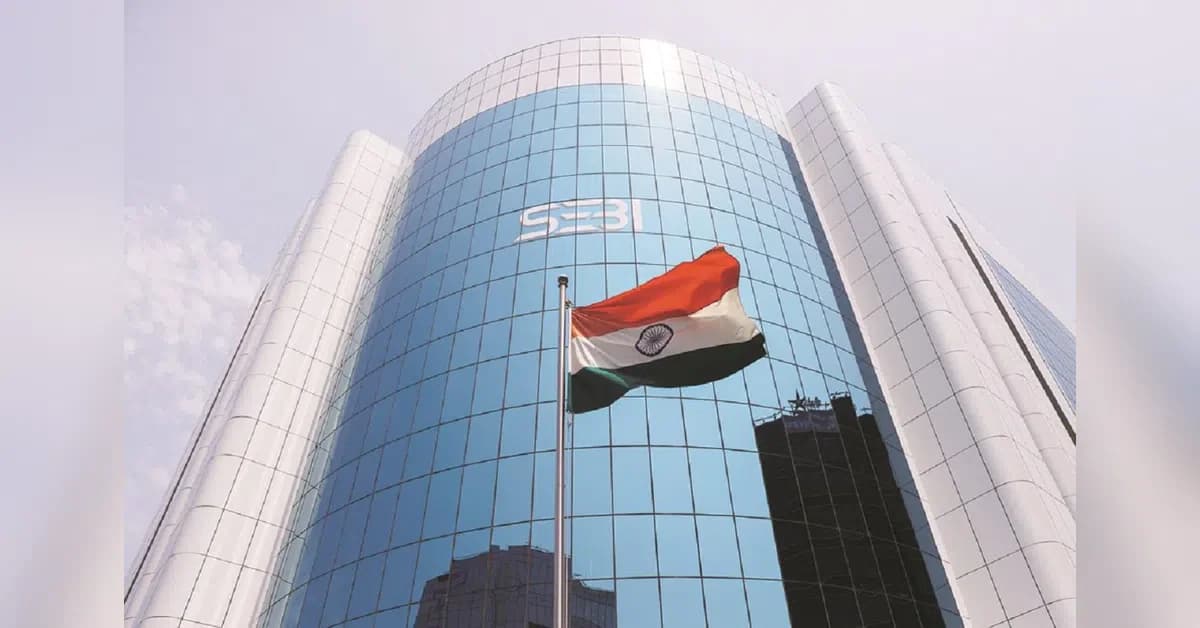
The Securities and Exchange Board of India (Sebi) will review its delisting framework as part of a broader effort to streamline capital market processes, according to Chairman Tuhin Kanta Pandey at the ET Now Market Summit in Mumbai on Friday. As reported by ANI, Pandey emphasized that 'A well-developed capital market must provide fair entry and fair exit', highlighting the regulatory focus on making market entry and exit less cumbersome for all stakeholders. The regulator plans to review the framework 'to ease exits', part of a comprehensive approach to make capital-market processes less clunky for market participants. Additionally, Sebi will work with other regulators to simplify know-your-customer rules for non-resident Indians, as announced by Pandey, representing a systematic approach to reducing procedural friction across multiple market processes. The comprehensive review also includes the Listing Obligations and Disclosure Requirements (LODR) framework, which is currently under review to make it more responsive to emerging governance and disclosure requirements.
Sebi has already implemented significant changes to delisting rules in recent years, including the introduction of a fixed-price route in 2024 that allows companies to offer shareholders a pre-set exit price as an alternative to reverse book-building. According to Investing.com, this reform was designed to provide certainty to both acquirers and shareholders, with the fixed-price model enabling founders to offer buybacks at a minimum 15% premium to fair price. The regulator also approved a voluntary delisting framework for public-sector companies where controlling shareholders own more than 90% of shares, addressing the unique challenges faced by state-controlled entities with very low public float. However, exit rules don't just matter at the end of a listing; they shape valuations on day one, with investors applying bigger discounts to promoter-controlled firms when reverse book-building makes final buyout prices hard to predict.
Sebi is simultaneously reviewing rules for the Innovators Growth Platform (IGP) to enhance startup access to long-term capital markets. As reported by Investing.com, the platform, originally introduced in 2016 as the Institutional Trading Platform, has undergone multiple rule changes due to Sebi's efforts to make it more accessible for new-age companies. The platform was revived as IGP in 2018 with further relaxations in 2019 and 2021, but has faced challenges due to stringent eligibility and lock-in rules that have limited market interest. A clearer fixed-price path, plus SEBI's plan to revisit the broader framework, could lower exit uncertainty for both promoters and minority shareholders, potentially narrowing governance and illiquidity discounts seen in some Indian stocks and making public markets feel like a more workable funding option for companies that might otherwise stay private or choose the Innovators Growth Platform.
The comprehensive review encompasses NRI know-your-customer rules alongside delisting and startup frameworks, representing Sebi's systematic approach to reducing procedural friction across capital market processes. According to ANI, the regulator is also working with the Reserve Bank of India (RBI) to introduce derivatives on bond indices as part of efforts to deepen India's capital markets. Pandey highlighted that deepening the cash market is a priority, with the Securities Lending and Borrowing and short selling frameworks being comprehensively reviewed to facilitate inter-linkage between the cash and derivatives markets and enhance liquidity. The SEBI chief also indicated plans to expand India's derivatives ecosystem, noting that development of longer-term futures and options contracts would be an important part of strengthening the derivatives market. On foreign investments, Pandey said SEBI would continue efforts to simplify access for global investors through easing KYC and a risk-based review of disclosure requirements.
The comprehensive regulatory approach aims to create a more flexible and accessible capital market ecosystem for all market participants, with the regulator also looking at related plumbing such as simplifying know-your-customer checks for non-resident Indians to further streamline market processes. As reported by ANI, Pandey emphasized that SEBI's approach has been one of optimum regulation - regulation which is effective, but not excessive - regulation which reduces risk, while allowing innovation. The regulator has also announced plans to issue detailed guidelines on the responsible use of artificial intelligence in capital markets, with SEBI planning to integrate IOSCO's AI supervisory toolkit into its AI strategy for regulated entities. Despite global volatility, Indian markets have remained resilient, with capital market helping raise more than ₹1.5 lakh crore in April and May of FY27, including around ₹70,000 crore through equity and about ₹86,000 crore through corporate bonds, while the pipeline of upcoming public issues remains strong at around ₹1.5 lakh crore.