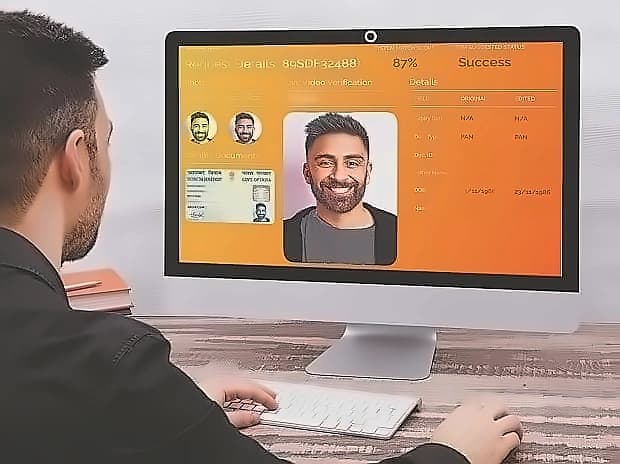
The Securities and Exchange Board of India (Sebi) has introduced a revised framework effective December 3, 2026, that allows persons resident outside India (PROIs) to complete know-your-customer (KYC) requirements digitally. According to reports from The Economic Times, CNBC TV18, Rediff Moneynews, Moneycontrol, The Financial Express, NDTV Profit, and The Hindu BusinessLine, the new rules cover non-resident Indians (NRIs), Overseas Citizens of India (OCIs) and foreign nationals who reside in Financial Action Task Force (FATF)-compliant countries. Clients from FATF-non-compliant countries will continue to follow existing KYC requirements. The framework specifically allows individual PROI clients to complete the onboarding process without requiring physical presence in India during the digital KYC process, removing the previous geographical restriction that constrained overseas clients. As reported by Moneycontrol, Sebi stated that "In order to ease the process of onboarding an individual Person Resident Outside India (PROI) client, it has been decided to review the existing provisions governing the KYC process." In a circular dated November 4, 2026, the market regulator confirmed that the revised framework will come into effect 30 days from the date of the circular, effectively removing the earlier requirement that clients must be physically present in India while completing digital KYC.
Under the revised norms, intermediaries can now accept digital submissions of KYC information and supporting documents from eligible clients through multiple channels. According to The Financial Express, intermediaries can collect KYC details in physical mode or through apps or websites, and can also accept scanned copies under electronic signatures or fully digital KYC forms under electronic signatures. The regulator has made KYC records portable, allowing them to be shared across intermediaries irrespective of whether all individual attributes have been validated. Intermediaries can rely on KYC undertaken by another Sebi-registered intermediary or an entity regulated by another financial sector regulator, based on records obtained from KRAs or the Central KYC Records Registry (CKYCRR). The move is aimed at simplifying the onboarding process and easing compliance requirements for overseas investors. According to Moneycontrol, the framework allows intermediaries to "accept digital submission of KYC information and supporting documents from such client," with the requirement of a client being in India during digital onboarding being relaxed for individual PROI clients located in FATF-compliant countries.
The new framework represents a dramatic reduction in processing time for overseas investors. As highlighted by Zerodha co-founder Nithin Kamath, what previously took weeks of couriering and notary visits can now be completed in just 2-3 days. Kamath emphasized that "for years, one of the biggest hurdles for NRIs wanting to invest in India has been account opening," noting that "while those with existing KYC could open accounts digitally, anyone abroad needing fresh KYC had to get documents attested by a notary or the Indian embassy, courier physical copies to India, and wait weeks for the account to open." The regulator has dropped the requirement that kept location tracking restricted to within India during onboarding, fundamentally transforming the process for overseas clients. According to LiveMint, Kamath welcomed the finalized changes, saying "In August, I'd written about Sebi's proposal to simplify account opening for NRIs. Good to see that the changes have now been finalised." The revised process allows Sebi-registered intermediaries, including stockbrokers, to accept KYC documents electronically and conduct verification through video-based procedures, subject to prescribed safeguards.
The framework requires intermediaries to collect PAN, passport copies and, where applicable, OCI cards from clients, along with proof of identity and address. According to The Economic Times, Rediff Moneynews, and Moneycontrol, overseas addresses will be accepted as proof of address and considered the current address for individual PROI clients. For passport verification, intermediaries will collect copies of the client's passport and, wherever applicable, the OCI card, with verification wherever feasible. The circular has clarified that an individual PROI client's current address must be their overseas address. For identity and address verification, intermediaries must collect any one of the specified officially valid or deemed officially valid documents. The regulator permits intermediaries to accept equivalent electronic documents available through DigiLocker, electronic documents issued by relevant authorities through verifiable mechanisms, Aadhaar-based e-KYC authentication, or copies attested by specified certifying authorities including notaries, authorized officials of overseas branches of scheduled commercial banks, court magistrates, judges, and Indian embassies or consulates. As reported by Moneycontrol, clients can submit KYC forms digitally or physically, while specimen signatures can be submitted electronically through cropped images under electronic signature, subject to verification during video-based in-person verification. Documents in another language must be translated into English and attested. Foreign nationals can provide government-issued documents or a letter from a foreign embassy or mission in India if their identity documents do not mention their address, according to SEBI circular.

The framework introduces video-based in-person verification (VIPV) where physical in-person verification is not feasible, subject to prescribed safeguards including uninterrupted video recording, live GPS coordinates and time stamps, facial liveness checks and end-to-end encryption. As reported by The Economic Times, Rediff Moneynews, and Moneycontrol, the client's IP address must originate from India or a FATF-compliant country and match the country specified in the KYC form and supporting documents. The infrastructure must prevent connections from spoofed IP addresses, VPNs and proxy servers. An authorized intermediary official must be present during the verification, which will be subject to concurrent audit. For specimen signatures, intermediaries can collect wet signatures on physical forms or as cropped signature images under electronic signature. If the signature is submitted digitally, the potential or existing customer must provide a wet signature during video-based in-person verification for live matching. The circular also clarifies that the process must include recording the client's consent, capturing live GPS coordinates and timestamps, blocking spoofed IP addresses, VPNs and proxy servers, and matching the client's photograph with the one in the KYC documents. It must also ensure end-to-end encryption, the presence of an authorized official and concurrent audits.
The regulatory changes are expected to significantly boost investment flows from overseas Indians. As noted by Zerodha's Nithin Kamath, "I've always felt that making it easier for NRIs to invest is one of the simplest ways to attract more long-term capital into India. Many of them already want to invest here, but the process has been complicated." According to LiveMint, Kamath believes that "cutting down this friction is the easiest way to pull steady, long-term capital into the country," adding that with these hurdles removed, NRIs have little reason to look anywhere else to invest. The simplified process addresses a long-standing challenge that has deterred overseas Indians from investing in Indian markets. According to The Economic Times, the changes could particularly benefit first-time investors who have never completed KYC in India and have been unable to visit the country for account opening. For stockbrokers, the simplified process could also reduce operational costs associated with physical documentation and manual verification while making it easier to serve overseas clients. The revised provisions will also apply to re-KYC of clients in FATF-compliant countries, with intermediaries permitted to retrieve existing client records from KRAs and CKYCRR using the client's PAN and CKYC ID, seeking additional KYC information only when existing records are incomplete or do not meet applicable norms.