The Securities and Exchange Board of India (SEBI) has proposed allowing the issuance of Depository Receipts (DRs) against units of REITs and publicly listed InvITs to widen investment options for overseas investors and attract foreign capital. According to The Hindu BusinessLine, Business Standard, and The Economic Times, the markets regulator announced this proposal on Tuesday, aiming to bridge a regulatory gap where SEBI's REIT and InvIT Regulations currently do not contain enabling provisions or operational frameworks for such issuances. The draft framework has been prepared by adapting the existing framework governing Depository Receipts issued by Indian listed companies, with modifications to suit REITs and InvITs. The operational framework will be notified through a separate circular and is proposed to be modelled on the existing Equity Depository Receipt Framework. As per The Economic Times, a framework for issuance of DRs on units of REITs and InvITs will enable REITs and InvITs to issue DRs in permissible jurisdictions, thereby providing an additional investment option for foreign investors. The proposal specifically aims to broaden foreign investor access to India's investment trust market and attract more global capital into these investment vehicles.
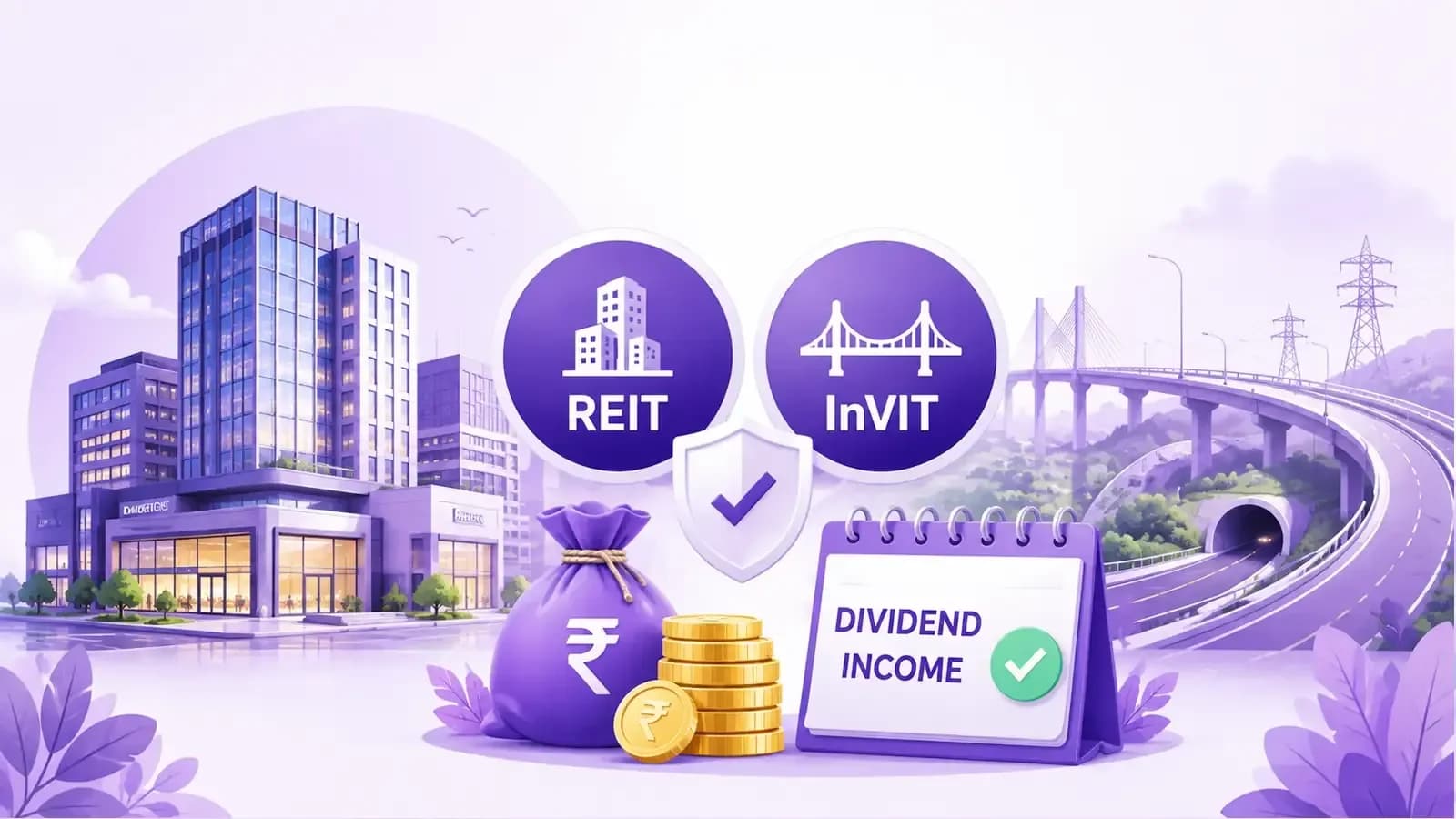
The government has proposed restoring tax-free REIT and InvIT dividends while raising the surcharge on SPVs to keep the changes revenue-neutral. As per Business Standard, the effective corporation tax rate for SPVs will rise to 28.6 per cent from about 25.2 per cent, as proposed in the Taxation and Other Laws (Amendment) Bill, 2026, tabled by Union Finance Minister Nirmala Sitharaman. The Bill seeks to raise the surcharge on SPVs opting for the concessional corporation tax regime to 25 per cent from 10 per cent, while extending the dividend tax exemption to unit holders even if the SPV has migrated to the new regime. Shobhit Agarwal, CEO at Anarock Capital, noted that while the Bill is positive, the higher 25 per cent surcharge on SPVs choosing the new regime remains a disincentive that partly offsets the restored dividend exemption. According to The Economic Times, DRs allow trading in foreign currency on the permitted international exchanges and will help attract foreign capital into Indian REITs and publicly listed InvITs. For investors, this means significant tax savings - a salaried investor in the 30 per cent tax bracket receiving ₹75,000 as eligible dividend income would save approximately ₹23,400 under the current rules, while the entire amount would be exempt if the proposed amendment becomes law. As per Business Standard, for investors receiving ₹50,000, the saving would be about ₹10,400 at the 20 per cent slab and ₹15,600 at the 30 per cent slab.
SEBI has introduced significant proposals to expand investment options for REITs and InvITs beyond traditional structures. The regulator has proposed permitting REITs and InvITs to invest in under-construction projects without having a controlling interest, within existing exposure limits prescribed for such assets. As per The Economic Times, investing a minority stake in under-construction assets would enable REITs and InvITs to build a pipeline of stable, revenue-generating assets while minimising exposure to construction-related risks. Additionally, common remote infrastructure will now be classified as real estate for REITs, addressing previous regulatory inconsistencies where remote captive renewable energy facilities were not properly classified. SEBI has also proposed reducing the cooling-off period for illiquid privately placed InvITs from 12 weeks to 8 weeks, recognizing that privately listed InvITs face inherent liquidity constraints due to their high trading lot size of ₹25 lakh.
SEBI has now provided comprehensive operational guidelines for the DR framework, addressing key compliance requirements. Units underlying DRs will be treated as non-public holdings for calculating minimum public unitholding, while holdings through DRs will be aggregated with direct holdings to ensure compliance with prescribed ownership limits. For fresh issuances, REITs and InvITs will have to file an offer document with SEBI and stock exchanges through a merchant banker, with SEBI proposing to provide its observations within 7 working days and stock exchanges granting or rejecting in-principle approval within 15 working days. Fresh DR issuances will generally require approval from at least 75 percent of unitholders, except where DRs are issued along with an IPO and domestic listing. The framework also bars foreign depositories from pre-releasing DRs before domestic custodians confirm receipt of the underlying units, while any disclosures made on overseas exchanges must be filed with Indian stock exchanges within 24 hours.
The framework is expected to create an additional investment avenue for foreign investors by allowing them to trade REIT and InvIT exposure in foreign currency on permitted international exchanges. According to The Hindu BusinessLine, Business Standard, and The Economic Times, SEBI emphasized that DRs allow trading in foreign currency on the permitted international exchange(s) and will help attract foreign capital into Indian REITs and publicly listed InvITs. Depository Receipts are foreign currency-denominated instruments issued by a foreign depository in a permissible jurisdiction against securities deposited with a domestic custodian in India, enabling foreign investors to trade such instruments in foreign currency on permitted international exchanges. The proposal could also help Indian REITs and InvITs tap a wider pool of global capital and enhance their international visibility, as reported by SEBI. Since investors trade DRs overseas instead of the underlying units in India, the instrument offers a familiar route for international investors seeking exposure to Indian assets. Reits have garnered funds worth ₹6,005 crore in the current fiscal year until June, while InvITs have mobilized ₹3,826.78 crore, highlighting the significant market potential for these investment vehicles. However, as noted by experts, the entire REIT payout will not become tax-free - interest income remains taxable at slab rates, and TDS at 10 per cent is deducted on both interest and dividend components for resident unitholders. Investors should carefully examine the tax breakdown of each distribution before calculating actual benefits.
SEBI has sought public comments on the proposals by August 27, 2026, addressing the current regulatory gap where the Depository Receipts Scheme, 2014 and the Foreign Exchange Management (Non-Debt Instruments) Rules, 2019 already permit DRs against eligible securities, including REIT and InvIT units, but SEBI's specific regulations lack enabling provisions. To address this gap, SEBI has proposed inserting enabling provisions in the REIT Regulations and InvIT Regulations to allow DRs to be issued against units of REITs and publicly listed InvITs, subject to compliance with the regulations and conditions specified by the regulator. The proposed framework will apply only to REITs and publicly listed InvITs, with SEBI noting that the detailed operational framework for issuance of DRs by REITs and publicly listed InvITs will be issued through a separate circular. In its consultation paper, SEBI stated that a framework for the issuance of DRs on units of REITs and InvITs will enable them to issue DRs in permissible jurisdictions, thereby providing an additional investment option for foreign investors. The Bill is yet to clear the Rajya Sabha and receive Presidential assent, with experts noting that the tax relief is particularly beneficial for higher tax bracket investors while the SPV-level tax increase may impact cash flows for asset-holding companies.