The Supreme Court on Monday issued a stern warning against granting bail to anyone accused of digital arrest scams, stating that 'digital arrest scams are the worst kind of crime against people, especially senior citizens whose life savings and hard-earned money are fraudulently siphoned out when they need it the most'. A Bench comprising Chief Justice of India Justice Surya Kant, Justice Joymalya Bagchi and Justice V Mohan sent out a clear message to High Courts and trial courts that 'no bail will be granted to anyone accused of being part of digital arrest scams, except when they point out extraordinary grounds which warrant their release from custody'. According to reports from TOI, the Court emphasized that 'when an accused pleaded that he had only helped the main accused in opening a bank account and that he has been in custody for more than a year, the bench said this made him an accomplice in the crime'. This represents a significant escalation in the Court's stance on digital arrest cases, moving beyond the earlier recommendation for formal legal definition to direct action against accused persons.
The Supreme Court has revealed that over ₹3,000 crore has been lost to digital arrest scams, highlighting the massive scale of these frauds targeting senior citizens. As reported by TOI, the Court stated that 'digital arrest scams are among the most serious offences affecting the public' and emphasized their severity. The bench made these observations while rejecting the bail plea of an accused in a digital fraud case, demonstrating the Court's zero-tolerance approach to these crimes. The Supreme Court has been closely monitoring the rise in digital arrest scams, particularly those targeting senior citizens, and has been instrumental in establishing a cross-departmental coordination mechanism among various agencies to address the issue.
The Bench observed that while such offences may involve elements of extortion or robbery, a dedicated statutory provision may be necessary to deal with the evolving nature of the crime. As reported by Business Standard, CJI Kant remarked, 'Do you have to define formally the case of digital arrest in penal laws? It has elements of extortion, robbery. Do you need to define this as a standalone offence with serious consequences, along with a provision that when something is found against an accused... his assets will be frozen.' Justice Bagchi also noted the emerging threat posed by deepfake technology and said legislative intervention was necessary to address such offences. 'We have deepfakes now. It can be used for cheating and impersonation. You fight with the given tooth, but you need to chisel it as well. Under Article 142, we cannot define a crime,' Justice Bagchi stated, adding that 'the Supreme Court could not create a new criminal offence by exercising its powers under Article 142 of the Constitution, adding that such changes must be made through legislation'.
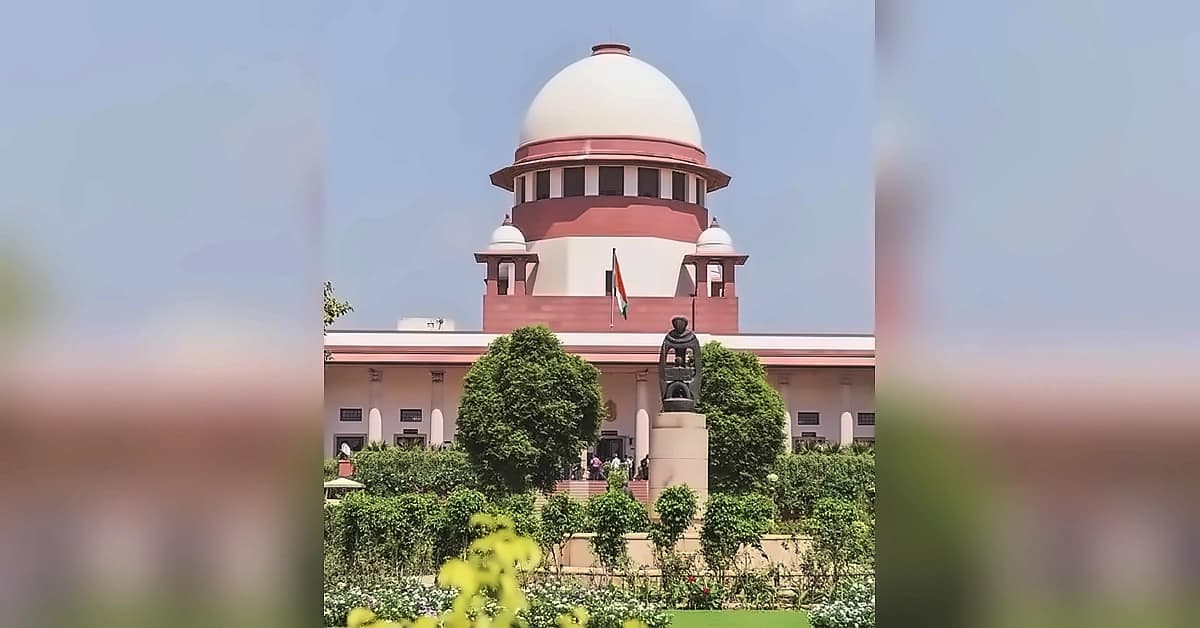
Attorney General R Venkataramani informed the Court that an Inter-Departmental Committee was preparing a comprehensive report to identify gaps in the existing legal and institutional framework. According to Business Standard, Solicitor General Tushar Mehta told the Supreme Court that the Centre is 'drafting legislation to tackle emerging cybercrimes, including deepfakes, digital arrest scams, and other forms of online fraud' and said 'a draft Bill is being prepared to address these offences under a comprehensive legal framework'. The proceedings stem from a suo motu case registered in October 2025 after an elderly couple informed the Court that fraudsters posing as officials had duped them of ₹1.5 crore using forged Supreme Court orders and threats of arrest. The fraudsters had contacted them through phone and video conference and showed them forged Supreme Court orders to coerce payment under threat of arrest.
Last Friday, the same bench issued even stronger directives, stating that 'the police and other investigating agencies must invoke strict anti-organized crime law provisions against those found in connection with digital arrest or cyber fraud cases, saying they should be equated with '