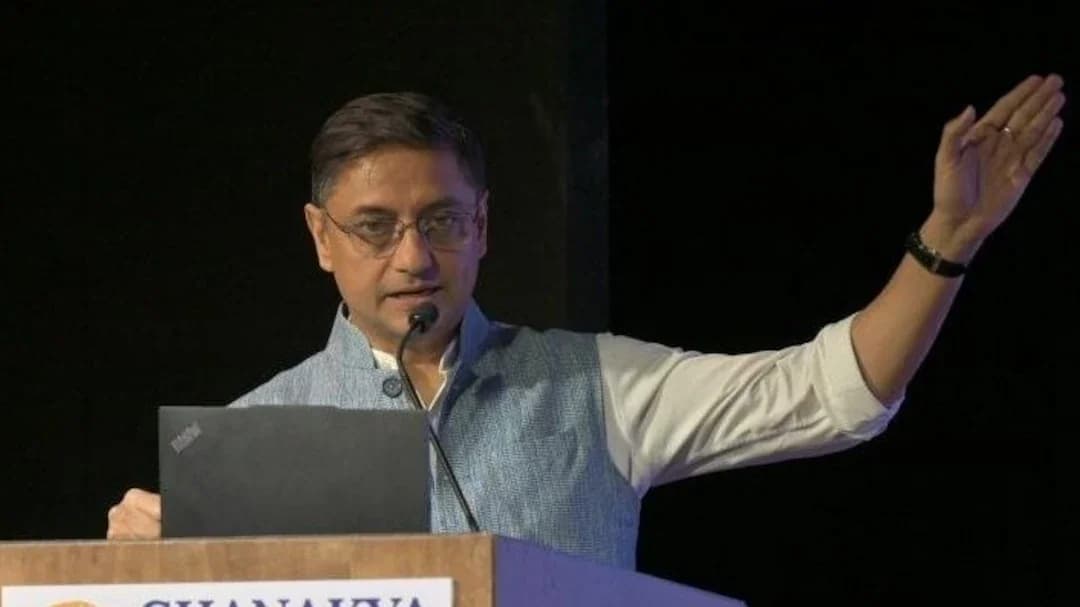
Sanjeev Sanyal, a member of the Economic Advisory Council to the Prime Minister, has proposed the enactment of a Transparency of Rules Act (ToRA) to address systemic inefficiencies in India's regulatory framework. Speaking at the Assocham's India Business Reform Summit 2026, Sanyal emphasized that the proposed legislation would require public pressure to implement this important reform. According to reports from ANI, the Act would establish a dedicated centralized portal for all rules, regulations, and citizen-facing requirements, making them easily accessible to businesses and citizens. Sanyal stated that the Transparency of Rules Act can help simplify regulations, improve transparency in governance and significantly enhance ease of doing business in the country by consolidating complex rules and reducing regulatory opacity. He explained that the idea of this is very simple, and it will cost almost no money to do, but it will require public pressure to get it done, because it will remove from the bureaucracy a major problem, which is what are the rules I am supposed to follow.
Sanyal identified a major inefficiency in the current system where numerous rules and regulations exist without clear version control. As reported by ANI, he explained that nobody knows which version is the latest of various regulations, creating confusion for businesses and citizens. The proposed ToRA would mandate that all rules and regulations citizens and businesses must follow be clearly placed in one central location on a government website. Under the framework, government agencies would be declared ToRA compliant, with officials prohibited from imposing rules until they are explicitly published on agency websites and the unified portal. Sanyal added that not knowing any law is no protection but every citizen or business should have a fair chance to find out what the law is.
The proposed legislation would require that rules and norms be presented as a whole rather than as endless circulars, similar to how the Reserve Bank of India operates through master circulars. According to ANI, Sanyal stated that the ToRA should mandate that portals and websites clearly time-stamp every change made to rules. This transparency measure would enable citizens to know from which point in time a rule came into existence or when it was removed, ensuring fair access to regulatory information. Sanyal emphasized that the rules and norms placed should be presented as a whole and not as a series of endless circulars. He cited the Reserve Bank of India as an example, noting that the central bank replaced 9,446 circulars with 244 master circulars in November 2025, helping improve clarity and reduce opacity in the regulatory framework. This, by the way, is the fastest in the world. Faster than Singapore, Sanyal added.
Sanyal highlighted successful government reforms that demonstrate the effectiveness of process simplification and administrative streamlining. As reported by ANI, he cited the voluntary closure of companies under the Companies Act, where the government reduced the average time taken to strike off companies from nearly 500 days in 2021-22 to around 60 days through the C-PACE platform established by the Ministry of Corporate Affairs. The new digital mechanism now automatically processes applications, seeks approvals electronically and grants deemed approvals if departments fail to respond within specified timelines. He also referenced reforms under the Insolvency and Bankruptcy Code (IBC), where the government simplified voluntary liquidation procedures for large companies by introducing standardized checklists and clearer compliance frameworks. The Insolvency and Bankruptcy Board of India (IBBI) issued clarification circulars and amended regulations to remove unnecessary ambiguity around NOCs and compliance requirements.
During his address, Sanyal highlighted a significant gap in India's professional services sector, noting that though India is a services exporting country, there are no Indian Big Four consultancy firms. As reported by ANI, he attributed this to restrictions on advertising and brand building imposed by professional bodies, along with limitations on branding by Indian consultancies. He added that professional bodies have all kinds of restrictions that prevent the growth of domestic consultancy firms in this sector. Sanyal noted that though worldwide this business is dominated by Indians, there are no Indian Big Four consultancy firms in India, despite India being a services exporting country. He also flagged restrictions on branding and multidisciplinary partnerships for Indian consultancy firms, saying such rules have limited the emergence of large Indian professional services firms. He also revealed that they are mapping the entire government as there are dozens of agencies and bodies, which can be closed or merged to streamline the administrative structure.
Looking ahead, Sanyal revealed that the government is reviewing outdated compliances and state-created bottlenecks that adversely affect businesses. According to ANI, he cited examples such as mandatory mediation in commercial disputes often adding unnecessary delays and costs despite very few disputes being resolved through the process. He also noted that the government is significantly expanding its patent processing ecosystem by recruiting additional patent examiners and controllers to support future growth in innovation and research. The government aims to build sufficient capacity by 2030 to handle a much larger volume of patent applications and ensure that India's R&D ecosystem is not constrained by administrative delays.