The Union finance ministry is implementing comprehensive human resource reforms across India's 12 public sector banks (PSBs), aimed at reducing human interface and automating seniority-based promotion and transfer processes. According to reports from Mint, these reforms are expected to benefit more than 750,000 employees across these lenders. The Department of Financial Services is pushing a wide-ranging reform agenda to modernize workforce management and improve transparency, with PSBs advised to automate transfer processes through dedicated digital portals and complete annual transfers before June each year using transparent systems with clear seniority lists.
The reform push addresses long-standing issues of workplace culture and employee morale at PSBs. As reported by Mint, resentment over opaque and often arbitrary transfer and promotion policies has been a simmering issue, with employees frequently raising concerns about fairness and career progression. Bank union officials have welcomed the proposed HR revamp, noting that workplace culture remains a key challenge affecting employees beyond administrative transparency issues.
The proposed HR transformation comes at a time when these 12 PSBs have delivered strong financial performance in FY26, driven by robust business growth and improved asset quality. According to Mint, aggregate business rose 12.8% year-on-year to ₹283.3 trillion as of 31 March 2026, with deposits increasing 10.6% to ₹156.3 trillion and advances growing 15.7% to ₹127 trillion. Aggregate operating profit reached ₹3.21 trillion, while net profit rose 11.1% year-on-year to a record ₹1.98 trillion, marking the fourth consecutive year of profitability for PSBs.
The reforms address serious workplace issues that have led to tragic incidents. As reported by Mint, workplace toxicity has come under sharp scrutiny following recent incidents involving Bank of Baroda employees, including a probationary officer who died by suicide in May, with his handwritten note highlighting extreme work pressure, inadequate training, and restrictive service bonds. In July 2025, another suicide was reported at Bank of Baroda in Maharashtra. According to the National Crime Records Bureau, professionals and salaried employees accounted for 9.9% of all suicides in 2024, with 1,70,746 suicides total.
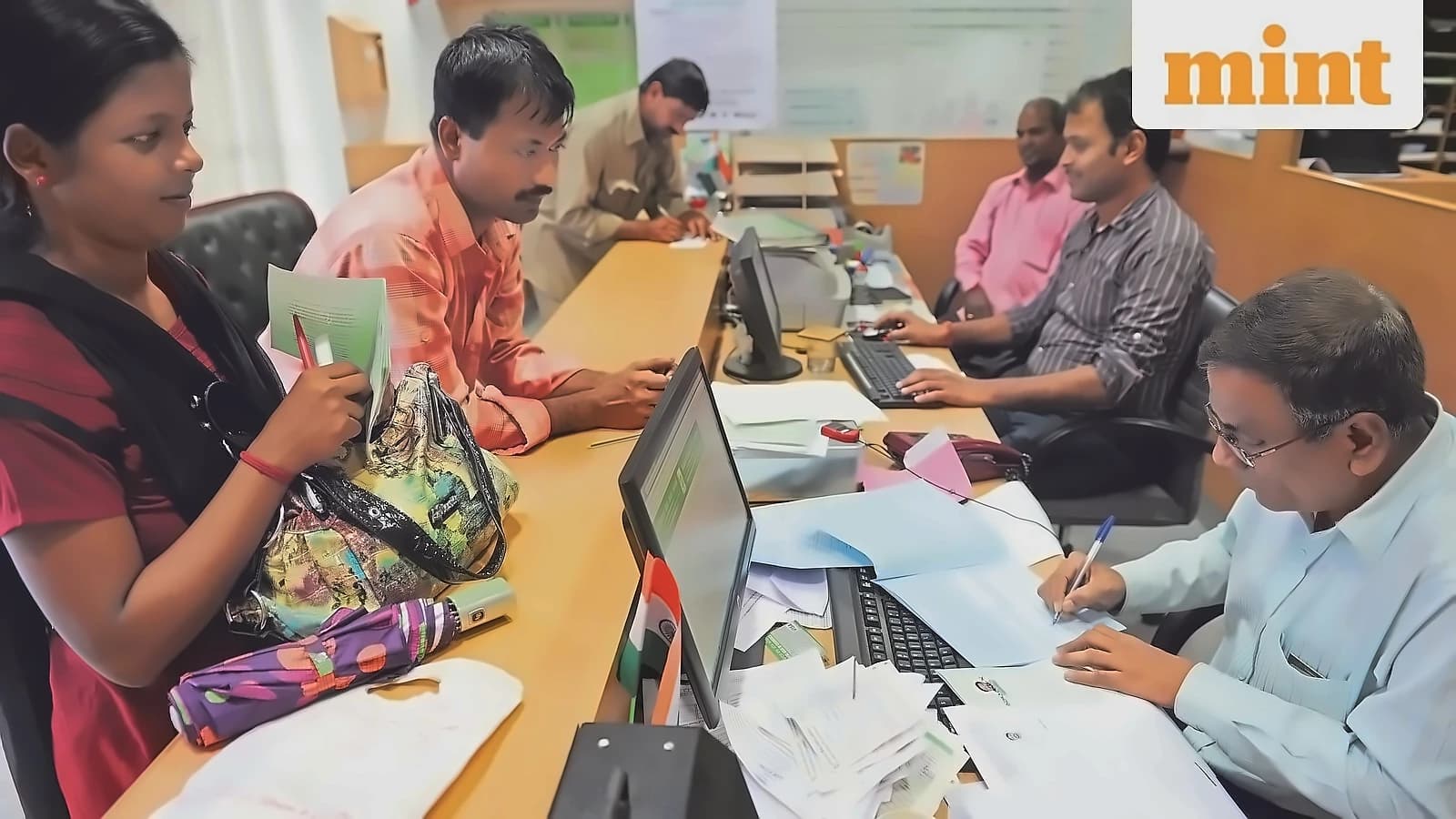
The reforms assume significance as these state-run banks serve as implementing agencies for the government's flagship welfare and financial inclusion schemes, including the Pradhan Mantri Mudra Yojana, Pradhan Mantri Jan Dhan Yojana, PM SVANidhi, Pradhan Mantri Jeevan Jyoti Bima Yojana, Pradhan Mantri Suraksha Bima Yojana, and Atal Pension Yojana. The Centre has already directed banks to streamline promotion exercises by starting processes in January-February and declaring results by 31 March to reduce uncertainty and delays, while the employee count of state-owned lenders rose 0.22% year-on-year to 757,641 as of 31 March 2025.