CBIC has issued comprehensive circulars establishing basic standards for show-cause notices, adjudication orders and appeals under the GST regime to ensure clearer and fairer proceedings. According to Business Standard, tax officers can no longer club several years into one show-cause notice without showing how much tax is being demanded for each year, with notices now required to spell out facts, evidence, legal provisions and exact tax amounts demanded. The circulars prohibit officers from invoking stricter fraud provisions merely because tax has not been paid or mismatches found - they must show specific evidence of intent to evade tax. Adjudication orders must deal with points raised by taxpayers with explanations of why submissions were accepted or rejected, while personal hearings should be meaningful with virtual hearings encouraged. As per EY India's Saurabh Agarwal, the guidance brings structured adjudication discipline into GST framework similar to pre-GST Master Circular, emphasizing clearly articulated allegations, supporting evidence, and reasoned orders to improve quality and reduce avoidable litigation. Pre-show cause notice intimation may be given to taxpayers, wherever feasible, so that they can clarify their position prior to the start of formal proceedings, addressing concerns about undue inconvenience to genuine applicants.
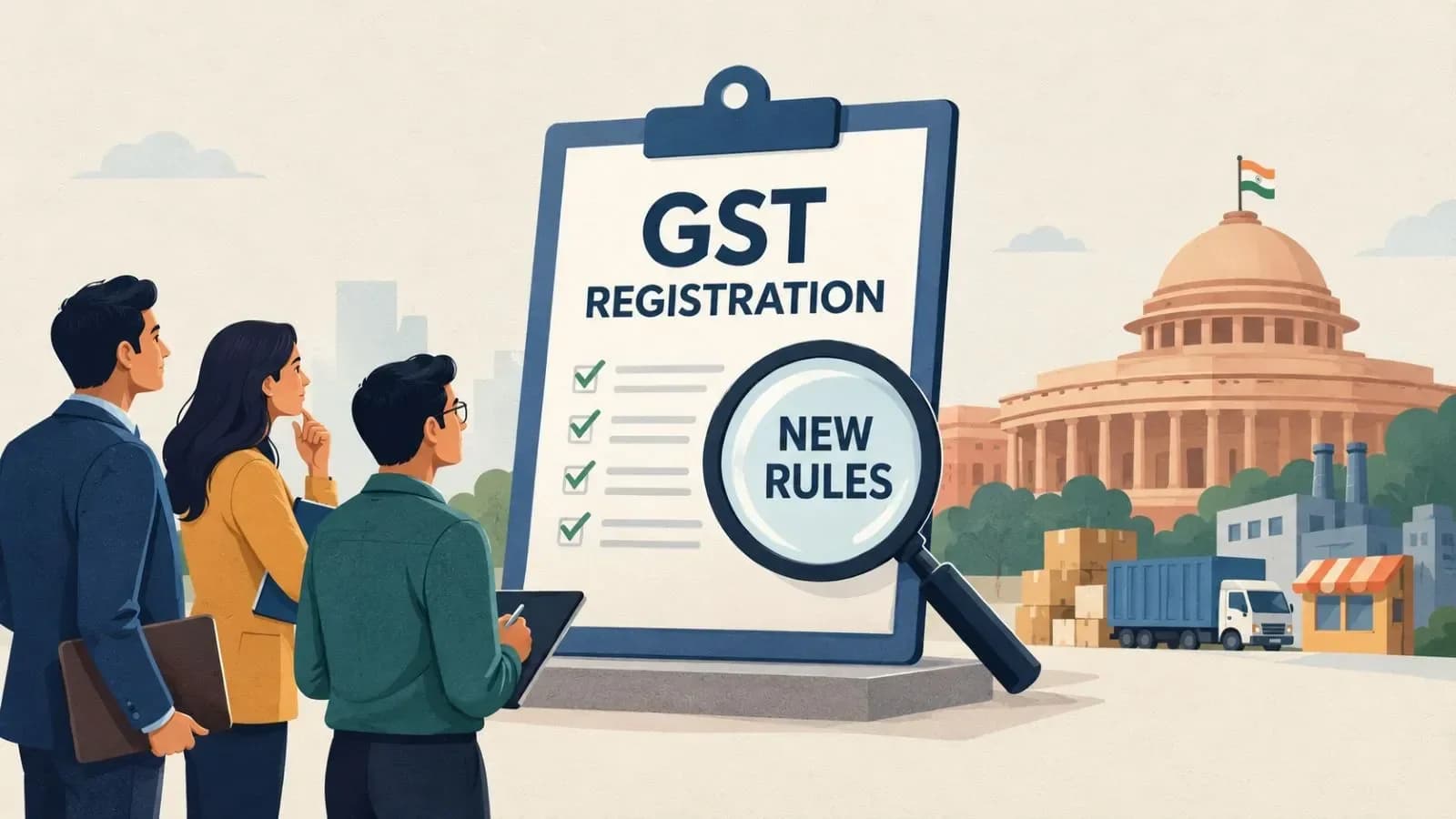
The Central Board of Indirect Taxes and Customs (CBIC) has issued fresh guidelines to streamline GST registration processes, marking a significant shift from previous officer-focused instructions. According to reports from Personal Finance News and Mint, the 38-page circular dated October 26, 2026, is specifically written for applicants rather than tax officers, designed to reduce the need for clarification requests and expedite genuine applications. The new guidelines address common delays caused by incomplete documents, inconsistent details, and illegible uploads, particularly in identity verification and business constitution proof. As per the latest circular, these guidelines give effect to the recommendation of the 57th GST Council Meeting held on 8th October, 2026 for issuance of a comprehensive circular specifying the documents and information required for GST registration, along with Frequently Asked Questions (FAQs) to simplify the filing and processing of registration applications. The guidelines emphasize that proper scrutiny of registration application by proper officers plays a critical role in ensuring the integrity of the registration process and preventing misuse of the system, with instances where unscrupulous elements have been found to obtain fake registrations using identity of other persons to fraudulently pass on ineligible input tax credit. CBIC has underlined the need to facilitate registration while ensuring that there is no misuse, pointing to grievances received due to difficulties faced by taxpayers.
Under the new framework, registration applications with Aadhaar authentication must be processed within seven working days from application submission. Without authentication or where risk parameters flag the application for physical verification, the processing period extends to 30 days. As reported by Personal Finance News and Mint, applicants may be required to visit Facilitation Centres or GST Suvidha Kendras for biometric authentication and document verification, with this process completed within 15 days from temporary reference number receipt. The circular states that registration is deemed approved if no action is taken within the specified timeframe, with automatic certificate availability on the GST portal. According to the latest guidelines, in cases where the applicant has opted for authentication of Adhaar number and successfully got the Adhaar authenticated, the registration application is required to be processed by the proper officer within a period of seven working days from the date of submission of the application. The guidelines specifically note that it is in the interest of the applicant to opt for and undergo authentication of Adhaar number to get his application for registration processed at the earliest.
CBIC's Circular No. 257/03/2026-GST provides definitive lists of required documents arranged by business constitution and premises type. For identity, constitution and photographs, every applicant must establish correct business constitution through Part B of FORM GST REG-01, with matching documents like partnership deeds for firms, registration certificates for societies, and Karta documents for HUFs. Photographs must be recent individual portraits, not group photographs, showing full front face and not copies of identity documents. Authorized signatories can include up to 10 persons with full personal details, photographs, and authorization letters, with at least two primary and alternate signatories recommended. Proof of principal place of business requires specific documentation based on premises ownership: owned premises need latest property tax receipts or utility bills, rented/leased properties require registered agreements, while co-working spaces need membership agreements showing specific desk allocation. For bank accounts and additional requirements, bank details are optional at application but compulsory within 30 days, with up to 10 accounts accepted. Applicants in Maharashtra, Rajasthan, Odisha, Andhra Pradesh, Assam and Madhya Pradesh must also furnish electricity connection details. The new guidance addresses practical issues including co-working spaces, consent-based premises, ATMs and telecom towers, with officers prohibited from raising irrelevant or state-specific objections beyond prescribed document lists.
Small businesses with monthly input tax credit requirements below ₹2.5 lakh can opt for simplified registration under Rule 14A, operational since November 1, 2025. According to the guidelines, registration is granted automatically by the system within 3 working days under these conditions: Aadhaar authentication during application, no more than one Rule 14A registration per State/Union Territory on the same PAN, and no outward taxable supplies to registered persons involving tax above ₹2.5 lakh monthly. To transition to regular registration, taxpayers must file at least one return and clear all pending returns while applying in FORM GST REG-32. The simplified registration scheme under rule 14A of CGST Rules, 2017 is not applicable in cases where the person needs to pass on ITC more than ₹2.5 lakh in a month. To avail this simplified scheme, a small supplier must file application for GST registration in FORM GST REG-01, opt for Aadhaar authentication while filing the application, and choose registration under Rule 14A by declaring that they will abide by all conditions and restrictions.
CBIC has issued comprehensive guidelines limiting unnecessary documentation demands from tax officers while clarifying specific requirements for different business scenarios. According to Mint, officers can seek clarification when uploaded documents are incomplete or illegible, addresses do not match supporting records or essential information is missing, but cannot demand irrelevant documents or raise objections without valid reason. For example, applicants should not be asked to submit Udyam registration certificates merely as additional requirements when prescribed GST documents are sufficient. Where clarification is necessary, officers must issue a notice through Form GST REG-03, giving applicants seven working days to respond using Form GST REG-04. After receiving clarification, officers must process the application within the prescribed seven-working-day period, with rejection requiring written reasons. The guidelines specifically address co-working space applications, requiring membership agreements with desk allocation details and supporting property documents, while clarifying that officers should not raise objections merely because applicants reside in different cities or states from proposed business locations. For freelancers and entrepreneurs using residential premises, the guidelines ensure proper categorization based on actual ownership, preventing incorrect declarations of self-owned properties when they belong to family members.