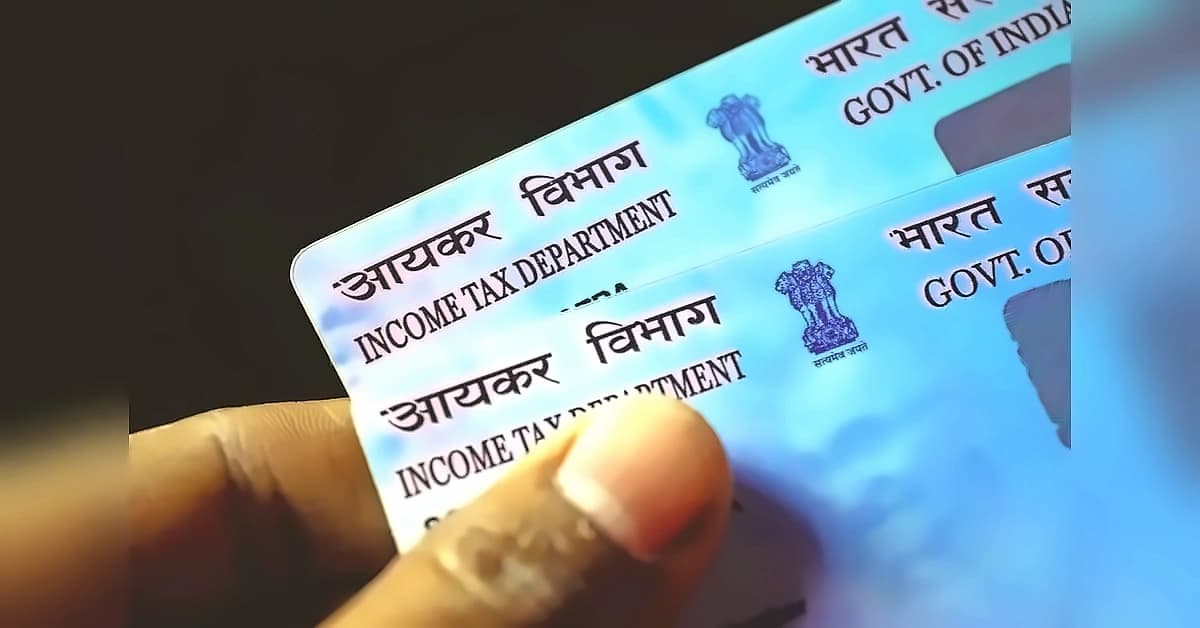
The Delhi High Court has issued a comprehensive directive requiring Goods and Services Tax (GST) authorities across the country to mandate biometric-based Aadhaar authentication for all new GST registrations. According to reports from Business Standard and Zee News, a Division Bench of Justices Anil Khetarpal and Shail Jain issued this direction while hearing petitions alleging fraudulent GST registrations using stolen or frozen PAN and Aadhaar details. The court noted that authorities had not pointed out any practical difficulty in implementing this mandatory authentication requirement. In an interim order pronounced on September 8, 2026, the bench stated that it is compelled to request the competent authorities to rise to the situation, which has resulted in loss of revenue to the government and harassment of innocents. The court emphasized that "for the time being, directions are issued to authorities across the country not to allow any GST registration without biometric-based Aadhaar authentication henceforth," while allowing authorities to file any practical difficulty in implementation. During the proceedings, the court was informed that biometric Aadhaar authentication was being carried out only when the system identified an application as "risky" based on parameters and data analytics. The court observed that "the tax authorities have failed to draw its attention to any difficulty in mandating biometric-based Aadhaar authentication for GST registrations," and noted a gap between the position stated by the government in Parliament and the manner in which authentication was being implemented on the ground.
The scale of fraudulent GST registrations has resulted in significant financial losses to the government. As reported by Business Standard and Zee News, according to information disclosed by the Minister of State for Finance in the Rajya Sabha, 2,800 fraudulent GST registrations involving stolen or frozen PAN/Aadhaar details were detected in 2023-24, with tax evasion of ₹15,085 crore. In 2024-25, another 1,654 fraudulent registrations were detected, involving tax evasion of ₹13,109 crore. The court observed that nearly nine years had passed since the enforcement of the Central Goods and Services Tax Act, 2017, yet respondents had failed to effectively curb the malpractice. The bench noted that "it appears that despite passage of more than one year, the statement given by the minister on the floor of the House has not been fully implemented, resulting in continuous fake GST registration obtained using stolen or frozen PAN/Aadhaar details." According to the latest court proceedings, together, the two years saw 4,454 fraudulent registrations and ₹28,194 crore of detected tax evasion, highlighting the continued scale of the problem despite government measures. The court had expressed concern over the possibility of "rampant" fraudulent GST registrations in the names of innocent persons, followed by the creation of huge tax liabilities.
The court has directed authorities to examine additional safeguards proposed by Senior Advocate Tarun Gulati to curb fraudulent GST registrations. According to Business Standard and Zee News, these proposed measures include mandatory facial recognition of applicants against the Aadhaar database and video-based verification of PAN and Aadhaar. Under the video verification mechanism, applicants would upload a 20-30 second video showing their face along with original documents and respond to system-generated prompts, holding each document for a minimum of 5 seconds. Other suggested safeguards include recording and preserving IP addresses and device locations used for GST applications, mandatory physical verification of proposed principal places of business, and real-time information sharing between GST and Income Tax departments. The suggestions also call for sending real-time messages and emails to PAN holders informing them that their PAN has been used for GST registration, cross-checking information with tax records, and flagging sudden and significant increases in turnover. The court has recorded suggestions for flagging sudden and significant increases in turnover, real-time confirmation from the Aadhaar holder regarding the business being registered, alerts through DigiLocker, creation of PAN-Aadhaar mismatch and first-time-use risk parameters, and requiring applicants to nominate identifiable persons who can corroborate their identity and the existence of the proposed business. The court has urged the tax administration to examine these suggestions in detail.
Tax experts have welcomed the court's direction while emphasizing the need for balanced implementation. As reported by Business Standard, Ikesh Nagpal from AKM Global noted that the court's direction effectively puts identity verification at the front and centre of GST registration. He added that suggestions around real-time alerts, digital footprints and targeted verification can add meaningful layers of protection. Nagpal explained that "the Court's direction effectively puts identity verification at the front and centre of GST registration, which is important when stolen or misused PAN and Aadhaar details can leave completely innocent persons facing the consequences of fraudulent registrations." He emphasized that "stronger technology-led checks could help detect suspicious registrations without creating unnecessary hurdles for genuine businesses. The objective should be to strike the right balance by keeping the registration process frictionless for genuine businesses, but far less vulnerable to misuse of an innocent person's PAN or Aadhaar." The authorities have been given liberty to place objections before the court if they face practical difficulties in implementing the biometric authentication requirement.
The Delhi High Court has listed the matter for further consideration on September 22, 2026, as reported by Zee News. According to Zee News, the court had earlier noted that this was the second case before it where a petitioner alleged fraudulent GST registration by another person using their PAN and Aadhaar details. The court had subsequently granted the respondents a "last opportunity" to find an effective solution to the problem, warning that failing this, it would be left with "no choice but to pass appropriate and effective orders." The bench has emphasized that "the authorities are expected to take up the matter with all seriousness," while maintaining that the court will examine any practical difficulties raised by authorities in implementing the biometric authentication requirement. The court had earlier sought assistance from the Delhi Police and directed the Commissioner of Delhi Police to deputise an officer in the matter, highlighting the seriousness of the ongoing fraudulent registration problem. The court has granted authorities liberty to file objections regarding any practical difficulty in the implementation of the new directive.