Union Education Minister Dharmendra Pradhan announced that the National Eligibility-cum-Entrance Test (NEET-UG) will shift to a computer-based test (CBT) format from 2027, as reported by Business Standard. The decision comes three days after the examination was cancelled following an alleged paper leak controversy. According to Pradhan, the root cause of the issue is the OMR (Optical Mark Recognition) system, making the CBT format more secure and protected than the current system. The minister acknowledged that cybercrime has become a big challenge even with computer-based testing, stating "Compared to OMR, the CBT is a little more protected... But cybercrime has become big... Even there, there are challenges, but we will have to trust the system." The government believes conducting NEET-UG online could help reduce paper leaks, impersonation, and organised cheating rackets, with officials saying advanced monitoring systems and tighter security measures will be introduced to rebuild trust among students and parents.
The government has fixed June 21 for the NEET-UG 2026 re-examination and announced additional time for candidates appearing in the retest, as reported by Business Standard. Admit cards for the re-examination will be issued by June 14, with candidates receiving an additional 15 minutes to complete the test. The exam timings have been adjusted from 2 pm to 5 pm to 2 pm to 5.15 pm to account for reduced time spent on formalities like signing OMR sheets. The NTA will refund exam fees to affected candidates and no extra charges will be taken for the re-exam. The June 21 re-test will continue in pen-and-paper format as the NTA prepares revised safeguards for all aspirants, with the minister confirming this development to address ongoing security concerns. Over 22 lakh candidates had taken the examination on May 3 which was cancelled later, making this one of the largest examination disruptions in recent times.
The decisions follow recommendations by the Radhakrishnan committee, which had previously suggested shifting the exam to CBT mode, according to Business Standard. The committee, chaired by former ISRO chief K Radhakrishnan and constituted in 2024, recommended introducing biometric authentication and AI-based identity verification, encrypting question paper delivery systems, conducting examinations in multiple sessions, and creating a more autonomous and accountable NTA with dedicated technology and security divisions. The committee's recommendations, submitted to the Education Ministry in 2024, had pointed to computer-based tests in multiple shifts as the preferred mode of examination, on the grounds that the pen-and-paper test "increases potential leakages" since it involves multiple third-party agencies that are involved in printing, transporting, and storing papers. The minister confirmed that most recommendations of the committee were followed, including those for conducting the examination like an election with the support of District Collectors and police.
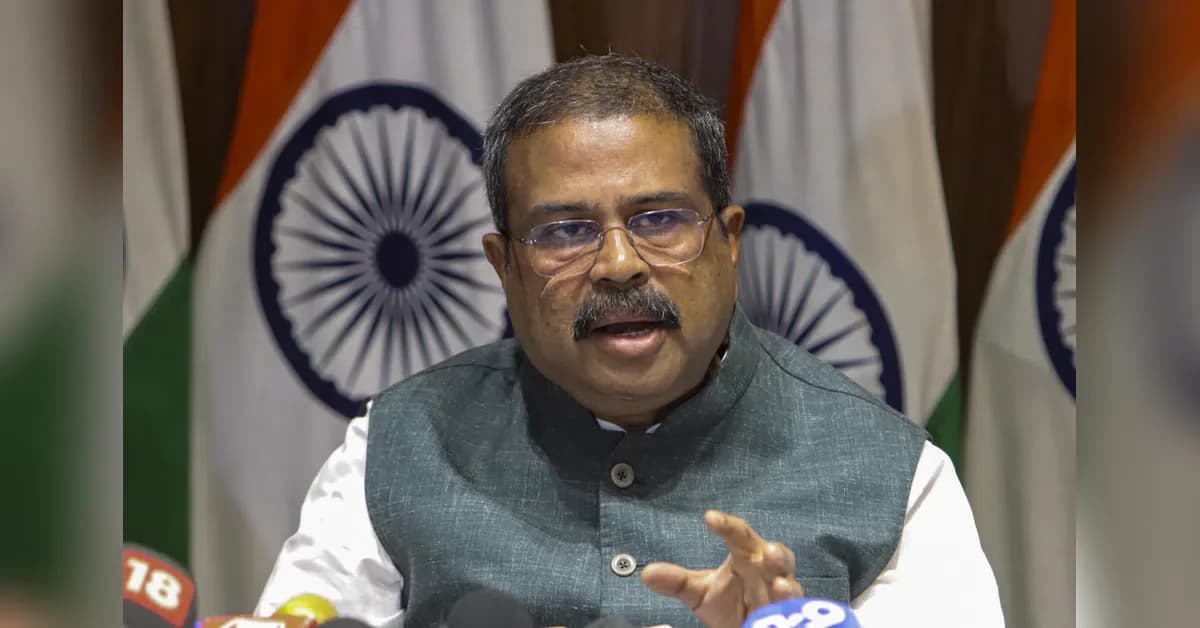
The NEET controversy has led to significant investigative action, with accused individuals arrested from Rajasthan, Haryana and Maharashtra, pointing to what investigators believe may be a multi-state network involved in procuring and circulating examination material, according to ET Bureau report. The agency conducted searches at multiple locations and seized electronic devices and documents suspected to be linked to the leak. Pradhan acknowledged lapses despite reforms and admitted that there has been some breach in the chain of command, as reported by Business Standard. He stated that the Central Bureau of Investigation (CBI) is investigating the breach to identify those responsible and described the government's response as a 'long-term battle against the education mafia'. The minister revealed that the NTA received a complaint on May 7 through its grievance redressal system about questions from this year's question sets appearing in a guess paper, leading to the cancellation on May 12 in the interest of students.
The cancellation and reconduct of NEET-UG 2026 marks one of the most significant disruptions in the examination's history, according to Business Standard. The Parliamentary Standing Committee in December 2025 had noted that the NTA's performance had 'not inspired much confidence', pointing out that five of the 14 competitive examinations conducted by the NTA in 2024 faced major disruptions. The committee raised concerns over repeated administrative lapses affecting examination credibility and called for stronger accountability mechanisms. The 2027 implementation timeline represents a significant shift in India's entrance exam system, with the government positioning it as a comprehensive solution to address long-standing credibility issues. Pradhan emphasized that "We have taken this tough decision in the interest of larger goals and the country" and stated that "We didn't want that through the conspiracy of some mafia, a money bag steals your seat." He confirmed that "We take the responsibility of not imposing any financial burden on students" and that "students will also get to pick the city of their choice for the retest."