The National Testing Agency (NTA) is exploring the deployment of artificial intelligence (AI) in question paper setting to reduce human involvement and lower the risk of examination-related breaches, according to Director General Abhishek Singh. Speaking at an event on AI and digital public infrastructure organised by the National Council of Applied Economic Research (NCAER), Singh emphasized that "one usage of AI that we do very often is how do you ensure that you develop a larger bank (of questions) and then reduce the human element in setting question papers." The initiative comes as the NTA's examination processes have remained under intense scrutiny since the NEET-UG 2024 controversy, when allegations of a question paper leak, irregularities in the award of grace marks, and an unusually high number of top scorers triggered nationwide protests and a Supreme Court-monitored investigation.
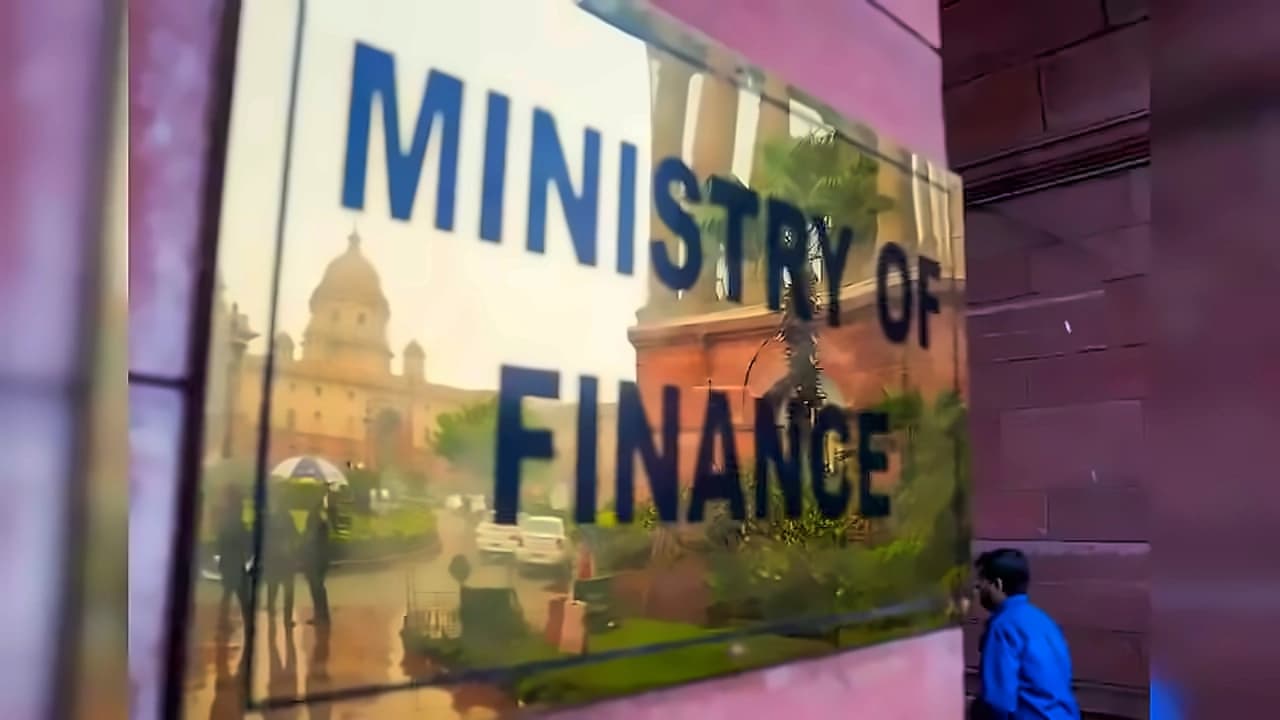
The government has categorically dismissed media reports claiming that the Ministry of Finance's printing press might have been used to print question papers for the NEET-UG re-examination. According to reports from PIB Fact Check on social media platform X, the government has characterized these media reports as fake news. The government's fact-checking unit has determined that these claims are incorrect and should be disregarded by the public. This response comes as several telegram groups are actively claiming to leak the re NEET 2026 question papers, creating widespread speculation about potential exam postponement. The controversy has intensified with a prominent pro-government news anchor on prime-time TV calling India's YouTube teachers "do kaudi ke" on May 29, a phrase meaning "worthless", soon after many prominent teachers spoke up against the NEET-UG 2026 paper leak scandal.
On June 1, 2026, the Supreme Court declined to direct the NTA to conduct the NEET re-exam 2026 in Computer Based Test format. The court stated that altering the mode of the exam at this stage may result in practical difficulties and pointed out the logistical challenges that NTA may face if the exam is conducted in online mode. This ruling indicates that the NEET re-exam 2026 is expected to be held as scheduled on June 21, 2026, despite ongoing controversies and speculation about potential postponement.
The NTA has taken significant security measures to ensure question paper integrity ahead of the re-exam, with Director General Abhishek Singh noting that the recent controversy stemmed largely from excessive reliance on human processes. Singh explained that "when one human has exposure to a larger number of questions which might be asked and if that human goes rogue and is compromised, then all these challenges come in." The agency is exploring AI for translating question papers across multiple languages while ensuring the process takes place in secure, air-gapped environments rather than conventional cloud-based systems to prevent sensitive examination content from being exposed. Additionally, AI and data analytics could help the agency make better use of examination telemetry data, such as the time students take to answer individual questions, to more accurately assess question difficulty and candidate ability, potentially enabling a shift towards computer-adaptive testing.
Despite ongoing controversies, medical aspirants are advised to continue their preparations as there is no official update on NEET 2026 re-exam postponement till now. Students should focus on revision, mock tests, and NCERT-based preparation while keeping documents ready for the release of re NEET 2026 admit cards. The NTA has clearly stated that candidates do not have to register for NEET 2026 re-exam, with the portal for address changes open from May 15 to 21, 2026 and registration fee refunds extended till June 22, 2026. Singh highlighted that "in education, the use of technology and AI will ultimately go to that level wherein we will be eliminating rote learning and eliminating the ability of coaching institutions" to focus on memorization-based preparation, enabling examinations that better evaluate students' reasoning, critical thinking, and potential to contribute to research and innovation.