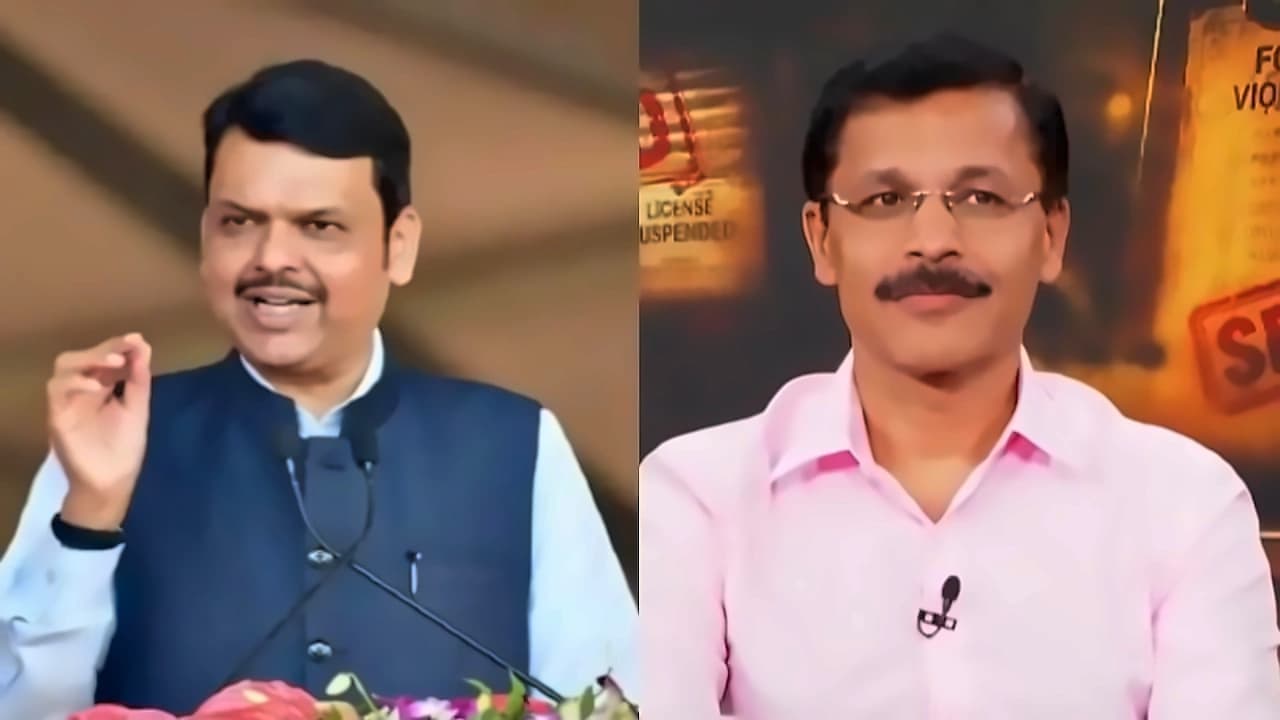
The Maharashtra government has moved the Bombay High Court challenging the constitutional validity of certain rules and orders issued by the Food Safety and Standards Authority of India (FSSAI). According to reports from The Indian Express, the petition was filed through Maharashtra Food and Drug Administration (FDA) Commissioner Tukaram Mundhe, who has been in the news for his crackdown on unsafe food handling and storage practices by major brands. Mundhe, known for taking strict action against food businesses and highlighting huge markups charged by hospitals on medicines and consumables, has said that the Centre has put restrictions on the powers of the commissioner and his officers.
At the centre of the dispute is an FSSAI order issued in May 2023, which restricted state officers from inspecting food businesses holding central licences. As reported by The Indian Express, Maharashtra has argued that this order undermines the authority of state-appointed food safety commissioners and creates confusion over who is responsible for enforcing food safety rules. The state has raised four key objections: creation of a parallel enforcement system, restriction of state powers, expansion of central licensing, and changes made without public consultation. A senior officer from a state food safety authority noted that "If you look at the Food Safety Act, there is no provision for the appointment of Central FSOs. It says that a FSO has to be appointed by a Commissioner of Food Safety, and the Commissioner of Food Safety is an officer appointed by the state government."
Food safety in India is governed by the Food Safety and Standards Act, 2006, which established the FSSAI to lay down science-based standards for food products and regulate their manufacture, storage, distribution, sale and import. According to The Indian Express, enforcement responsibilities are assigned to state authorities under Section 31(3) and Section 36, where designated officers are responsible for food safety administration in specified areas and can appoint Food Safety Officers (FSOs) for specific local areas. The Act empowers the Commissioner to appoint Food Safety Officers (FSOs) for specified local jurisdictions to carry out inspections and seizures in case of complaints or contraventions, with these FSOs reporting to the district-level Designated Officer.
In an order dated March 13, 2026, FSSAI revised the turnover limits for registration and state and central licences. As reported by The Indian Express, food businesses with an annual turnover of up to ₹1.5 crore can obtain a registration, those with turnover up to ₹50 crore require a state licence, and businesses above ₹50 crore require a central licence. This represents a significant increase from the previous structure where companies with annual turnover of ₹12 lakh needed registration, those with ₹12 lakh to ₹20 crore required state licence, and those with turnover of more than ₹20 crore needed central licence. The division matters because licensing category determines which authority is responsible for inspections and enforcement.
According to an official quoted by The Indian Express, coordination problems between central and state authorities have created difficulties. The official cited instances of central officers inspecting premises holding state licences and collecting samples that were subsequently handed over to state authorities, creating difficulties during prosecution because state officials may not have all necessary information. The FSSAI order dated May 12, 2023 stated that all centrally licensed food businesses must be inspected by Central FSOs, with state officers allowed to carry out inspections only in certain cases: when there is an incident or emergency where immediate action is necessary, when the state authority is carrying out special drives with prior permission, and in case of VIP duty where time is of the essence. Even in cases where inspection is carried out and samples collected by state food officers, the reports must be submitted to the Central licensing authority, with consequent proceedings and appeals undertaken by the Central authority.