State-run oil marketing companies have launched a comprehensive verification drive to reduce the liquefied petroleum gas subsidy burden by checking the annual income details of cooking gas consumers. According to reports from Mint, oil companies are sending warning messages to LPG users, stating that the subsidy may be permanently discontinued if the annual taxable income of either the consumer or their spouse exceeds ₹10 lakh. Consumers have been asked to respond within seven days to avoid possible cancellation of the benefit. The notices say objections can be raised through the toll-free helpline 1800-2333-555 or through the grievance portal of the concerned oil company.
The move follows tighter verification measures introduced by the Centre, under which OMCs are matching LPG customer data with records from the Income Tax Department. As reported by Mint, through this process, authorities are identifying consumers who continue to receive subsidies despite crossing the prescribed income threshold. At present, LPG consumers who are not in the income tax bracket and have linked their Aadhaar number with their bank account receive a subsidy of ₹24.50 on every cylinder delivered to their home. Under government rules introduced in December 2015, families with annual income exceeding ₹10 lakh are not eligible for LPG subsidy, with the rule applying to either the consumer or spouse.

To receive the LPG subsidy, consumers must meet specific conditions including having an active domestic LPG connection and the combined annual taxable income of the consumer and spouse must be below ₹10 lakh under the Income Tax Act. According to Mint, consumers are also required to link their Aadhaar number and bank account with the LPG connection under the Cash Transfer Compliant system. The subsidy amount is later transferred directly to their registered bank accounts after consumers book cylinders at market prices. Officials have warned that the rule may apply not just to personal income but also to combined family-linked income details available in official records.
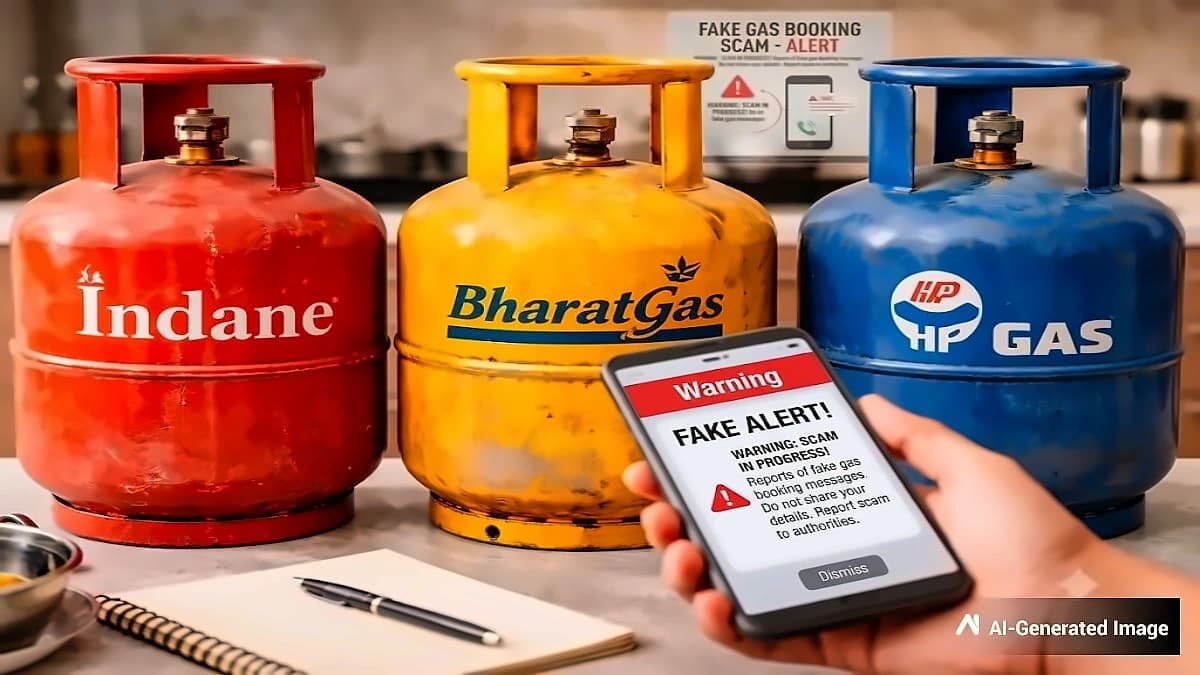
Oil companies have strengthened LPG delivery procedures by making the Delivery Authentication Code (DAC) system mandatory. As reported by Mint, under this system, LPG cylinders are delivered only after customers provide a verification code to the delivery agent. The DAC mechanism has been introduced to curb unauthorised diversion of LPG cylinders and ensure secure delivery to consumers. However, companies say cyber fraud attempts linked to fake DAC messages have also increased. HP Gas stated that genuine messages come from the official sender ID 'VM-HPGASc-S' and contain a four-digit OTP meant only for cylinder delivery, warning customers not to share OTPs over phone calls, WhatsApp messages or suspicious links.
Cyber experts and oil companies have advised consumers to stay alert against fake LPG delivery messages by first verifying whether they have actually booked a cylinder before trusting any SMS related to delivery. According to Mint, customers should check whether messages have been sent from official sender IDs such as 'VK-INDANE' or 'VM-HPGASc-S'. Oil companies have warned consumers about increasing cyber fraud involving fake delivery messages and OTP scams, urging consumers to remain cautious about fake delivery scams and fraudulent OTP requests. A similar advisory has also been issued by Bharat Petroleum Corporation Limited, with the DAC only to be shared when the delivery person arrives with the cylinder at the doorstep.