The Bombay High Court's ongoing hawkers litigation has exposed a fundamental governance failure that extends far beyond pavements and municipal enforcement. More than a decade after Parliament enacted the Street Vendors (Protection of Livelihood and Regulation of Street Vending) Act, 2014, Mumbai is still attempting to determine who is entitled to vend, where they may vend, and under what conditions. The Court's frustration is directed not merely at the presence of hawkers on public roads, but at the inability of public institutions to implement a statutory framework that was specifically designed to regulate them. The proceedings reveal two competing truths that must be reconciled: public spaces cannot be surrendered to unregulated occupation, while street vendors are workers operating within one of India's largest informal economies, many of whom entered official surveys and participated in statutory processes. The crisis confronting Mumbai is therefore not merely one of illegal hawking, but also the consequence of a regulatory framework that remained unfinished despite clear statutory mandates.
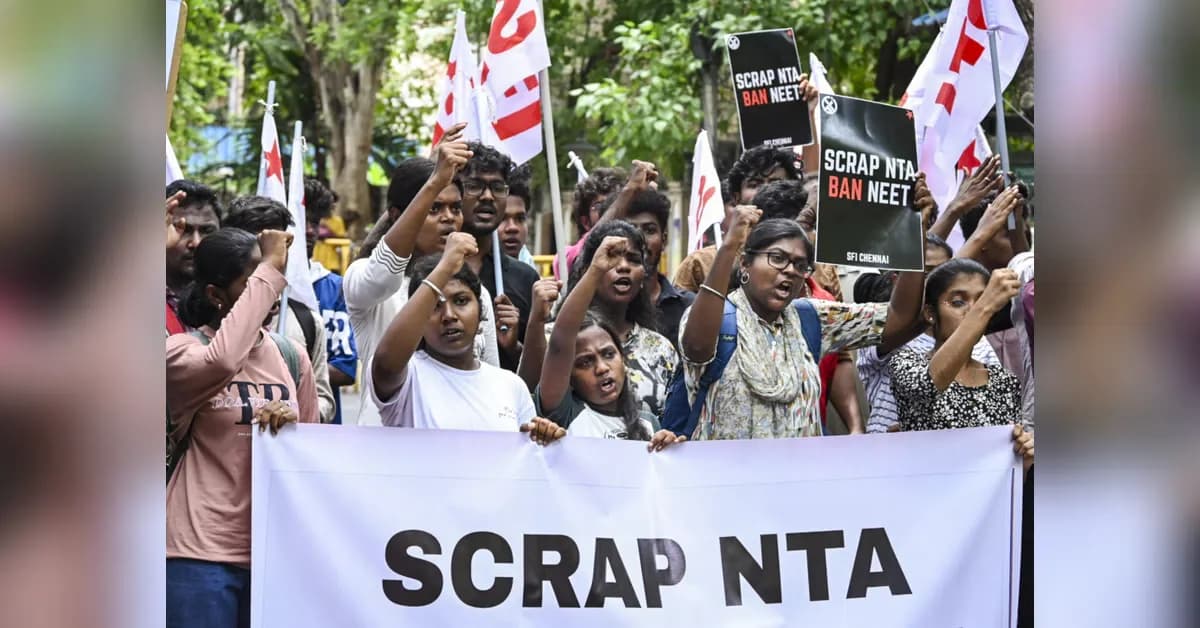
The government's temporary block on Telegram ahead of the NEET-UG 2026 re-examination has drawn criticism for misidentifying the source of the problem. According to Business Standard's editorial analysis, the paper leak originated from governance failures within the National Testing Agency, where individuals with authorised access allegedly compromised examination integrity rather than from the messaging platform itself. The editorial contends that invoking legal provisions to restrict Telegram risks treating distribution channels as the cause while leaving structural weaknesses untouched, arguing that reforming oversight, tightening safeguards, and addressing links with coaching networks should take priority over platform bans.
The continued absence of a final report on the Air India AI171 crash, one year after the disaster, is deepening uncertainty and denying closure to affected families. As reported by Business Standard's editorial, while investigations into complex aviation accidents require time, greater transparency about the inquiry's progress is necessary. Preliminary findings pointing to fuel-control switch movement, without definitive attribution or full cockpit transcripts, have encouraged competing theories and public speculation. With international norms favouring either a final report or an interim update within a year, authorities must release conclusive findings promptly to strengthen accountability and improve aviation safety.
The growing emphasis on ESG compliance by regulators, investors, and stakeholders has transformed industrial safety into a strategic governance issue. Companies that integrate safety, transparency, accountability, and sustainability into their governance structures are better positioned to prevent accidents, protect stakeholder interests, maintain regulatory compliance, and achieve long-term value creation. As India continues its industrial and economic expansion, strengthening ESG-oriented corporate governance will remain essential for building resilient, responsible, and sustainable enterprises. Industrial accidents not only result in loss of human life, environmental degradation, and property damage but also expose weaknesses in corporate governance structures and regulatory compliance mechanisms. Major industrial accidents can significantly damage a company's reputation, reduce shareholder value, trigger regulatory sanctions, and undermine stakeholder trust.

A decade of the Insolvency and Bankruptcy Code has entrenched an unjust hierarchy that sidelines operational creditors in favor of financial creditors, according to analysis by M S Sahoo and Raghav Pandey. They contend that legal changes and judicial deference to creditors' commercial wisdom have enabled lenders to control both insolvency outcomes and the distribution of proceeds, creating an inherent conflict of interest. The authors reject the economic and constitutional rationale for this distinction, arguing that suppliers, who are mostly small and medium enterprises, also assess risk and create value. International practice grants operational creditors greater participation, making India's framework unusually exclusionary.
The fatal Hauz Rani fire, nearly three decades after the Uphaar disaster, exposes not isolated failures but a persistent model of unsafe urban growth, as noted by Amit Kapoor. Drawing on personal experience, he contends that India's cities routinely prioritise density, speed, and rent extraction over safety and dignity. Informality is not an accident but an accepted mode of urban planning that leaves vulnerable residents with unsafe choices, with administrative responses remaining reactive rather than preventive. Lasting change requires civic accountability and a renewed demand for liveable, lawful cities, though Indian society appears to have collectively lost its sense of morality and protest capabilities.