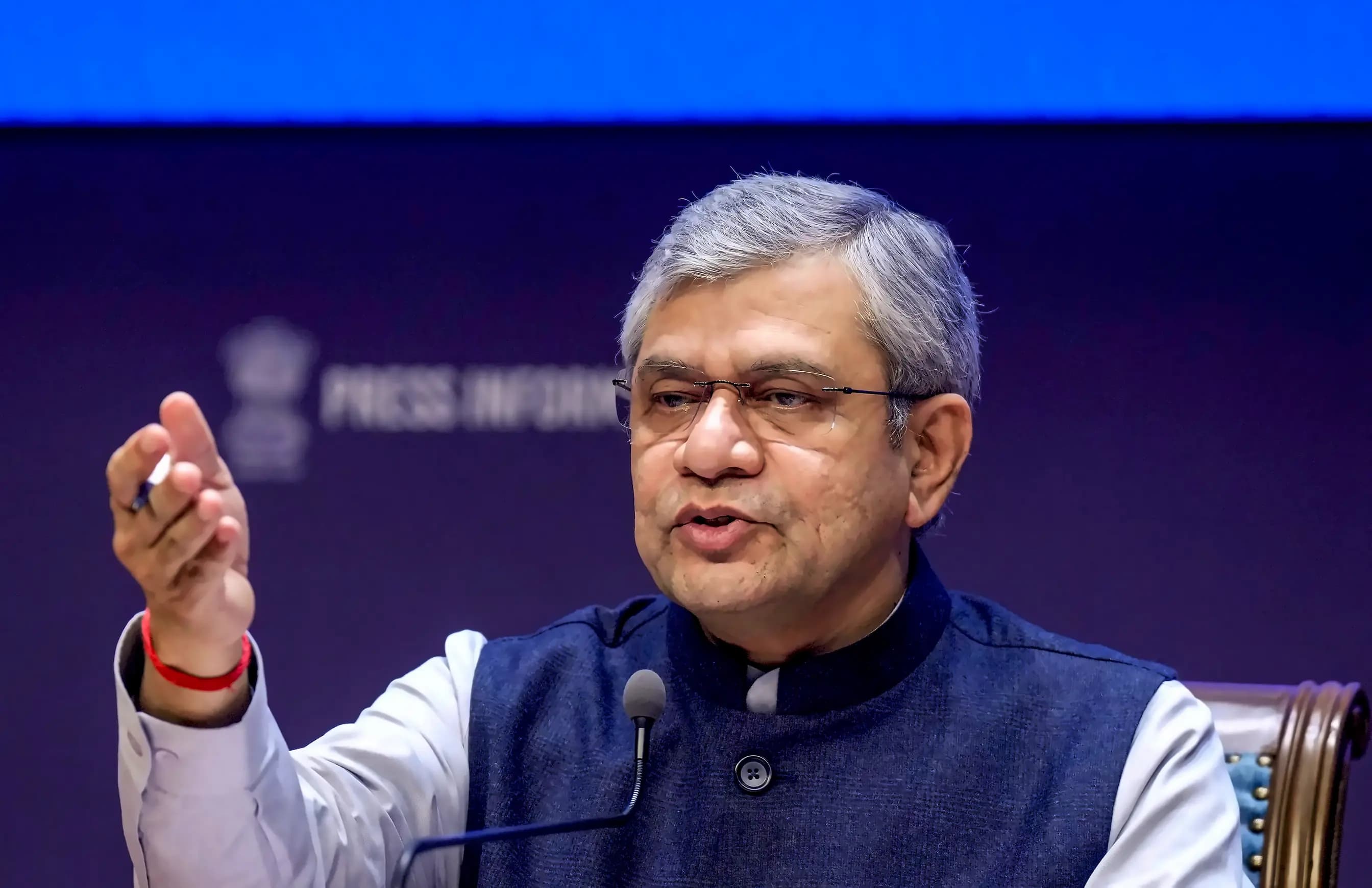
India is moving towards establishing a dedicated regulatory framework for artificial intelligence, with MeitY Secretary S Krishnan announcing on Friday that the time has come to draft dedicated AI regulations. Speaking at the CII Cybersecurity Summit, Krishnan revealed that the government is preparing to begin work on a draft regulatory framework for AI, even as it continues to rely on existing legal provisions to address immediate concerns. "It is a conversation which has commenced, and my Minister (IT Minister Ashwini Vaishnaw) and I have both been on record earlier that we will look at AI regulation when the time is right, and it appears that the time is getting right, and we will start looking at it," Krishnan stated. The IT Secretary emphasized that while the existing provisions of both the Information Technology Act, 2000, as well as the Information Technology (Intermediary Guidelines and Digital Media Ethics Code) Rules, 2021, have so far proven sufficient to address concerns around deepfakes and synthetically generated content, "now, probably the time has come to look at separate legislation."
As reported by Business Standard, Krishnan explained that the current information technology law was framed much before the rapid emergence of Artificial Intelligence (AI) and may require a new legal framework to deal with the changing landscape. When asked about timelines for bringing out new AI regulation, the IT secretary stated that as a ministry, they can prepare draft legislation, but the final timing depends on various factors. Union Minister Ashwini Vaishnaw had previously indicated that discussions are ongoing with the industry, with the government seeking to strike a balance between innovation and regulation. In 2023, MeitY had informed Parliament that it was not considering a separate law to regulate artificial intelligence, maintaining that the existing legal framework was adequate to address emerging concerns. However, earlier this year, Union Electronics and IT Minister Ashwini Vaishnaw acknowledged that India's legal framework may need to evolve, stating that "the world of AI is very different from the world when the IT Act was enacted in 2000." The latest remarks from Krishnan in December 2025 indicate that consultations with industry on mandatory labelling of AI-generated content have concluded and that revised rules would be notified soon.
The Centre has proposed stricter disclosure norms for AI-generated content, with IT rules requiring clear and continuous labels identifying synthetically generated information to be visible throughout the entire duration of visual display. According to the IT Ministry, deepfake videos, AI-generated audio and other forms of synthetic media pose growing risks by enabling the spread of convincing false information. The amendments have defined AI-created or altered content that appears real or authentic, while excluding routine editing, accessibility improvements, and good-faith educational or design work from the definition. Under the proposed amendments, online platforms would be required to label AI-generated or altered content using visible markers or metadata. For visual content, the disclosure would have to cover at least 10% of the screen, while audio content would need to include a disclosure within the first 10% of the clip. These measures address global challenges posed by generative AI, including deepfakes, misinformation, and online harms.
India has been implementing stricter IT rules to crack down on AI deepfakes, with the government bringing in stricter obligations for online platforms on handling AI-generated and synthetic content in February. The amendments to the Information Technology (Intermediary Guidelines and Digital Media Ethics Code) Rules, 2021 formally define AI-generated and synthetic content, covering audio, visual or audio-visual information and synthetically-generated information. These rules require platforms such as X and Instagram to take down AI content flagged by competent authorities or courts within three hours. The government notified amendments that defined "audio, visual or audio-visual information" and "synthetically-generated information," covering AI-created or altered content that appears real or authentic, while excluding routine editing, accessibility improvements, and good-faith educational or design work from the definition.
According to the IT Ministry, deepfakes and AI-generated media pose critical risks, including major electoral and financial harm through the potential to influence elections, spread convincing misinformation, and facilitate financial fraud. Additionally, these technologies present severe social risks, particularly in their ability to damage personal reputations and disrupt digital safety across the board. To help shape the upcoming rules, the government is expected to constitute specialized advisory bodies as policymakers grapple with the proliferation of generative AI and the systemic risks posed by synthetic content. For India's AI startups, the discussion is less about regulation itself and more about regulatory certainty. As AI applications move deeper into banking, healthcare, manufacturing, education and public services, founders increasingly need clarity on issues such as compliance, accountability and responsible deployment. A well-defined legal framework could provide greater certainty for startups building AI products, enterprises adopting AI solutions and investors backing the sector, while also helping Indian AI companies build greater trust in global markets where customers are placing increasing emphasis on responsible AI governance.