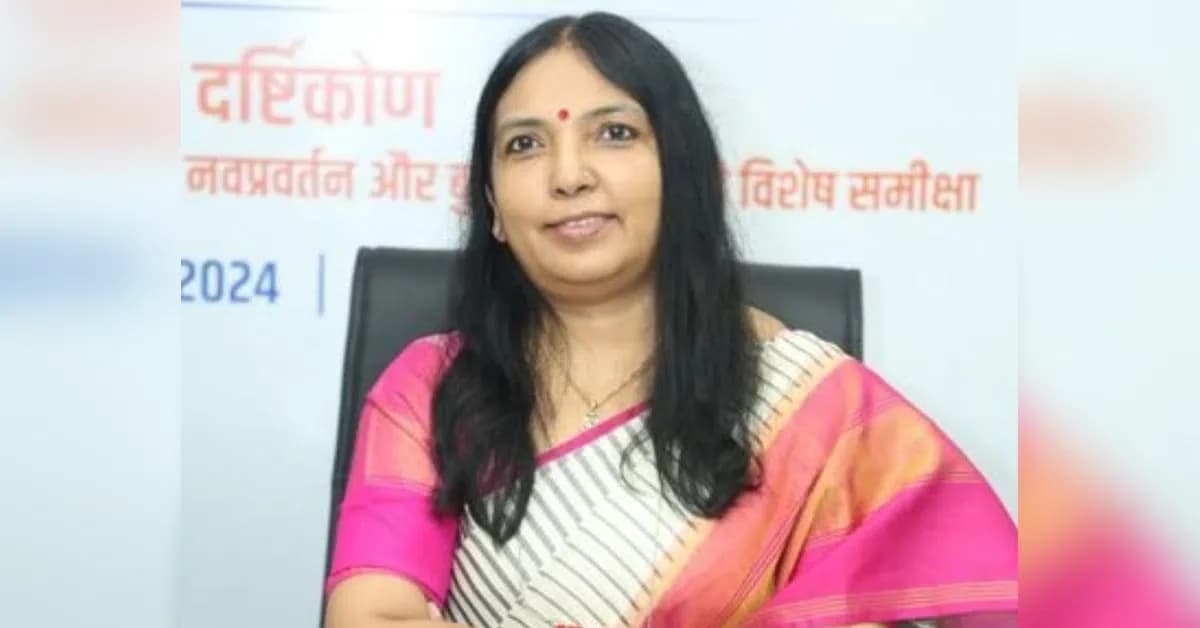
India will chair the ninth session of the Intergovernmental Group of Experts on Consumer Protection Law and Policy, scheduled to take place at the Palais des Nations in Geneva from July 6 to 8, 2026. According to the Consumer Affairs Ministry, Nidhi Khare, Secretary, Department of Consumer Affairs, will preside over the three-day deliberations and steer discussions among member states on key global priorities in consumer protection. The session is organized by the United Nations Trade and Development (UNCTAD) and will bring together member states, international organizations, consumer protection authorities, academics, and other stakeholders to discuss emerging issues in the field. Meanwhile, Union Minister of State Kirti Vardhan Singh will lead the Indian delegation at the inaugural United Nations Global Dialogue on AI Governance, scheduled for July 6-7, 2026 in Geneva. As per the Ministry of External Affairs, Singh is leading an Indian delegation to Geneva, Switzerland, for this crucial forum, with the ministry noting that "in line with the terms of reference and modalities adopted in August 2025, the Co-Chairs had also held several stakeholder consultations, including one in-person consultation held on the sidelines of the AI Impact Summit held in New Delhi in February 2026."
Among the highlights of the consumer protection session, the ministry highlighted the launch of the United Nations Principles for Consumer Product Safety, adopted by the UN General Assembly in December 2025. A high-level fireside chat titled "Why the Principles Matter" will also be held, with India among the participants. Other agenda items include the implementation of the United Nations Guidelines for Consumer Protection (UNGCP) by member states, discussions on consumer information and education, sustainable consumption, enforcement of consumer protection laws in global markets, and cross-border consumer disputes. The AI governance dialogue will feature thematic discussions around four clusters covering AI's social and economic implications, bridging AI divides, safe and trustworthy AI and human rights in the AI context. The Global Dialogue on AI Governance is a universal, multi-stakeholder UN forum established under General Assembly Resolution 79/325, following the Global Digital Compact adopted as part of the Pact of the Future in September 2024. The first session will receive the annual report of the Independent International Scientific Panel on AI (IISPA), providing the first independent scientific assessment of AI capabilities and emerging opportunities. According to the UN website, "Artificial intelligence is reshaping economies, societies, and daily life. Its opportunities are real. So are its risks. No country can address either alone. The AI Dialogue exists to ensure that governance reflects the priorities of all nations, not just the most technologically advanced and that the benefits of AI are shared by all."
The ministry reported that India's National Consumer Helpline (NCH) has helped secure refunds of more than ₹91.77 crore across 36 sectors over the past fourteen months, resolving over 1.47 lakh refund-related grievances before they escalated to litigation. According to the ministry's statement, the department has expanded e-Jagriti, an AI-enabled digital platform that allows consumers to file complaints online, attend virtual hearings, and access case records electronically. The platform is designed to allow non-resident Indians and consumers based abroad to pursue complaints digitally, aiding cross-border dispute resolution. Recent consumer disputes cases include a ₹10,729 refund ordered by the District Consumer Disputes Redressal Commission in Vizianagaram for rooftop solar billing issues, and a ₹15,000 compensation awarded by the Madhya Pradesh State Consumer Disputes Redressal Commission against BSNL for failing to restore a customer's landline connection.
Addressing the UN Global Dialogue on AI Governance, Minister of State Kirti Vardhan Singh emphasized India's commitment to responsible AI governance, stating that "India firmly believes that responsible AI governance must rest on strong foundational principles: preserving human oversight, upholding human rights, and preventing its misuse." He highlighted that these principles, reflected in the recent India AI Impact Summit, are essential to ensuring that AI systems operate across borders in an ethical, secure and beneficial manner. Singh emphasized India's approach through its National Strategy for AI and National AI Governance Guidelines, which embody the philosophy of "AI for All"--inclusive growth for everyone without stifling innovation. However, he stressed that developing countries need greater support to participate meaningfully in shaping global AI rules, stating "For the Global South to participate meaningfully in AI governance, we must first close the glaring capacity gaps that exist today." Emphasizing the importance of multilateral cooperation, Singh said "Machines do not quarrel over borders, ideology, or pride; humans do. AI governance structure must reflect unity of purpose, and our divisions should not allow technology to outrun diplomacy." He called the Global Dialogue a defining moment, saying "This Global Dialogue is not merely a forum; it is a deciding forum. Let this be the moment for us to choose consensus over conflict, before the choice is no longer ours to make."