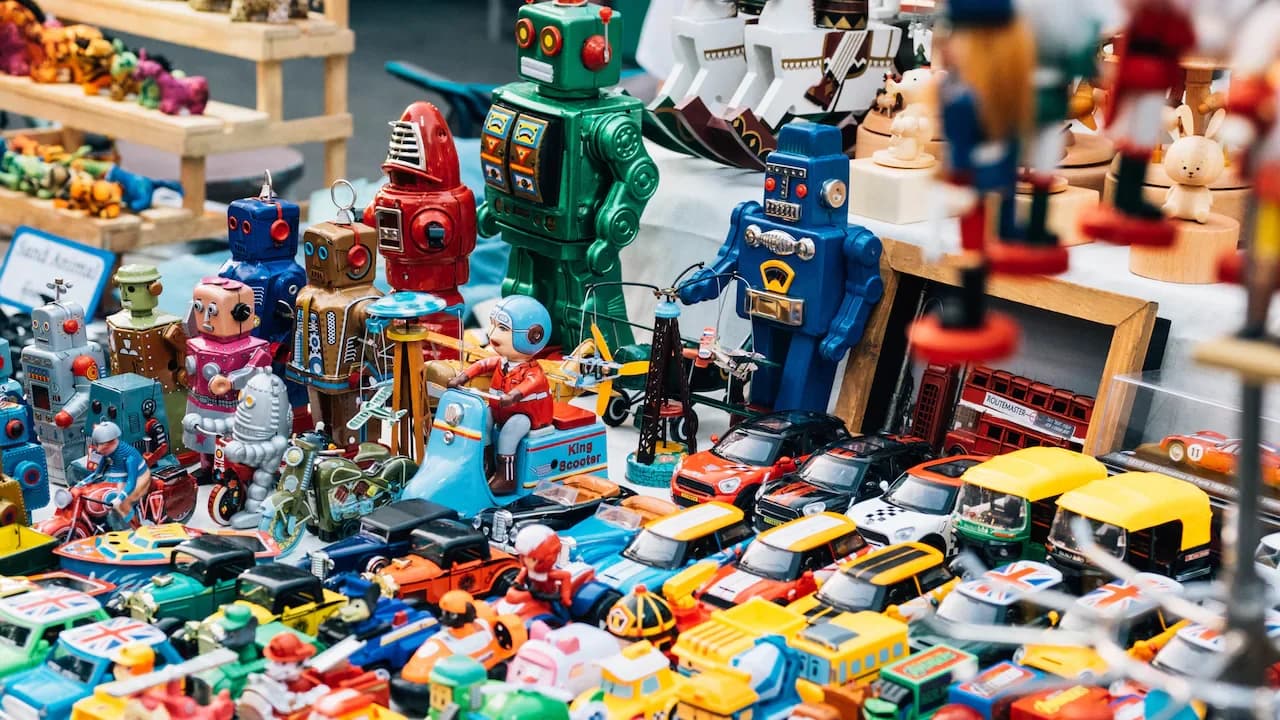
Finance Minister Nirmala Sitharaman has urged the Indian toy industry to aspire for a quarter of the global toy market, which is projected to reach $179 billion by 2032. Addressing the 17th Toy Biz International B2B Expo 2026 organised by the Toy Association of India in New Delhi, Sitharaman emphasized that India's toy market is projected to reach $5 billion by 2034, but noted that the global growth trajectory demands more ambitious targets. The minister stressed that India's toy exports reached $186 million in FY2025-26, with Indian-made toys now being shipped to 153 countries globally. Speaking at the event, Sitharaman highlighted that this remarkable transformation reflects the government's sustained push towards quality manufacturing, innovation and self-reliance. However, she acknowledged that "We are still aiming at only $5 billion by 2034. I think we are capable of doing a lot better. We have immense potential to capture; at least aim for one quarter of it ($179 billion)."

The Modi government is providing comprehensive support to Indian toy manufacturers through multiple initiatives to help them scale up, export and compete globally. As reported by Business Standard, the government is supporting toymakers through remission of duties and taxes on exported products, collateral-free loans for budding and small-time entrepreneurs under the PM Mudra Yojana and support through the Scheme of Fund for Regeneration of Traditional Industries. Sitharaman emphasized that these support programs are "empowering Indian toy manufacturers to scale up, export and compete globally." The minister specifically highlighted that "while manufacturing is important, branding creates value," exhorting toymakers to create quality products and focus on branding to capitalize on global market opportunities.
The minister highlighted that duty-free access for Indian toys to the United Arab Emirates and Australia under their respective trade agreements with India should provide additional impetus to the toy sector. As reported by Business Standard, this trade facilitation is expected to enhance India's competitive position in international markets and support the sector's growth trajectory. The government's strategic approach to trade agreements has created new export avenues for Indian toy manufacturers, positioning them competitively in global markets.
The government has implemented comprehensive quality control measures to strengthen the domestic toy manufacturing sector. According to reports from Business Standard, the Bureau of Indian Standards intensified its enforcement to ensure only genuine, safe toys enter the market. Sitharaman emphasized that these measures have sent an unambiguous signal that India is committed to providing quality toys for children, with the government not allowing unsafe toys to enter airports and shopping centres. The minister noted that these quality control initiatives have been instrumental in driving the sector's transformation and establishing India as a reliable global toy supplier. Sitharaman specifically highlighted that "toy imports were earlier concentrated from one country, which was dumping a lot of their cheap goods that had safety issues and were not healthy for children."
Following the duty hike and quality control measures, India's toy imports declined by 71% in FY26 compared with 2019, as reported by Business Standard. The sector's remarkable recovery is evident in the 71% decline in toy imports over the past seven years, demonstrating the effectiveness of government policies in encouraging domestic manufacturing. India's toy exports have shown consistent growth, with the $186 million export figure in FY2025-26 representing the sector's expanding global footprint. The government has raised the basic customs duty on toys to 60% from 20% in 2020 to encourage domestic manufacturing and curb dumping. Sitharaman emphasized that "the sector's remarkable recovery is evident in the 71% decline in toy imports over the past seven years, demonstrating the effectiveness of government policies in encouraging domestic manufacturing."