Steel Secretary Sandeep Poundrik announced that India will put its new National Steel Policy in the public domain for stakeholder consultation within about one week. As reported by Business Standard, the draft policy will replace or update the framework set out under the National Steel Policy of 2017 and will align the sector's capacity, technology and raw-material requirements with the government's Viksit Bharat 2047 target. The policy represents a substantial increase from the target under the National Steel Policy 2017, which envisaged crude steelmaking capacity of 300 million tonnes by 2030-31. The existing policy also targets crude steel production of 255 million tonnes, finished-steel demand and production of 230 million tonnes, and per-capita finished-steel consumption of about 160 kg by 2030-31. The proposed policy will provide a roadmap for the steel sector up to 2047 and take into account issues that were not as prominent when the 2017 policy was formulated, including artificial intelligence, machine learning, technology upgradation, decarbonisation and sustainability.
Under the proposed policy, India is expected to have more than 600 MT of steel capacity by 2047, while consumption is estimated at more than 500 MT. As per Business Standard, about 45 MT of this capacity is expected to be accounted for by exports, either directly or through steel embedded in manufactured products. Steel Secretary Sandeep Poundrik said steel consumption was growing faster than capacity and projected construction to remain the country's largest steel-consuming sector by 2047, with automobiles also emerging as a major source of demand. India's steel consumption has grown faster than capacity over the past four years, with consumption growing at 11 per cent compared with capacity growth of more than 9 per cent. A NITI Aayog study on India's Viksit Bharat pathway has projected total steel consumption at about 568 million tonnes by 2047, compared with 127 million tonnes in 2023.
The Steel Ministry has instructed its major undertakings SAIL and NMDC to explore mineral assets abroad to secure long-term raw material requirements and reduce input costs. According to a senior ministry official, this initiative will help secure future requirements and reduce costs without sharing further details. SAIL is India's largest public sector steel-making entity, while NMDC is the country's leading iron ore player. While iron ore is available in abundance domestically, Indian steel makers, including SAIL, remain heavily dependent on imports for 85-90 per cent of their coking coal requirements from countries such as Australia and Mozambique. Similarly, limestone is also imported from the West Asia region. This strategic move follows private steelmaker JSW Steel's acquisition of coking coal assets abroad as part of its plan to achieve 50 per cent of its raw material requirements through captive sources.
The proposed National Steel Policy will include measures aimed at discouraging cheap and sub-standard steel imports, including the use of trade remedies such as safeguard and anti-dumping duties. India imposed a 12% safeguard duty on select non-alloy and alloy flat steel products in April 2025 following an investigation into rising imports. The Steel Ministry has also expanded quality-control orders requiring specified steel products sold in India, including imports, to comply with Bureau of Indian Standards norms. Separately, the Directorate General of Trade Remedies in June 2026 opened an anti-dumping investigation into imports of hot-rolled flat products of alloy and non-alloy steel from China, Japan and Russia, which remains under way. However, Steel Secretary Sandeep Poundrik said the government is not currently considering a higher safeguard duty, stating that the existing three-year safeguard duty appeared to be working effectively.
The government plans a ₹5,000 crore Viksit Bharat Ispat scheme for small steel producers, with incentives linked to output and lower carbon emissions. As reported by Business Standard, the scheme is likely to be approved by the competent authority in the near future. For larger steel producers, the government is moving towards mandatory emissions reduction through the Carbon Credit Trading Scheme (CCTS), which is expected to be notified very soon. Under the proposed policy, India is expected to require more than 700 MT of iron ore by 2047, prompting plans to secure access to high-grade reserves through foreign assets and joint ventures. The government has also approved the carbon capture, utilisation and storage (CCUS) mission, with the steel sector expected to be an important part of it. The Steel Ministry released India's Green Steel Taxonomy in December 2024, defining thresholds for classifying lower-emission steel, and has outlined a roadmap covering renewable energy, green hydrogen, energy efficiency and carbon capture.
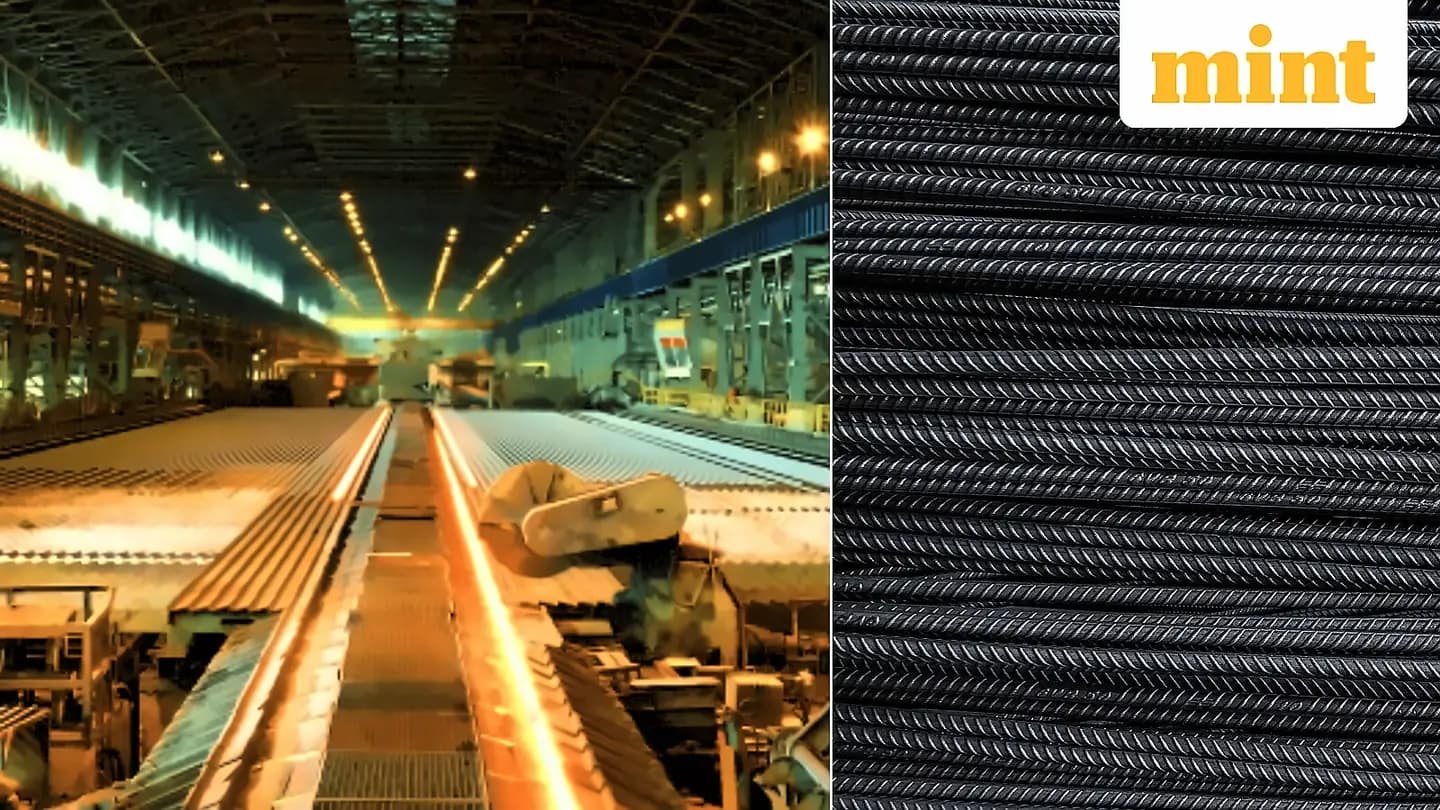
Indian steel prices are expected to rise further in the coming weeks due to a post-monsoon pickup in infrastructure and automotive demand, according to executives and analysts. Higher coking coal costs are also lifting production costs for mills, creating additional pressure on pricing. The proposed National Steel Policy will focus on improving the competitiveness of domestic steelmakers, particularly smaller producers, on both technology and costs. The government has notified the constitution of a Steel Industry Safety Council following accidents at steel plants, including RINL and SAIL, which will be chaired by the Steel Secretary and include chairmen and managing directors of integrated steel plants. The Steel Ministry is also studying the impact of the European Union's 1.6 MT steel quota for India before taking up the issue with concerned governments, as some grades cannot be exported in sufficient quantities while India could export more than the quota in certain other grades.