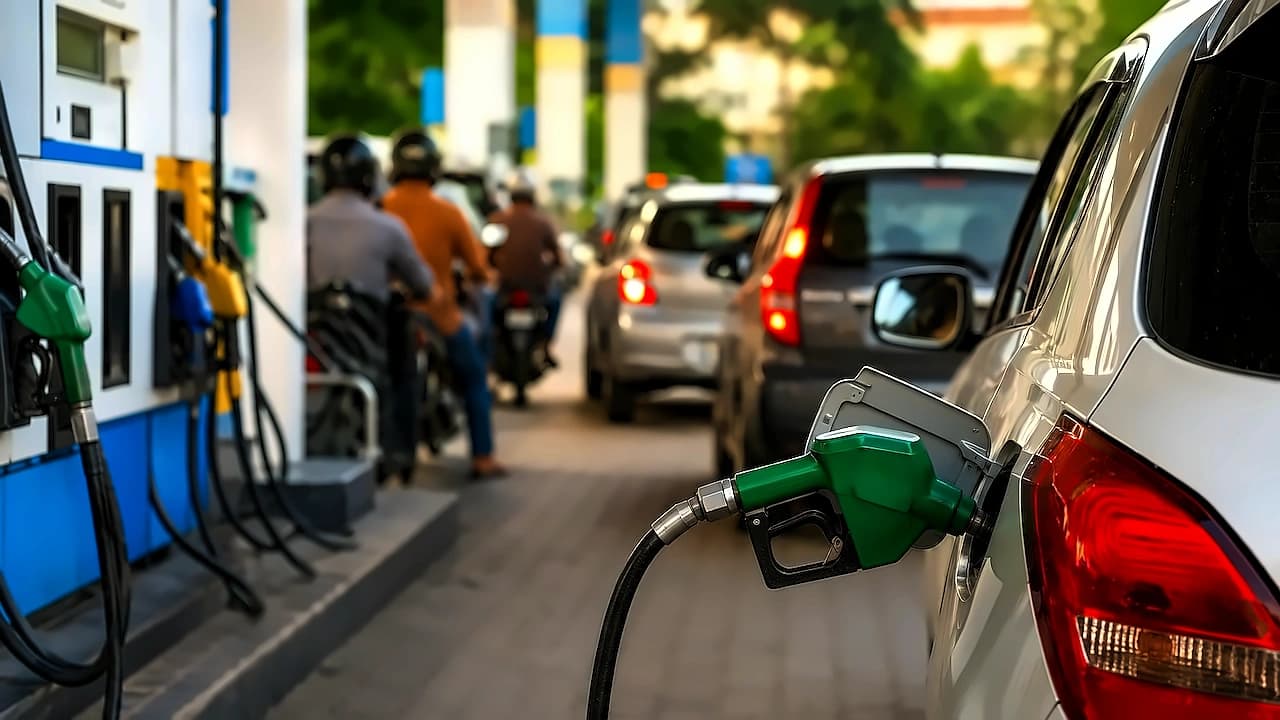
The government has increased windfall gains tax on exports of diesel and aviation turbine fuel (ATF) while maintaining the levy on petrol for the fortnight beginning June 16. According to reports from The Hindu BusinessLine, Business Standard, Upstox, Goodreturns, and Zee News, the special additional excise duty (SAED) on diesel exports will be ₹14 per litre, up from the current ₹13.5 per litre. Similarly, SAED on ATF exports will be ₹12.5 per litre, increased from the previous ₹9.5 per litre. The Finance Ministry announced these duty hikes in a notification on Monday, with the revised rates effective from June 16, 2026. As per The Hindu BusinessLine, there is no change in the existing duty rates on petrol and diesel cleared for domestic consumption. The export duty on diesel has been increased to ₹14 per litre from ₹13.5 per litre, while the levy on ATF has been raised to ₹12.5 per litre from ₹9.5 per litre. The export duty on petrol remains unchanged at ₹1.5 per litre. The latest revision comes after the government had reduced export duties on petroleum products effective June 1, 2026, when the SAED on petrol exports was cut by half to ₹1.5 per litre from ₹3 per litre, while diesel was lowered to ₹13.5 per litre from ₹16.5 per litre and ATF to ₹9.5 per litre from ₹16 per litre.
Since the US-Israel-Iran war, petrol prices in India have witnessed significant and back-to-back hikes in May 2026. According to Goodreturns, the last hike in petrol prices was in the range of ₹2.46 to ₹2.95 per litre with effect from May 25, 2026. Prior to this, petrol prices were raised by ₹0.87 to ₹1.46 on May 23, and earlier were hiked by ₹0.82 to ₹1.71 per litre. OMCs began hiking petrol prices for the first time since April 2022, by ₹2.82 to ₹3.39 per litre on May 15, 2026. Current petrol prices across major cities include ₹102.12 in New Delhi, ₹113.47 in Kolkata, ₹111.21 in Mumbai, and ₹107.88 in Chennai. Diesel has also become costly due to the West Asia war, with the latest round of hike being ₹2.57 to ₹3.03 per litre on May 25, followed by ₹0.87 to ₹1.45 per litre on May 23. Current diesel prices range from ₹95.20 in New Delhi to ₹104.42 in Thiruvananthapuram. The windfall tax hike is expected to further impact fuel prices as companies face increased compliance costs. However, Oil Marketing Companies (OMCs) kept retail fuel prices unchanged on June 16 despite ongoing volatility in international crude markets, offering some relief to consumers after a series of price increases over recent weeks.
The windfall tax hike on ATF is expected to significantly impact airline operations, with jet fuel prices increasing by over 10% from ₹104.927 per litre to ₹115 per litre under the new price stabilization regime. According to PTI reports, this rate will be locked for three years for airlines participating in the government-backed scheme, while non-participating airlines will face market-linked fares around ₹142 per litre. Airlines like IndiGo, Air India, and Akasa Air may pass these increased costs to customers, with jet fuel accounting for approximately 60% of total airline expenses. The West Asia conflict has already disrupted operations, with thousands of flights delayed or cancelled, further impacting passenger loading factors and airline profitability. Aviation bodies have stated that airlines were facing collapse due to ATF price hikes, prompting the Union Cabinet to approve a ₹10,000 crore price stabilization scheme on June 4th.
Under the new price stabilization scheme, the government will provide interest-free advances to Oil Marketing Companies (OMCs) to supply ATF to participating Indian airlines at predetermined and stable prices for both domestic and international operations. As reported by PTI, whenever international ATF prices rise above the benchmark level, the corpus will compensate OMCs for the difference. When fuel prices moderate, the differential amount will be recovered from OMCs and returned to the Consolidated Fund of India through a transparent true-up mechanism. This arrangement is designed as a temporary stabilization measure rather than a subsidy, ensuring full accountability and monitoring. Since April 1, 2026, airlines pay ₹1,04,927 per litre for jet fuel in Delhi, while rates vary across cities: ₹1,09,450 in Kolkata, ₹98,247 in Mumbai, and ₹1,09,873 in Chennai.
As per Tata Capital analysis, windfall taxes create significant impact on Oil Marketing Companies (OMCs) like BPCL, IOCL, and HPCL. A windfall tax is a temporary levy that governments impose on companies that earn unexpected profits due to sudden market changes or external factors. When India introduced the windfall tax on domestic crude oil producers and fuel exporters, it lowered profit margins for these companies, making their financial performance less attractive. The tax also created uncertainty, leading to potential delays in investment and expansion plans. From a market viewpoint, the tax helped stabilize oil prices by preventing companies from taking advantage of high prices. It made Indian fuel exports less competitive, which can lead to a decrease in export volume. Oil marketing companies are expected to be in focus on Tuesday as they navigate the increased compliance costs from the windfall tax hike. According to Business Standard, as of June 15, India's state-run oil marketing companies are incurring under-recoveries of ₹3 per litre on petrol sales and ₹27 per litre on diesel in the domestic market, with losses on domestic LPG sales as high as ₹700 per cylinder.