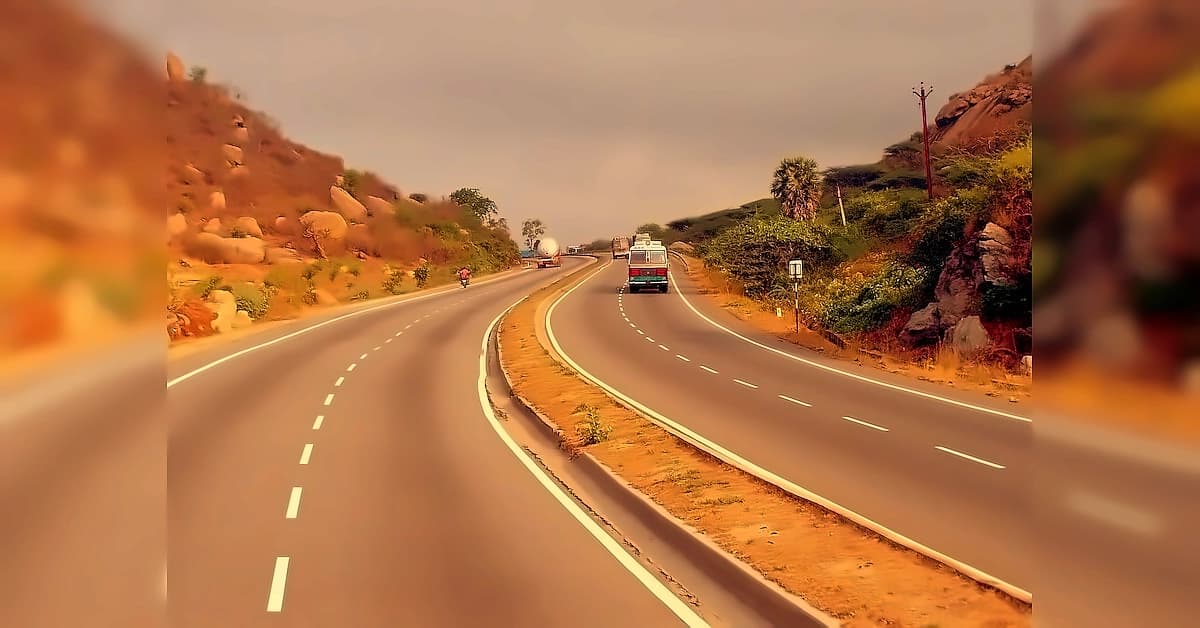
India is experiencing a comprehensive infrastructure transformation that is reshaping its economic landscape. The country has electrified 100% of its railway network, achieving a remarkable feat that places it alongside Switzerland as one of the world's most electrified rail systems. During the 2022-23 financial year, Indian Railways connected 6,565 kilometres of track, with the entire Western Dedicated Freight Corridor now fully electrified by January 2026. This rail revolution has enabled containers to travel from Mumbai to industrial cities like Dadri and Khurja in Uttar Pradesh in just one day, compared to the previous three to four days before electrification. The government has also approved ₹1.66 billion for a state-backed container shipping company and earmarked ₹7.7 billion over the next decade for maritime development, including the construction of deep-draught mega-ports like Vadhaven scheduled for completion in 2034.
HCLTech is significantly expanding its AI footprint in India with two major initiatives in Odisha, including an AI data centre at the upcoming Odisha Sovereign AI Park and a Global Technology Centre in Bhubaneswar. The company has signed an agreement with the Government of Odisha to establish a Global Technology Centre that will house 5,000 employees and is planned to begin operations by 2028. According to HCLTech COO Rahul Singh, the centre is part of the company's New Vistas initiative aimed at expanding its presence across India and bringing technology opportunities closer to emerging talent hubs. The planned capital outlay for the data centre project is ₹14,257 crore, including financial assistance from the Odisha government.
The economic partnership between India and the United States continues to expand despite the absence of a bilateral trade agreement, according to USISPF President and CEO Mukesh Aghi. Speaking to ANI, Aghi noted that trade and investment flows are growing steadily between the two countries, with American companies deepening their presence in India through Global Capability Centres (GCCs). Nearly 60% of these centres are American and are developing high-end products to improve global competitiveness, demonstrating the strength of bilateral economic ties. As Aghi emphasized, "You can see the Global Capability Centres- almost 60% are American, and they are innovating high-end products for the US companies so they can be efficient and effective and competitive in the global world. So if a trade deal happens, great, but without the trade deal, the economic partnership continues between the two countries."
While negotiations on the proposed India-US trade agreement have been underway for some time, Aghi declined to speculate on when the deal could be concluded. However, US Secretary of State Marco Rubio and External Affairs Minister S Jaishankar held talks in Manila on July 22 focusing on the urgency of finalising an interim bilateral trade deal. According to a US State Department readout attributed to Spokesperson Tommy Pigott, the two leaders discussed advancing bilateral commitments made during talks between US President Donald Trump and Prime Minister Narendra Modi last year. "The Secretary and Minister Jaishankar agreed on the importance of finalising the interim trade deal, which is almost complete," the readout added, with trade being a key area of discussion. Aghi noted that "We have been talking about this for some time, so I would not jump in and predict that it's going to close in a month or whatever it is. But one thing is, with or without the trade deal, the trade between the two countries is going up. The investment from Indian companies in the US is going up."
The United States unveiled fresh tariff slabs of 10 and 12.5% on several economies under its Section 301, with India placed in the lower 10% tariff category. Aghi explained that initially it was going to be 12.5%, but India secured the lower rate following productive discussions on labour practices. He noted that "Initially it was going to be 12.5 per cent, and then India certified that it does not have that clause, and made it into a legal verdict itself. So what we are seeing is that India's tariff is now 10 per cent, as compared to other countries, which is at 12.5 per cent. It is, I would say, better than 18 per cent, which they were talking about." He stressed that tariffs ultimately increase costs for American consumers, emphasizing that "But at the end of the day, tariffs--who pays for it? It is going to be the American consumer. So I think India's position is: give us preferential tariffs so we can be more competitive against the neighbouring countries themselves."

The expert analysis proposes that expanding manufacturing, exports, trade and commercial services from the current 65-70% contribution by 10-15 percentage points could accelerate job creation and gross national product growth. According to Business Standard, this would require a comprehensive approach covering internal trade, exports, manufacturing, and innovation to achieve the desired scale. The analysis suggests that India needs 10,000 enterprises of scale without being burdened by hundreds of regulations across multiple government departments, as the country currently has 65 million enterprises but only 200 receive media attention.
India requires a fundamentally different approach to unlock business growth, according to expert analysis published by Business Standard. The country currently has 65 million enterprises, but only 200 receive media attention, highlighting the concentration of business reporting. As reported by Business Standard, the analysis suggests that India needs 10,000 enterprises of scale without being burdened by hundreds of regulations across multiple government departments. Despite progress in reducing corruption, with the Central Bureau of Investigation reporting just over 7,000 pending cases in late 2025, compared to over 9,000 cases a few years ago, India still ranks 91st on Transparency International's Corruption Perception Index, roughly halfway through the scale.