India's AI compute infrastructure has expanded significantly beyond initial targets, with over 38,000 GPUs now available through the broader compute ecosystem at subsidised rates, compared to the original target of 10,000 GPUs. The IndiaAI Mission, backed by an outlay of more than ₹10,000 crore, has created a shared national compute infrastructure with compute access available at around ₹65 per GPU hour, which is considerably below international market rates. The programme offers subsidised access to GPUs for startups, researchers, educational institutions and other eligible users, with the IndiaAI Compute Portal allowing applications from startups, MSMEs, researchers, academic institutions, government agencies and other approved entities.
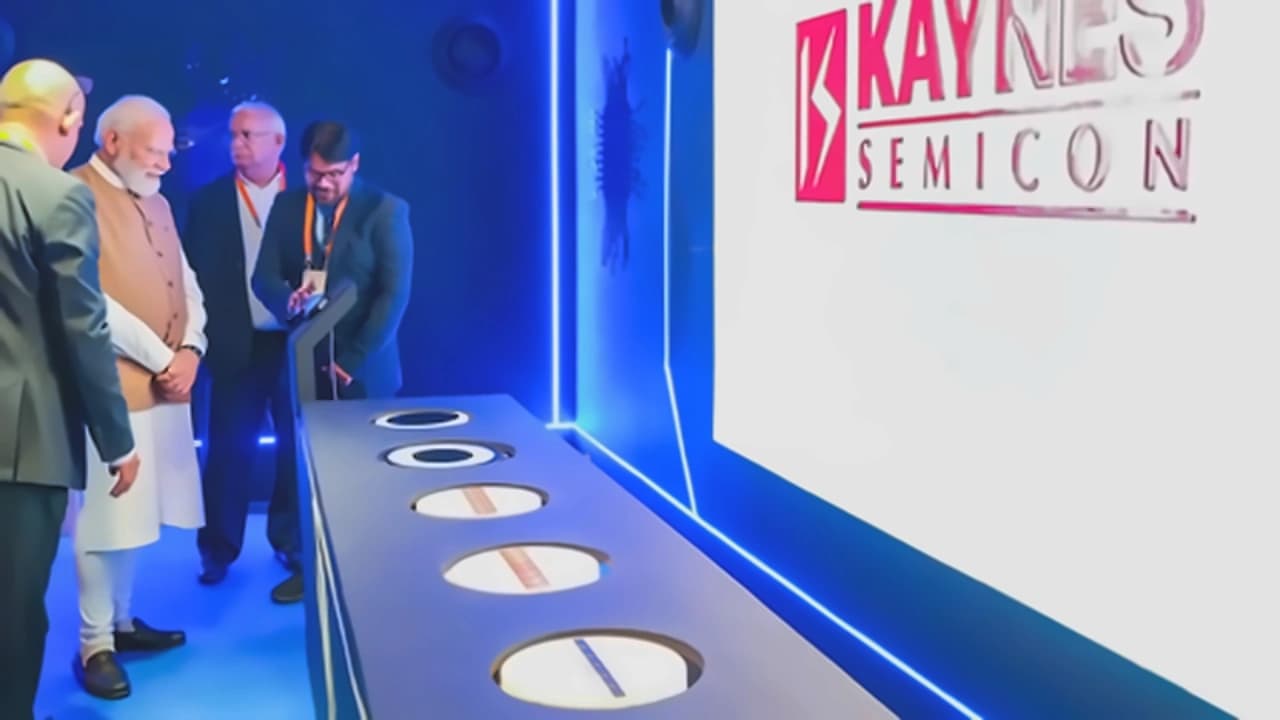
Under the India Semiconductor Mission (ISM), 12 semiconductor manufacturing projects have been approved with an investment pipeline of approximately ₹1.64 lakh crore, comprising one semiconductor fabrication unit, two compound semiconductor fabrication units and nine packaging units, according to an official fact-sheet. The approval comes as part of India Semiconductor Mission 2.0, announced in the Union Budget 2026-27, which signals a deepening of the national commitment to chip manufacturing with focus on semiconductor equipment, materials, indigenous intellectual property and resilient supply chains. As of June 2026, these projects are creating a robust ecosystem for semiconductor and electronics manufacturing across the country.
The AI Foundation Model pillar now hosts over 12,519 datasets, 307 AI models and 20 toolkits, making AI development resources openly accessible to researchers, startups and institutions across the country. Twenty AI solutions have been deployed across 12 sectors through challenges, hackathons and in-house development. To ensure AI capability reaches beyond metropolitan centres, 27 Data and AI Labs have been established across tier 2 and 3 cities, 684 Fellowships awarded to students, and 8.4 million learners supported through the YUVA AI course, according to the government statement. The IndiaAI Mission has also made significant strides in semiconductor design, with 24 projects being supported under the Design Linked Incentive Scheme, 105 companies assisted with advanced chip design tools, and 23 design tapeouts completed at various foundries, including at advanced nodes.
According to industry experts, training still accounts for around 80 per cent of total GPU hours consumed, but demand is increasingly shifting towards inference applications. More than 60 per cent of startups requesting access want GPUs for inference, and that share is growing fast, as reported by digiCloud Solutions. The three-tier market comprises roughly 60 per cent of demand from inference-focused startups running chatbots and APIs, another quarter involves fine-tuning workloads, while only a small segment comprises companies training large models over extended periods. Dr Kanishk Agrawal from Judge Group India primarily uses GPUs for fine-tuning and inference rather than training foundation models, making it more practical for many startups to adapt existing open-source models for commercial applications in areas such as governance, financial services, customer support and multilingual applications.
Despite the expanded GPU availability, experts highlight operational and strategic challenges that could determine the programme's success. Short contract cycles and pricing uncertainty remain major concerns for startups, with companies selling AI services often committing to fixed customer pricing over long periods, making sudden increases in compute costs difficult to absorb. The seven-day lease cap creates real operational risk for fine-tuning runs, as founders seek predictable access rather than simply cheaper compute. Industry experts also point to budget volatility, the need for multi-year compute commitments for foundation-model developers, and an uneven hardware mix where major portions of available GPUs are more suitable for inference than frontier model training. Building compute is the easy part; running it reliably with SLAs researchers can actually plan around is what the Mission has not yet solved completely.