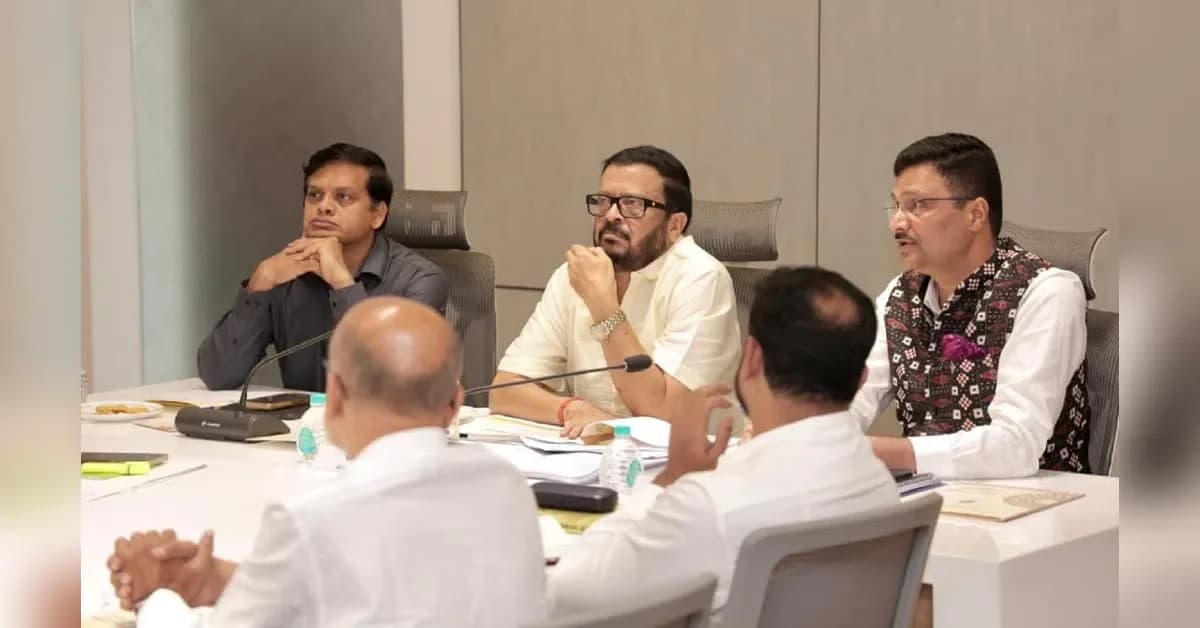
Haryana Chief Minister Nayab Singh Saini on Saturday launched an upgraded QR code-based 'Track and Trace' system for liquor and eight online excise services aimed at improving transparency and regulatory oversight. According to reports from Business Standard, the initiatives were launched while reviewing the Excise and Taxation Department's Haryana Vision-2047 roadmap and implementation of chief ministerial announcements. Under the upgraded system, every liquor bottle will be assigned a unique QR code, enabling authorities to monitor its movement from distilleries and bottling plants to wholesale distributors and retail outlets.
The government stated that the Track and Trace system would help curb the circulation of illicit liquor, improve compliance with excise laws, check tax evasion and smuggling, and facilitate real-time monitoring of the supply chain. As reported by Business Standard, Saini also launched eight online excise services, including online grant of temporary liquor-serving licences (L-12A-C) for social and public events such as concerts, exhibitions and other functions. The new digital services cover annual registration of marriage palaces and banquet halls, licences for denatured spirit outlets, permits for industrial and medicinal spirit possession, and approvals for extending the operating hours of retail liquor vends.

According to the government, the services have been developed on a fully paperless workflow, allowing applicants to submit applications online, track their status and receive approvals within seven working days. As reported by Business Standard, automated processing is expected to reduce human intervention and make licensing more transparent and efficient. The chief minister directed officials to ensure effective implementation of the new systems across the state.
During the meeting, Saini urged taxpayers to avail the benefits of the One-Time Settlement Scheme (OTS)-2026, which came into effect on June 1 for settlement of dues under pre-GST tax laws, including the Value Added Tax (VAT), Central Sales Tax (CST) and the Haryana General Sales Tax Act. According to Business Standard, under the scheme, taxpayers are eligible for a 100 per cent waiver of penalty and interest, along with concessions in tax payable across different slabs. The government has also introduced a document-linked relief mechanism under which tax demands can be reduced upon verification of statutory forms.
Saini thanked GST taxpayers, stating that Haryana recorded a 32 per cent growth in State GST collections during the first quarter of 2026-27, the highest among all states. As reported by Business Standard, he added that Haryana had also registered the country's highest SGST growth rate of 22 per cent during 2025-26. Applications under OTS-2026 can be submitted through the Excise and Taxation Department's online portal, with the chief minister directing officials to ensure effective implementation of the new systems across the state.