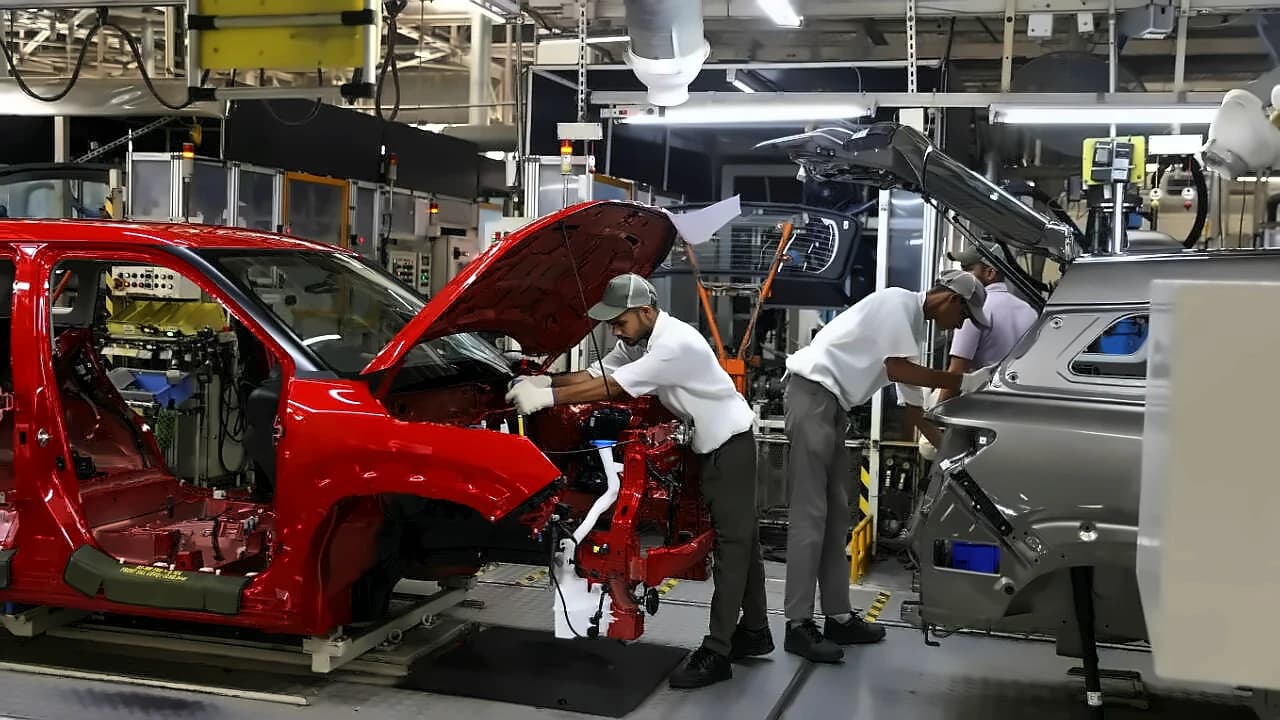
Automakers have welcomed the Central government's proposed rollout schedule for mandatory vehicle-to-vehicle (V2V) communication systems, with industry executives expressing relief over the October 2028 deadline that provides sufficient time for preparation. According to Business Standard reports, senior auto executives said their primary concern was not the technology itself but the time available to implement it across vehicle platforms. A senior executive noted that the industry had sought adequate preparation time, as integrating the technology would require coordination between vehicle manufacturers and suppliers. The October 2028 rollout provides companies the required time to develop sourcing arrangements, complete validation and testing, and align the technology with future vehicle launches. The transition will also require significant participation from the component industry, with executives emphasizing that a compressed schedule could have resulted in higher costs being passed on to customers. The phased implementation approach from October 2027 allows voluntary adoption before mandatory compliance, providing manufacturers with gradual transition time while ensuring common technical standards across the industry.
The V2V proposal builds on broader Vehicle-to-Everything (V2X) framework developed by the Telecom Regulatory Authority of India (TRAI). The V2X ecosystem consists of four primary communication layers: Vehicle-to-Vehicle (V2V) for direct vehicle communication, Vehicle-to-Infrastructure (V2I) for roadside infrastructure integration, Vehicle-to-Pedestrian (V2P) for pedestrian and cyclist safety, and Vehicle-to-Network (V2N) for cloud-based services. While the latest draft rules focus on V2V communication, it forms part of India's comprehensive V2X roadmap. The phased rollout reflects the complexity of deploying a nationwide connected transport network, as V2V primarily requires compatible onboard units while more advanced V2I applications depend on roadside infrastructure. This approach allows safety applications to be deployed without waiting for cities and highways to build supporting infrastructure for the complete ecosystem. The Ministry of Road Transport and Highways (MoRTH) has proposed making V2V communication systems mandatory through amendments to the Central Motor Vehicles Rules, 1989, marking one of India's biggest technology-led road safety initiatives.
The AIS-230 standard establishes comprehensive technical requirements for V2V communication systems operating on Indian roads. The standard covers factory-installed On-Board Units using Cellular Vehicle-to-Everything (C-V2X) technology in the 5.875 GHz to 5.925 GHz frequency band. Each vehicle equipped with V2V technology continuously broadcasts and receives data including speed, location, direction, acceleration and braking status. The system can alert drivers or onboard vehicle systems in situations such as sudden braking, risk of forward collisions, unsafe lane changes and the approach of emergency vehicles. V2V communication enables vehicles in close proximity to exchange real-time information, providing capabilities that complement conventional safety systems and Advanced Driver Assistance Systems (ADAS). The draft guidelines state that from October 2027, vehicles fitted with V2V communication systems must comply with AIS-230, as amended from time to time, suggesting that compliance will remain optional until 2028 for newly manufactured vehicles. The Department of Telecommunications issued a notification on June 10, 2026, exempting the use of the 5.9 GHz frequency range from licensing requirements, with the 5.875 GHz to 5.925 GHz frequency band designated for V2V and other Intelligent Transport System (ITS) applications. The AIS-230 standard prescribes minimum standards covering radio performance, receiver sensitivity, positioning accuracy, electromagnetic compatibility, electrical performance and cybersecurity requirements.
Industry stakeholders emphasize the critical role of component manufacturers in V2V implementation. Suresh D, Group CTO and CEO, Spark Minda Technical Centre, stated that V2V communication systems becoming mandatory from October 2028 marks an important step in the evolution of India's connected mobility ecosystem. He noted that OEMs will play a critical role by integrating V2V capabilities into vehicle platforms from the design stage, while component manufacturers will drive innovation in communication modules, sensors, electronic control units, embedded software, cybersecurity and system integration. Vimal Singh SV, founder and CEO, ReadyAssist, highlighted that the success of V2V communication will depend on how effectively the ecosystem is implemented at scale, including ensuring interoperability across different OEM platforms, standardising communication protocols, strengthening telecom coverage, and creating a secure framework for real-time data exchange. The phased implementation approach allows manufacturers to integrate communication modules, antennas, Global Navigation Satellite System (GNSS) positioning capability, cybersecurity software and dedicated onboard electronics into new vehicles. While this could increase manufacturing costs initially, industry experts expect costs to decline as production scales up and common hardware platforms emerge. For consumers, the additional cost is likely to be relatively modest compared with the overall vehicle price, particularly as many premium models already feature ADAS hardware that can work alongside V2V systems.
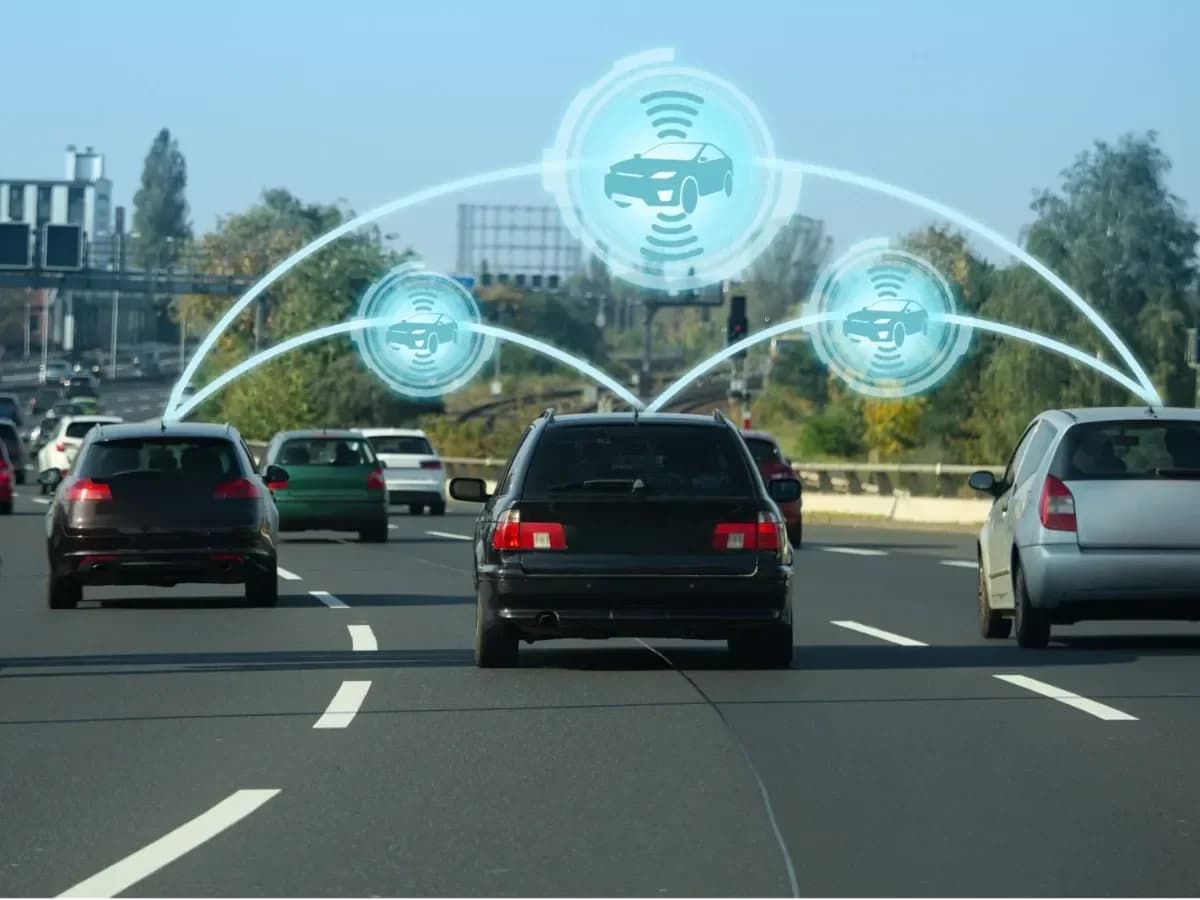
The Department of Telecommunications has provided regulatory support for V2V implementation through licensing exemptions. The Department of Telecommunications issued a notification on June 10, 2026, exempting the use of the 5.9 GHz frequency range from licensing requirements. The 5.875 GHz to 5.925 GHz frequency band has been designated for V2V and other Intelligent Transport System (ITS) applications. The AIS-230 standard prescribes requirements relating to radio performance, receiver sensitivity, satellite-based positioning, power supply, electromagnetic compatibility, cybersecurity and communication security. It also provides for the phased introduction of safety applications, including Emergency Brake Alert, Forward Collision Warning, Wrong-way Driving alerts and Emergency Vehicle Alert. The proposed framework applies to categories L, M and N, covering two-wheelers, passenger vehicles and commercial vehicles. The phased implementation from October 2027 allows voluntary adoption before mandatory compliance, with all new vehicles in these categories required to be equipped with compliant V2V communication systems as standard equipment from October 2028. Over time, V2V is expected to evolve into Vehicle-to-Everything (V2X) communication, allowing vehicles to interact not only with each other but also with traffic signals, roadside infrastructure and emergency response systems. Such connectivity could improve traffic management, reduce congestion and support higher levels of vehicle automation for a country that records among the world's highest number of road accident fatalities each year.