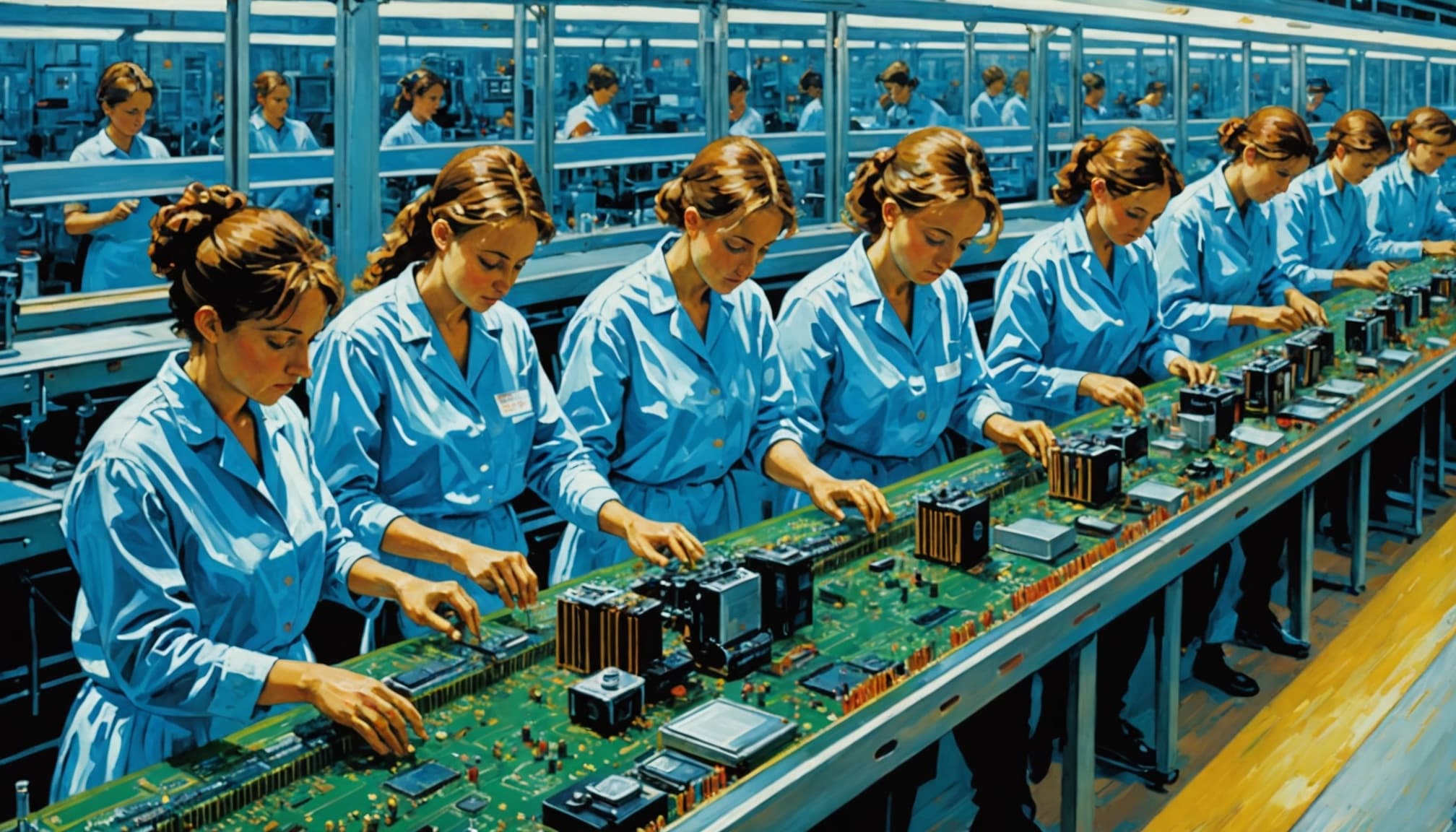
The government has officially launched the ₹62,500 crore Mobile Phone Manufacturing Scheme (MPMS) on Friday, August 24, 2026, with Union Minister of Electronics and Information Technology Ashwini Vaishnaw announcing that the scheme is open officially from today. As per Upstox, the five-year scheme, officially launched on April 1, 2026, will run through FY27-31, providing production-linked incentives for mobile phones manufactured in India. The scheme has been structured around two target segments - Target Segment 1 will focus on incentivising mobile phone manufacturing, while Target Segment 2 will support Indian mobile phone brands. Under the second target segment, eligible applicants will be provided a gestation period of one year, giving them time to scale operations and meet the required criteria before becoming eligible for financial incentives. The Ministry of Electronics and Information Technology (MeitY) notified the new scheme on Friday, with the notification coming more than a month after the Union Cabinet approved the scheme on July 15.
Four domestic players have confirmed their participation in the new Mobile Phone Manufacturing Scheme, with industry leaders expressing strong interest in the enhanced incentive structure. Amber Enterprises CEO Jasbir Singh confirmed to Business Standard that the company is "looking into the notification and the fine print to see whether we are eligible for it. If we are, we will surely consider it." Amber Enterprises, which entered into a manufacturing collaboration with Oppo Mobiles India in June to assemble three brands — Oppo, Realme, and OnePlus — is targeting 8-9 million phones per annum in the first year, rising to 13-15 million in the second year. Lava International Chairman Hari Om Rai also confirmed the company will apply under the incentive category for Indian brands, stating "Yes, we are planning to apply under the scheme for our own brand, Lava, which we manufacture." NxtQST, founded by Madhav Sheth, former CEO of Realme, has confirmed application plans, revealing "We are applying for the scheme for an Indian brand. We think there is a huge scope, and, as a result, we have already invested $10 million in developing our own research and development (R&D) capabilities and hired over 600 engineers."

Mobile phone manufacturers registered in India with a minimum turnover of ₹10,000 crore in FY26 will be eligible to apply under the MPMS. As reported by Business Standard, the scheme sets a higher threshold for existing brands seeking to claim incentives, with such companies required to achieve additional sales of ₹5,000 crore over their total FY26 sales in each financial year for which they seek financial incentives. For new brands, the scheme introduces a moving baseline for calculating eligible sales, where baseline sales for a financial year will be the brand's domestic sales in the preceding financial year plus 15%. Eligible sales will be calculated by subtracting this baseline from the brand's total target-segment sales during the year. Electronics manufacturing services (EMS) firms with 51% Indian ownership and turnover of ₹1,000 crore in FY26 will also be eligible for participation in the scheme, as per Upstox.
The new scheme has been tweaked to incentivise exports and push localisation by encouraging vendors to buy components from domestic suppliers. Dixon Technologies, one of the leading smartphone OEMs in India, is also planning to apply for eligibility under the scheme, having been one of the few Indian companies that benefited from the earlier PLI scheme. The company assembles phones for Motorola and Transsion Holdings, with around 2 million phones exported to Africa. More significantly, Dixon is one of two vendors that assemble Google Pixel phones in India, with Google looking at shifting its smartphone assembly business from China from next year. Currently, Vietnam accounts for 63% of Google Pixel production, followed by China (3%), while India accounts for only 3%. The deal with Vivo, where Dixon will hold a 51% stake with Vivo holding the rest, could mean assembling 20-22 million phones per annum, with exports adding another 3-4 million phones.
Shares of electrical equipment manufacturers gained up to 2% on Monday following the government's notification of the ₹62,500 crore Mobile Phone Manufacturing Scheme. Dixon Tech shares gained 6% in a week and 23% in 2026 so far, though they have delivered negative returns of more than 12% over the past year. The company's shares jumped over 200% in three years and nearly 290% in five years. Syrma SGS shares have gained 12% in a month and over 100% in 2026 so far, delivering nearly 200% returns over three years. The stock jumped more than 2% to trade at ₹1,472 apiece on Monday morning. The government expects cumulative mobile phone production in the country to reach approximately ₹39 lakh crore during the scheme tenure, with a significant increase in mobile phone exports. MPMS is also expected to generate around 60,000 direct jobs, contributing to economic growth, employment generation, and strengthening India's position as a global electronics manufacturing hub.