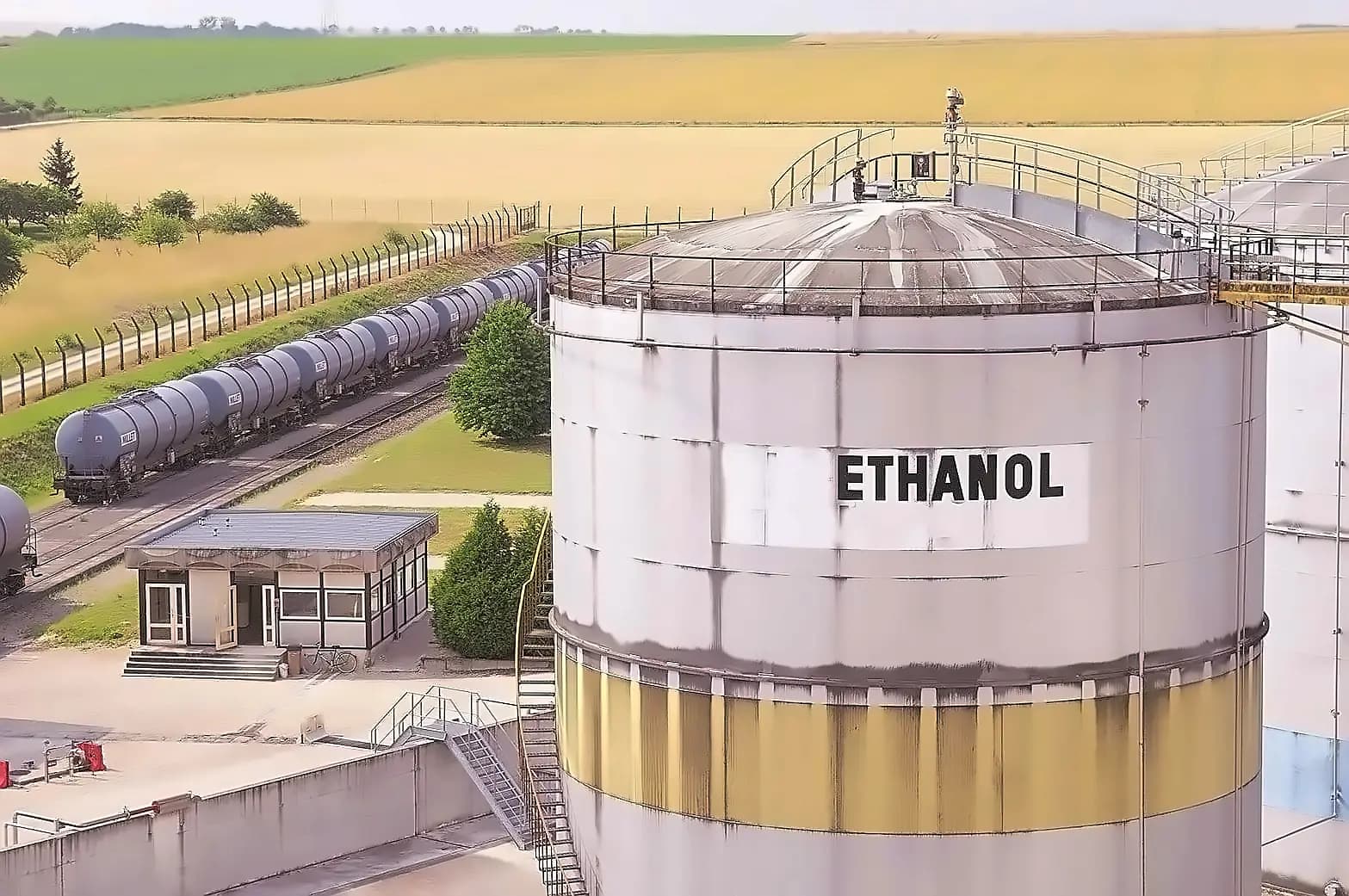
Sugar stocks experienced significant gains following the government's announcement of excise duty exemptions on higher ethanol-blended petrol. Dhampur Bio Organics and SBEC Sugar gained 5% each to touch the day's upper price band of ₹112.42 and ₹66.32, respectively, while other counters like Dwarikesh Sugar Industries (₹45), Triveni Engineering & Industries (₹381.50), and Dhampur Sugar Mills (₹144.45) were trading higher in the range of 2 to 4%. The rally came after the central government exempted petrol blended with 22%, 25%, 27%, and 30% ethanol from all excise duties, as notified by the Ministry of Finance's Department of Revenue on Wednesday, June 11. This development extends zero-duty treatment that was previously available only to lower-blend fuels, marking a major shift in policy approach. The move comes against the backdrop of petrol and diesel prices rising by nearly ₹7.50 per litre in the second half of May, highlighting the government's efforts to provide relief to domestic consumers amid rising fuel costs.
The exemption is designed to improve the economics of high-blend ethanol fuel for oil marketing companies, advancing India's stated target of 30% ethanol blending in petrol. As reported by the Ministry of Finance, this move represents a major shift in policy approach, as India has been targeting 30% ethanol blending in petrol as part of its energy transition roadmap, though actual blending levels have remained well below that threshold due to supply and pricing constraints. The policy change is expected to provide better incentives for oil marketing companies to push higher-blend fuels into the market, with the move specifically aiming to reduce crude oil imports, boost domestic biofuel use, and increase energy security amid global supply uncertainties. The development comes weeks after the Bureau of Indian Standards (BIS) notified fuel specifications for E22, E25, E27 and E30 blends, establishing the technical standards required for their use in petrol-powered vehicles. According to The Times of India, India has already increased ethanol blending in petrol from 1.53% in 2014 to 20% currently, achieving its target five years ahead of schedule. This programme has saved more than ₹1.84 lakh crore in foreign exchange and reduced crude oil imports by nearly 302 lakh metric tonnes.
The government has issued official notifications through the latest issue of The Gazette of India detailing the precise compliance requirements for duty exemptions. The 22% ethanol blended petrol must consist of 78% motor spirit (commonly known as petrol) on which appropriate duties of excise have been paid and 22% ethanol on which appropriate Central tax, State tax, Union territory tax or Integrated tax have been paid, while conforming to Bureau of Indian Standards specification IS 19850. Similarly, 30% ethanol blended petrol must consist of 70% motor spirit and 30% ethanol, with the same tax compliance requirements. The notifications clarify that appropriate duties of excise include duties leviable under the Fourth Schedule to the Central Excise Act, 1944, additional duty of excise under section 112 of the Finance Act, 2018, special additional excise duty under section 147 of the Finance Act, 2002, and Agriculture Infrastructure and Development Cess under section 125 of the Finance Act, 2021. This statutory definition ensures that only fuels meeting specific composition rules qualify for the nil excise duty rate. The exemption covers four key levy components: Basic Excise Duty, Special Additional Excise Duty, Road and Infrastructure Cess, and Agriculture Infrastructure and Development Cess. In another notification, the government exempted the same categories of ethanol-blended petrol from the additional duty of excise levied as road and infrastructure cess, with the applicable rate fixed at nil, while the Revenue Department also amended the Agriculture Infrastructure and Development Cess-related notification to provide similar concessional treatment for petrol blended with 22-30% ethanol.
The policy change has received strong support from industry leaders, with Bharati Balaji, deputy director general at All India Distillers Association, describing it as a "powerful demand-side signal" that creates "a clear commercial pathway to deploy our surplus ethanol production capacity, which currently stands well above E20 programme requirements." According to Business Standard, Balaji emphasized that the move will reduce crude import bill and reinforce India's energy security at a time when global fuel markets remain deeply volatile. "Fiscal incentives must keep pace with blending ambitions, and today's announcement does exactly that. It strengthens farmer incomes, reduces our crude import bill, and reinforces India's energy security at a time when global fuel markets remain deeply volatile. We urge state governments to complement this measure with aligned tax structures so that the full benefit reaches both industry and consumers at the pump," he stated. India's ethanol production capacity has grown significantly, with the country's installed ethanol production capacity estimated at about 20-21 billion litres per year, as reported by the government in the Rajya Sabha in October 2024. This capacity substantially exceeds the ethanol demand for the current E20 blending programme of around 10-12 billion litres annually, providing substantial room for expansion into higher blends. The excise duty waiver is aimed at encouraging customers to move towards ethanol-blended petrol, with the government having in March cut excise duty on petrol and diesel by ₹10 per litre, foregoing over ₹1 lakh crore of annual revenue to shield domestic customers from surge in global crude oil prices amid the West Asia war.
The government has announced ambitious plans to expand ethanol fuel infrastructure across major cities. According to The Times of India, the move is part of the government's broader push to expand the use of ethanol, with plans to open 50-100 ethanol fuel stations in Delhi-NCR, Pune, Mumbai, Nagpur and scale up the network to 500 by the end of 2026. E85 fuel will initially be available at select petrol pumps and is designed for vehicles with flex-fuel engines. The government plans to expand availability to 500 outlets by December 2026 and about 5,000 outlets by December 2027. This infrastructure expansion is designed to support the increased adoption of higher ethanol blends and provide consumers with greater access to alternative fuel options. As per The Times of India, expanding E85 infrastructure is expected to raise India's overall ethanol blending level to nearly 26% by 2030-31, according to Union Petroleum and Natural Gas Minister Hardeep Singh Puri during the launch. Puri said India has balanced energy security, affordability, and sustainability while protecting consumers from global energy market volatility. The Finance Ministry had earlier indicated that state-run oil marketing companies are preparing to offer E85 fuel at a discount of ₹20 per litre compared with E20 petrol, with the discount aimed at offsetting ethanol's lower energy content and encouraging consumer adoption.