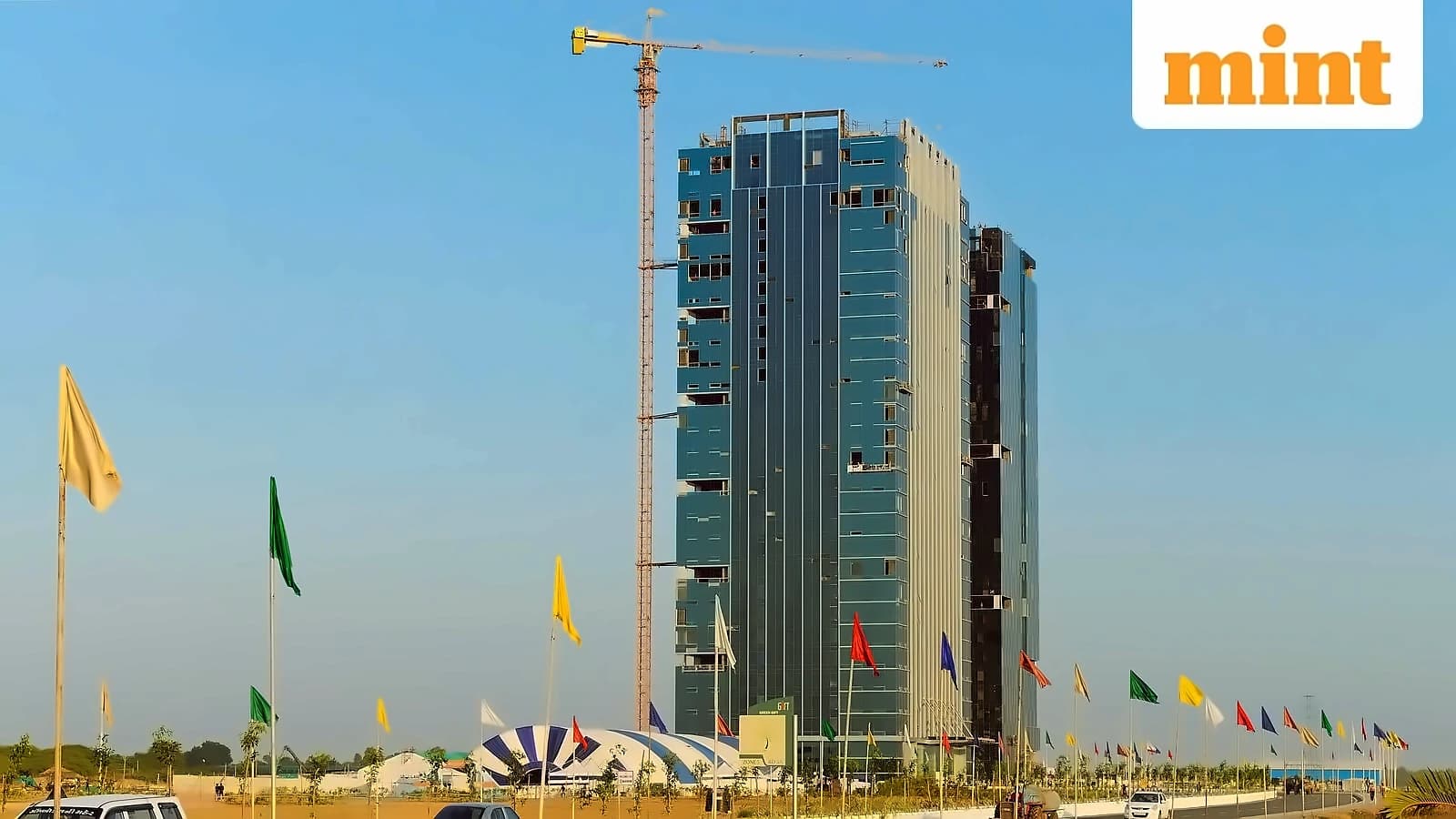
GIFT City has achieved a significant milestone by crossing $111 billion in assets under management, according to Sanjay Kaul, MD & CEO of GIFT City. The financial hub now hosts more than 40 banks and has close to 1,200 entities registered with the regulator. Kaul described the centre as being at an 'inflection point' as more businesses establish operations and the range of products offered from the International Financial Services Centre expands. The regulator is currently registering entities at a pace of around 40 to 45 entities per month, demonstrating sustained growth momentum in the financial services sector.
Senior executives from HSBC India and Visa highlighted that GIFT City is emerging as a key opportunity to offer Indian customers greater access to foreign currency and international financial products from within India. As per HSBC, international payments that earlier took one to two weeks to be confirmed by companies or universities can now be completed and confirmed on the same day, including payments made for children studying overseas. HSBC enables customers to hold foreign currency and make faster international payments via digital platforms, with most customers using these services being non-resident Indians or Indians seeking exposure to overseas assets. The company is exploring services such as card management systems and technology infrastructure for running cards and loans from GIFT City.
The GIFT City ecosystem now spans banking, insurance, reinsurance, fund management and capital markets, with more than 40 banks operating from the centre, of which about half are international banks. Kaul noted that some of these international banks do not have branches in mainland India, with the IFSC operating as a separate jurisdiction under the foreign exchange framework. The centre also features two stock exchanges and their NSE and BSE subsidiaries, along with a bullion exchange. Aircraft leasing has emerged as another significant area of activity, with Kaul highlighting that this business traditionally concentrated in financial centres such as Ireland is now part of GIFT City's portfolio.
Kaul sees GIFT City competing with established financial centres such as Singapore and Dubai by combining access to India's economy with its talent and technology base. He emphasized that 'India is one of the largest growing major economies of the world' and highlighted the country's 'tremendous capability in terms of talent, technology, innovation, operating global services'. This combination is central to GIFT City's proposition, with Kaul stating that 'If you have to deal with India in terms of business, you need, we feel, to be here'. He acknowledged that GIFT City is much younger than established global financial centres, describing it as 'toddlers' while noting the centre is learning from those markets as it grows.
IFSCA has implemented comprehensive regulatory innovations to create a frictionless, globally competitive environment. The authority has streamlined compliance by acting as a unified regulator, replacing the overlapping jurisdictions of multiple domestic bodies. As reported by IFSCA, the authority's primary objective is to provide a regulatory framework that is on par with, if not better than, established global financial hubs. The combination of regulatory improvements and tax benefits for GIFT City IFSC investments positions the centre as a competitive alternative in the global financial services landscape, with the reduced bureaucratic hurdles attracting international financial institutions seeking to establish operations in India.