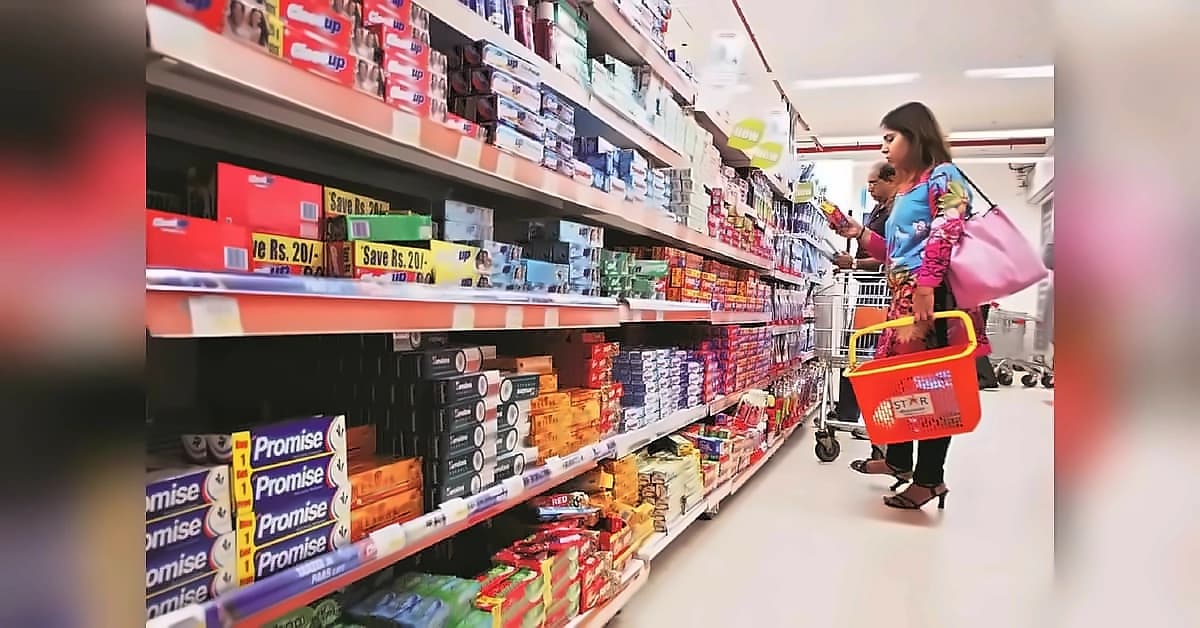
Fast-moving consumer goods (FMCG) distributors have approached the Ministry of Health and Family Welfare seeking mandatory storage norms for quick-commerce dark stores. According to reports from Business Standard, the All India Consumer Products Distributors Federation (AICPDF) highlighted that many dark stores operate in highly congested premises where 60,000 to 70,000 stock-keeping units (SKUs) are stored within inadequate floor space. The federation stated that such storage conditions result in unsafe stacking of products, restrict movement of personnel, and lead to poor ventilation, inadequate sanitation, and ineffective pest-control measures.
The AICPDF has proposed a mandatory scientific formula linking SKU capacity with the minimum permissible storage area. As reported by Business Standard, the federation also seeks the declaration of approved storage area and maximum permissible SKU capacity in every FSSAI (Food Safety and Standards Authority of India) licence, along with automatic revision of approved storage capacity whenever inventory levels increase. The proposal includes mandatory segregation of fresh produce, dairy products, frozen foods, packaged foods, household chemicals, personal care products and other non-food articles.
The federation has requested prescribed standards relating to ventilation, sanitation, pest management, temperature control, humidity control, fire safety, aisle width and emergency access. According to Business Standard, it also seeks prohibition of storing food articles, dairy products, fresh produce, frozen foods and other perishable products in temporary or uninsulated tin-sheet structures unless such premises are equipped with approved thermal insulation, adequate ventilation and scientifically designed air-conditioning systems. The distributors have also asked for annual infrastructure and food safety audits by FSSAI, digital maintenance of inventory records, and strict penalties for exceeding approved storage limits.
The storage norms initiative comes as India's quick-commerce market reaches significant scale, with Redseer estimating the market reached approximately ₹13-14 billion of GMV in FY26, equivalent to around 17% of online retail GMV. According to a recent CLSA report, quick-commerce dark stores are present across approximately 477 cities in India, though presence and store density vary significantly from city to city. Major platforms are increasingly expanding beyond traditional dark stores, with Flipkart crossing 1,000 micro-fulfilment centres across 130+ cities and 8,000+ pincodes, while Amazon plans to expand Amazon Now to more than 300 Indian cities. The infrastructure evolution includes larger Urban Fulfilment Centres that can stock four times the assortment of smaller facilities.
According to the latest CLSA report, the competitive landscape shows significant shifts in quick-commerce market share. Blinkit maintains the largest network with 969 stores, followed by Zepto with 828, Flipkart Minutes with 627, Swiggy Instamart with 615, and BigBasket with 497. Blinkit accounts for approximately 30 percent of dark stores across the top 10 cities and more than 34 percent nationally, with the highest store count in six of the 10 largest markets. Notably, Flipkart Minutes has surpassed Swiggy Instamart in both dark store count and pincode coverage across the top 10 cities, while Swiggy added the highest number of dark stores among the top three players over the past month. The report also highlights that newer players are increasingly targeting geographies that remain underpenetrated by incumbents, potentially providing first-mover advantages as quick commerce adoption spreads beyond Tier-1 cities.