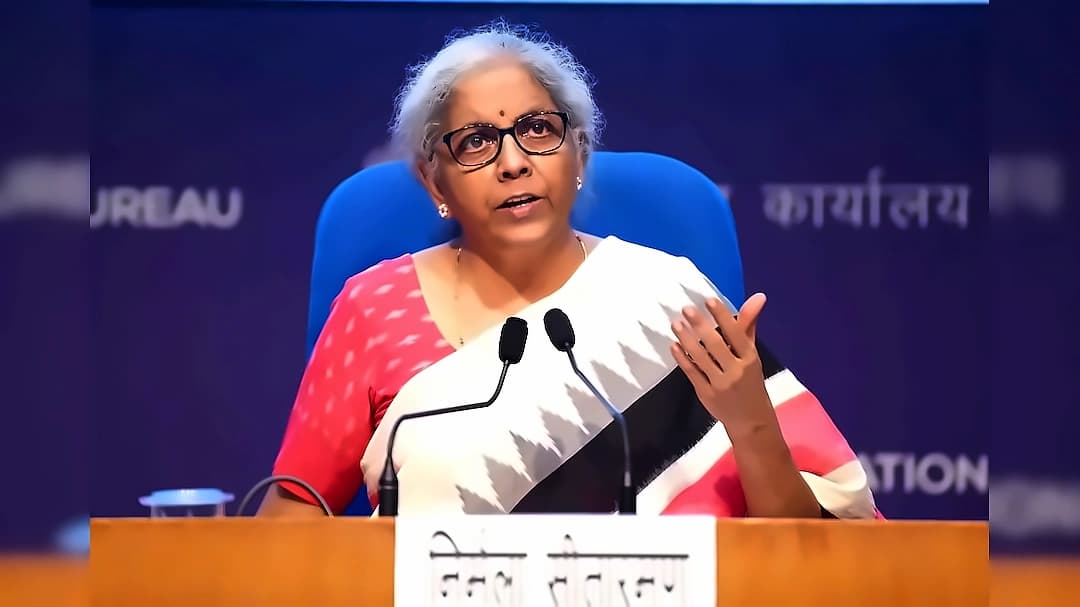
Finance Minister Nirmala Sitharaman emphasized that India's economy continues to show resilience amid global uncertainty, strongly criticizing attempts to spread a 'pessimistic and cynical narrative' about the country's growth trajectory. Speaking at the 37th SIDBI Foundation Day programme in Mumbai, Sitharaman stated that 'India cannot afford fear mongering that damages public confidence' and added that 'naysayers de-cry achievements of their own people'. According to IANS, she argued that high-frequency indicators continue to point to resilient domestic demand, with GST collections remaining strong despite rate rationalisation in September 2025. Vehicle sales and credit growth across retail, agriculture and MSME segments remained healthy, while private sector expenditure rose 67% year-on-year in September 2025, as cited by CII data. Additionally, corporate profit margins hit their highest level in the March quarter, demonstrating the strength of India's corporate sector despite global headwinds.
Finance Minister Nirmala Sitharaman warned that the ongoing conflict in the Middle East could create significant pressure on India's economy through multiple channels. Speaking at the SIDBI Foundation Day programme, Sitharaman stated that the geopolitical tensions may affect working capital cycles for businesses and create uncertainty around export orders. The conflict could affect fuel costs further, leading to costly shipping, with Indian export cargo already facing disruptions during the crisis. To minimize the impact, the government has simplified customs procedures and allowed exporters to reroute or bring back cargo affected by disruptions. As per IANS, Sitharaman warned that the ongoing conflict in the Middle East could create pressure on India's economy through higher fuel prices, elevated shipping costs and disruptions to exports, while insisting that India's broader economic fundamentals remain strong.
Finance Minister Nirmala Sitharaman announced that gross GST collections for 2025-26 have crossed ₹22 lakh crore, up 8.3% year-on-year despite global uncertainty. She highlighted that India's economic momentum remains strong, citing strong GST revenues as evidence of sustained economic activity even after the tax rationalisation measures introduced in September 2025. The finance minister emphasized that robust growth in tractor, passenger vehicle, two-wheeler and three-wheeler sales, rising life insurance premiums, lower public sector bank NPAs, and broad-based credit growth across retail, agriculture and MSMEs demonstrate the resilience of India's economic fundamentals. Credit growth remained broad-based across key sectors in 2025-26, with retail lending growing 18.1%, agriculture credit rising 15.5%, and MSME lending increasing 18.2%, reflecting sustained economic activity and banking sector support.
Sitharaman linked rising global crude oil, fertiliser and gold prices to broader economic pressures, noting that the pressure on imports had implications for both inflation and foreign exchange reserves. She linked Prime Minister Narendra Modi's recent appeal for austerity to these rising global commodity prices, saying the pressure on imports had implications for both inflation and foreign exchange reserves. As reported by IANS, she highlighted Prime Minister Narendra Modi's recent appeal for austerity amid rising global crude oil, fertiliser and gold prices, saying the pressure on imports had implications for both inflation and foreign exchange reserves. The government said the Prime Minister's decision must be viewed in the context of rising and highly volatile international crude oil prices, noting that global energy markets remain dynamic and subject to constant fluctuations.
On the policy front, Sitharaman announced several MSME-focused measures during the SIDBI Foundation Day programme. As reported by IANS, she announced a co-lending platform between Small Industries Development Bank of India (SIDBI) and regional rural banks aimed at expanding credit access. The government introduced a special micro credit card under the CGTMSE scheme, allowing Udyam-registered MSMEs to access collateral-free loans of up to ₹5 lakh. Additionally, the Cabinet has approved ECLGS 5.0, which will enable up to ₹2.55 lakh crore in loans for MSMEs. The government is also likely to absorb a revenue hit of nearly ₹1 lakh crore in FY27 due to reductions in excise duty on petrol and diesel, a move aimed at shielding consumers and businesses from surging global energy prices. The government's latest initiatives are designed to address the 'real needs' of MSMEs, including easier access to credit, better machinery, modern technology adoption, support for rural enterprises, and stronger market linkages.