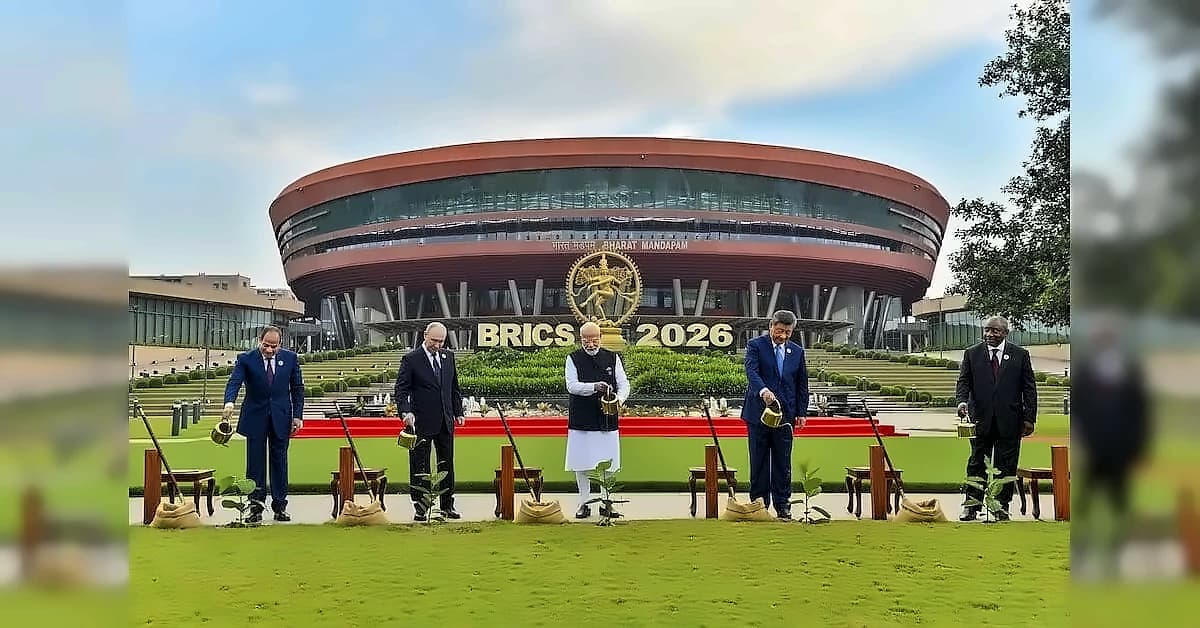
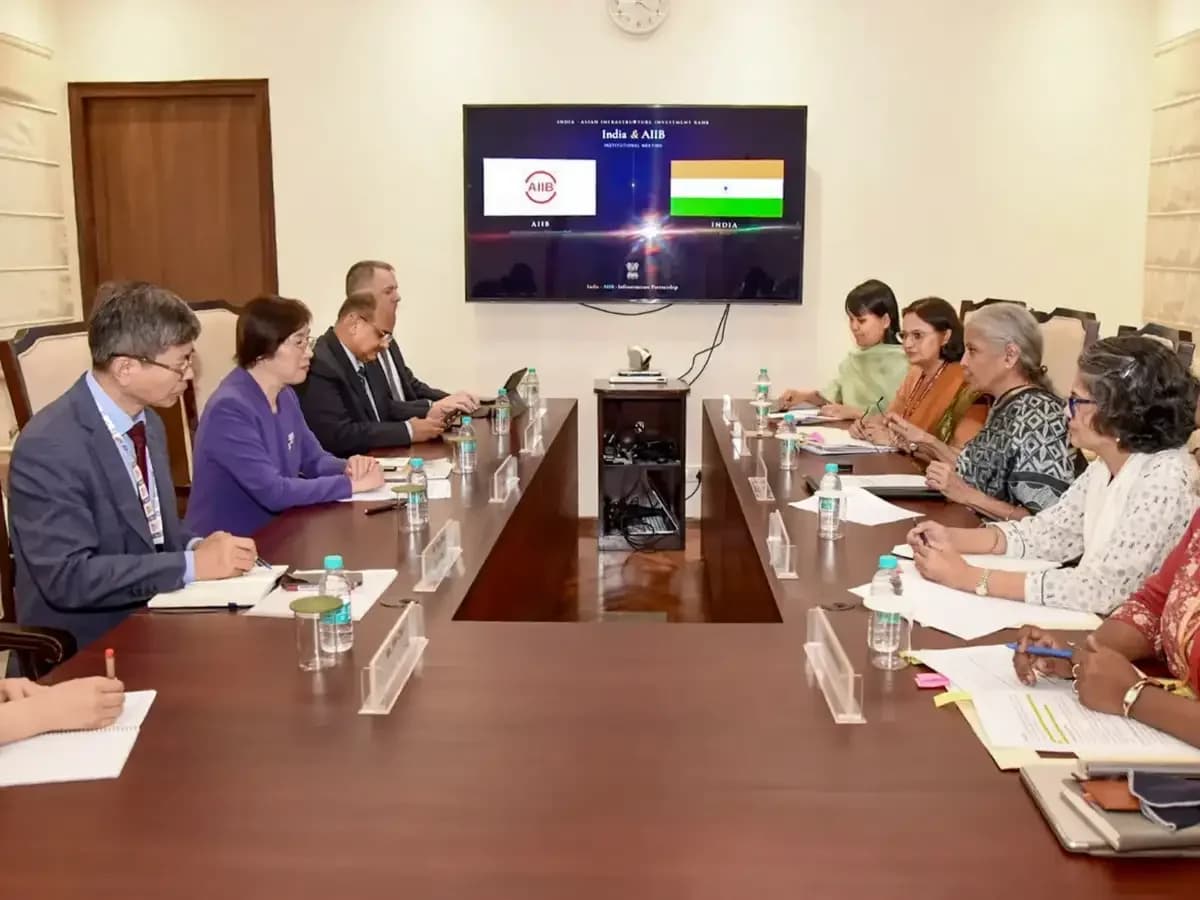
Finance Minister Nirmala Sitharaman called for stronger cooperation among Brics tax administrations in global tax negotiations, emphasizing that 'the rules of international taxation are being renegotiated' and decisions made over the next few years will shape cross-border taxation for a generation. Speaking at a Brics tax heads meeting in New Delhi, Sitharaman stated that 'Brics economies, as source jurisdictions and large developing economies that have built significant domestic tax capacity, had an important perspective to bring to these negotiations'. As per The Times of India, Sitharaman urged BRICS nations to share their experiences on treaty interpretation and multilateral negotiations in international taxation, noting that global transfer pricing disputes 'disproportionately' burden developing countries. India has proposed two new working groups - one on international taxation and transfer pricing, and another on revenue statistics - as part of efforts to build institutional mechanisms that continue beyond India's 2026 chairmanship. Revenue Secretary Arvind Shrivastava explained that the international taxation working group would provide a permanent platform for member administrations to exchange experience on treaty interpretation, transfer pricing audits, advance pricing agreements and mutual agreement procedures.
Finance Minister Nirmala Sitharaman called for greater trust and transparency in business-government relations, emphasizing that businesses should engage constructively with authorities rather than resorting to litigation. Speaking at the AIMA event, Sitharaman stated that while legal recourse remains available, 'every disagreement need not begin as litigation'. She urged businesses to engage early with the government, present evidence, participate seriously in consultations, and work towards solutions before differences escalate into disputes. The Minister emphasized that 'there is considerable value in engaging early, placing evidence on the table, participating seriously in consultations, and working towards solutions before differences become disputes'. She also called for businesses to provide predictability, transparency and willingness to listen, noting that a mature economy should be capable of handling disagreements 'without immediately becoming adversarial'. As per Moneycontrol, Sitharaman highlighted the virtue of settling disagreements through dialogue rather than litigation, stating that 'a mature economy should be able to handle disagreement without immediately becoming adversarial'.
Sitharaman highlighted the critical need for companies to increase spending on research and development (R&D), either in-house or through collaboration with academia, to drive innovation and improve existing products. 'Corporates need to spend more on R&D, either in-house or through collaboration with academia. This will help in driving innovation and improving existing products,' she said. The Finance Minister stressed that 'this spending raises a further question' about corporate commitment to innovation and technological advancement. She underlined that higher R&D expenditure should also translate into more intellectual property being created in and from India. Sitharaman emphasized that 'our ambition must move from 'Made in India' to 'Imagined in India' products not only manufactured here, but conceived, designed and technologically developed here, and then taken to markets across the world'. India's Gross Expenditure on R&D stands at 0.83 per cent of GDP, far below the OECD average (2.7 per cent), China (2.6 per cent), and the US (3.5 per cent), reflecting a persistent shortfall in private-sector R&D depth where the domestic private sector contributes just 36 per cent compared to over 70 per cent in leading advanced economies.
According to reports from Business Standard, Sitharaman emphasized that 'trust between businesses cannot be demanded; it has to be built through conduct on both sides'. She called for businesses to provide predictability, transparency and willingness to listen, while noting that a mature economy should be capable of handling disagreements 'without immediately becoming adversarial'. The Finance Minister stressed that 'sound governance is not simply a set of external codes to be adopted wholesale. It grows out of how institutions actually conduct themselves, and out of the standards they hold themselves to. So start with the conduct, and above all, with trust'. She urged businesses to demonstrate trustworthiness through their actions and conduct, emphasizing that 'the contribution of Indian management would be measured by the quality of enterprises and institutions being built today as the country moves toward Viksit Bharat by 2047'. As per Moneycontrol, Sitharaman noted that 'sound corporate governance is not simply a set of external codes to be adopted wholesale; it, in fact, grows out of how institutions actually conduct themselves, and out of the standards they hold themselves to'.
Sitharaman urged Indian corporates to focus not just on scale but also on building stronger, more resilient, and better-governed enterprises as the country works towards the goal of Viksit Bharat by 2047. She emphasized that 'India today has the scale of market, the entrepreneurial energy and the institutional capacity to aim much higher. Execution will determine how successfully we convert these strengths into lasting national capability'. The Finance Minister urged industry to focus on creating companies that are not merely bigger, but better, competitive, innovative, trusted and resilient enough to contribute to India's growth over the coming decades. She highlighted that 'India's next phase of growth must be built on quality', with businesses needing to combine scale with durability, higher quality, better governance and deeper technological capabilities. Sitharaman noted that 'India's consumption base rests on working families across agriculture, rural construction, transport, and informal enterprise. If corporate India pursues premiumisation for the urban tier alone, growth will lose its structural durability'. As per Moneycontrol, she stressed that 'India today has the market scale, entrepreneurial energy and institutional capacity to aim much higher. So, execution will determine how successfully it can convert these strengths into lasting national capability'.
As reported by Business Standard, Sitharaman called for an overhaul of management curricula to reflect current techno-economic realities and promote greater interdisciplinary learning. She emphasized that managers today need stronger grounding in geopolitical and supply-chain risks, climate risk, behavioural science, data, regulation and technology-aided project execution. She urged management institutions to produce leaders capable of connecting different disciplines rather than operating within functional silos, while also suggesting that AIMA could expand short, practical programmes for family businesses covering succession planning, governance, professionalisation, conflict management and delegation. The Finance Minister also called for greater professionalization through separation of ownership from management, clearly defined responsibilities, preparation of the next generation and resolution of conflicts before they affect the business. She underlined the need for building capability management education and designing short, practical courses for founders and early employees on hiring, delegation, financial discipline, customer management, compliance and building systems. As per Moneycontrol, she called on the management community to help 'make the difficult transition from founder-led ventures to institution-led companies, without losing the entrepreneurial energy that created them in the first place'.