The Centre has extended the tenure of Enforcement Directorate Director Rahul Navin by one year, according to a government order issued by the Appointments Committee of the Cabinet (ACC) on Saturday. The extension allows Navin to continue as ED Director up to August 13, 2027, including service beyond his superannuation date of July 31, 2027, or until further orders, whichever is earlier. As reported by PTI, the Appointments Committee of the Cabinet has approved extension in tenure of IRS officer Rahul Navin, as Director of Enforcement Directorate for a period of one year beyond August 13, 2026, i.e. up to August 13, 2027. Navin, a 1993-batch Indian Revenue Service officer of the Income Tax cadre, has been leading the federal anti-money laundering agency as its full-time chief since August 14, 2024. The extension comes as part of a broader trend, with the Central Bureau of Investigation (CBI) Director Praveen Sood also receiving a one-year extension in May 2026 after completing his two-year term.
According to the government order, Navin was made acting director of the agency in September 2023 before his full-time appointment. The rules allow an officer to be appointed ED director for a tenure of two years followed by three one-year extensions each. Navin holds B.Tech and M.Tech from IIT-Kanpur and an MBA from the Swinburne University of Technology in Melbourne. He has also authored several books, journals and articles on various international taxation and transfer pricing issues related to direct taxation. With this latest extension, Navin stands a chance of getting two more extensions and serve till August 2029, all through the present tenure of the Modi government with next general elections due in April-May 2029. Navin's journey with the ED began as a Special Director in November 2019, before taking additional charge as ED Director in September 2023, and becoming the full-time chief in August 2024.
During Navin's tenure, the ED has achieved significant success in asset restitution, restituting assets worth over ₹32,000 crore to victims out of total attachments worth ₹2.40 lakh crore attached under the Prevention of Money Laundering Act (PMLA) till date. As reported by SocialNews.XYZ, as of March 31 this year, the ED had attached assets worth around ₹2.36 lakh crore rupees, of which more than ₹63,000 crore rupees have been returned to rightful owners, including banks, investors and homebuyers. Most of the property restitution has taken place in the last two years only. Out of the ₹32,000 crore assets restored, over ₹15,000 crore is linked to fugitives Vijay Mallya, Nirav Modi and Mehul Choksi. The agency has filed 2,396 charge sheets in its 8,851 PMLA cases till date, demonstrating its commitment to prosecuting financial crimes.
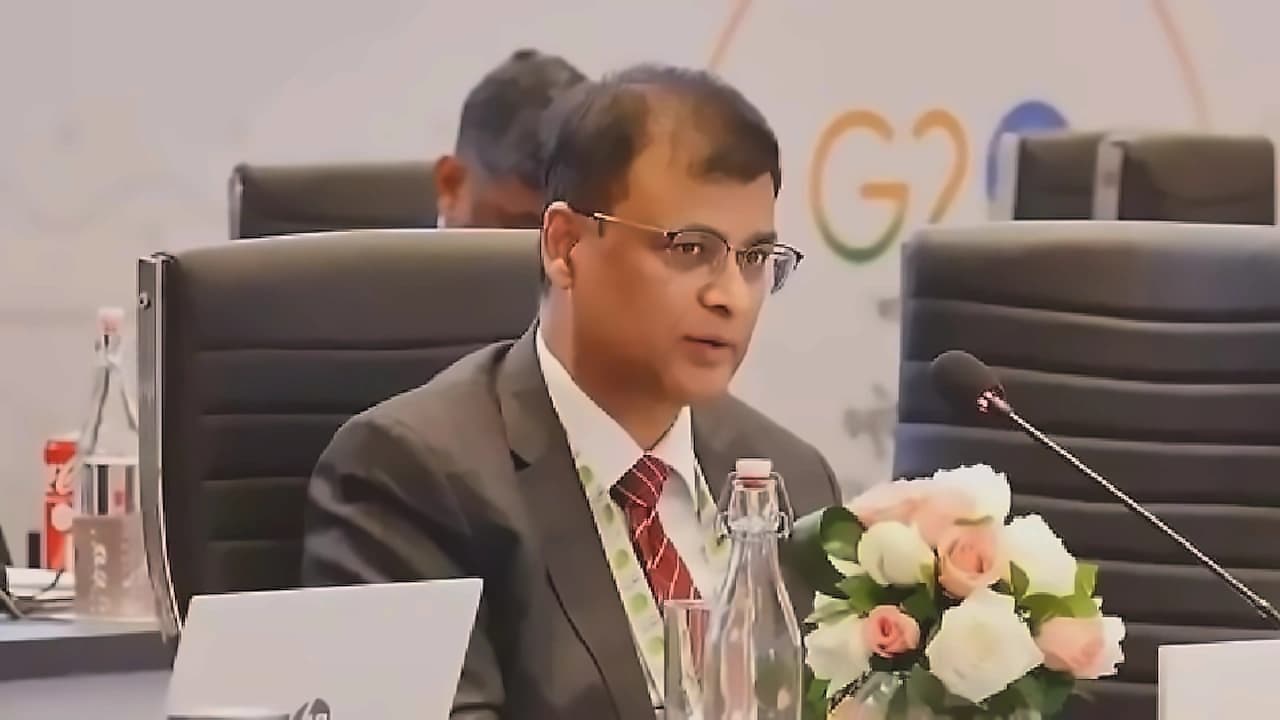
During Navin's tenure, the ED has continued and launched several high-profile investigations including those related to the political consultancy firm I-PAC, Reliance Anil Ambani Group, online money gaming companies, All India Trinamool Congress leaders, real-estate developers, and human traffickers, as reported by Hindustan Times. The agency has also focused on multiple cases of frauds by real estate giants against homebuyers and used powers under the anti-money laundering law to restore assets worth crores of rupees to the victims. In February this year, Navin asked all units of the agency to exercise "caution, fairness and accountability" while conducting money laundering investigations. The ED chief had asked his men to ensure that summons and other statutory notices are issued "judiciously", based on "clear necessity and proper application of mind". Speaking at the 70th Enforcement Day celebrations, Minister of State for Finance Pankaj Chaudhary emphasised that the ED's powers are aimed at combating financial crimes such as money laundering, hawala transactions, benami properties and corporate frauds, and not to target individuals.
Addressing the 70th Enforcement Day celebrations, ED Director Rahul Navin highlighted that the nature of financial offences has shifted from bank frauds and corporate scams to cryptocurrency fraud, cyber-enabled crimes, terror financing and narcotics trafficking. As reported by SocialNews.XYZ, he noted that the ED has adapted proactively to these emerging threats, with a focused strategy to disrupt criminal networks by targeting their financial roots. The ED chief also emphasised India's strengthened role in anti-money laundering efforts, with the agency contributing to international frameworks and asset recovery networks. Minister of State Chaudhary called for stronger cooperation among central agencies to tackle rising concerns of cyber fraud and online financial crimes. The Minister reiterated that the Union government follows a zero-tolerance policy towards corruption and inaugurated the ED's Jaipur Zonal office during the occasion. The ED investigates financial crimes under two criminal laws--the Prevention of Money Laundering Act (PMLA) and the Fugitive Economic Offenders Act (FEOA), apart from the civil provisions of the Foreign Exchange Management Act (FEMA).