According to ICRA's thematic report on the Indian electric vehicle industry, the Delhi EV Policy 2026 is positioned as "one of the landmark EV policies implemented in any state in India." The policy establishes a four-year roadmap to accelerate the shift to electric mobility, marking "a decisive move away from subsidy-led uptake towards mandate-driven electrification." Under the framework, only electric three-wheelers and N1 goods carriers below 3.5 tonnes will be eligible for registration from January 1, 2027, while registration of new petrol and diesel two-wheelers will end from April 1, 2028.
The policy provides comprehensive support mechanisms including subsidies, scrappage incentives and exemptions from road tax and registration fees. As reported by ICRA, the framework combines these financial incentives with regulatory mandates, making it "one of the most interventionist EV frameworks in the country." The agency noted that the policy strengthens the long-term business outlook for the EV ecosystem by providing regulatory clarity and a defined roadmap for deeper EV penetration across vehicle segments.
According to ICRA's analysis, EV penetration in Delhi recovered to 8.7% in FY2026 and rose further to 12.9% in the year-to-date FY2027, compared with the all-India level of 9.4%. The report cautioned that EV adoption "is likely to remain constrained owing to affordability concerns, limited financing access for small fleet operators and individual buyers, and continued dependence on imported battery cells, critical minerals and EV components." ICRA rated Delhi's policy framework as "very high" in overall strength compared with "high" or "moderately high" for other leading EV states.
Unlike Maharashtra, Tamil Nadu, Karnataka and Gujarat, Delhi has imposed mandatory electrification targets for school buses, delivery fleets and government commercial vehicle fleets, besides phasing in restrictions on registrations of ICE vehicles. As reported by ICRA, Delhi also offers among the highest scrappage incentives in the country and has laid out a detailed framework for battery swapping, battery traceability and recycling. The policy is expected to unlock multi-fold demand opportunity as current electrification stands at 7% for two-wheelers, 6% for light commercial vehicles and 33% for three-wheelers.
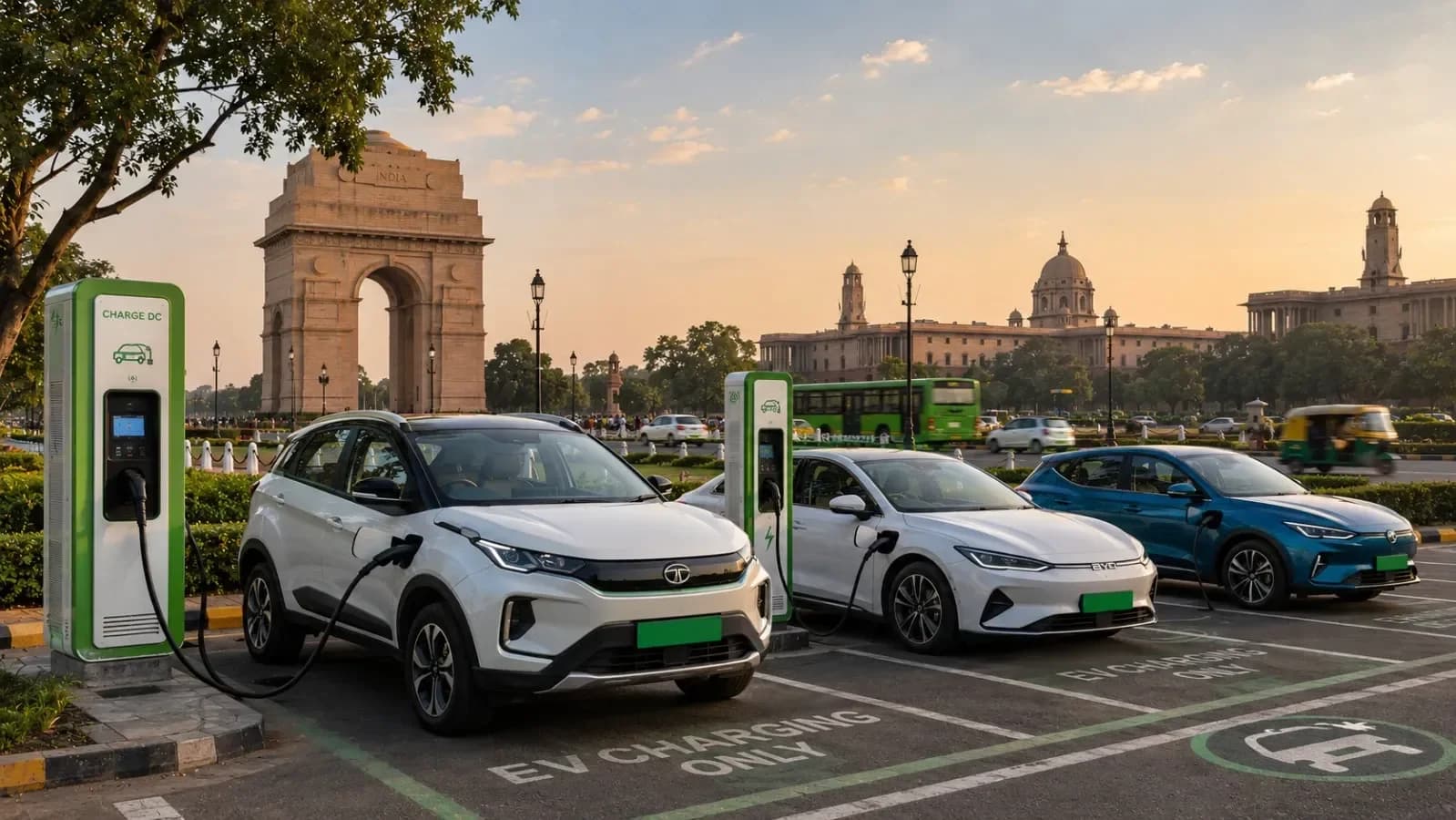
According to ICRA's assessment, the policy is "a credit positive" for electric vehicle manufacturers, charging infrastructure providers, battery-swapping operators and EV financiers. The report noted that demand for manufacturers and component suppliers focused largely on ICE vehicles could moderate over time. The policy is expected to accelerate the next phase of EV adoption in Delhi, which already has a higher EV penetration than the national average, with the new registrations in key segments slated to become fully electric under the policy framework.