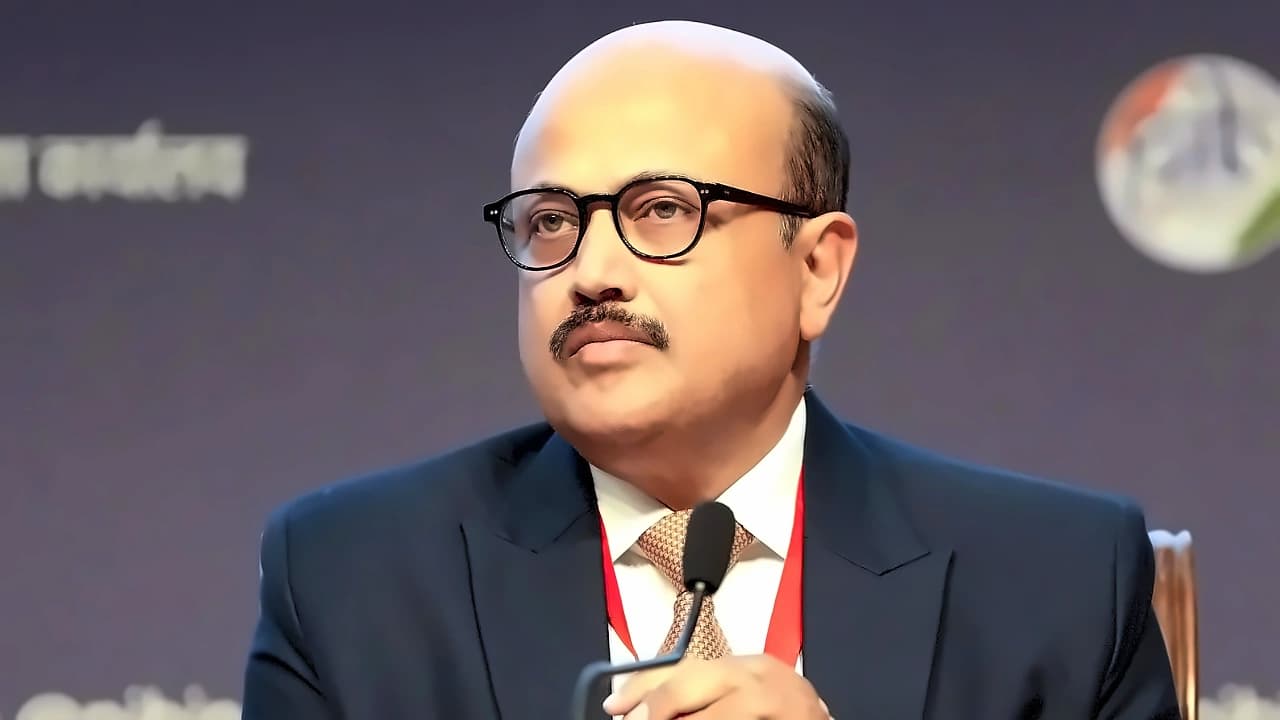
The commerce ministry is considering wide-ranging reforms to overhaul India's Special Economic Zone framework, including allowing SEZ units to sell goods to the domestic market on a duty-foregone basis, accept payments in rupees for services, and undertake manufacturing for domestic firms, as reported by Business Standard. Commerce Secretary Rajesh Agrawal discussed these proposals during a stakeholder consultation on Tuesday, which brought together officials, industry representatives and export promotion bodies. The most significant proposal under discussion is to allow SEZ units to sell into the domestic tariff area (DTA) on payment of only the customs duty forgone on imported inputs, which would be in line with global practice and already exists for Export-Oriented Units (EOUs) and units operating under the Manufacture and Other Operations in Warehouse Regulations (MOOWR).
Another major proposal seeks to permit SEZ units to receive payments in Indian rupees for services supplied to domestic customers, as reported by Business Standard. Existing rules requiring payment in convertible foreign exchange have limited the ability of SEZ firms in sectors such as aerospace, defence and maintenance, repair and overhaul (MRO) to serve domestic clients, including HAL, ISRO and the armed forces. The industry has also proposed allowing SEZ units to undertake reverse job work for domestic manufacturers without linking the activity to exports, a move expected to expand domestic manufacturing capabilities in high-technology sectors.
The 17-member committee established by the government has a wide-ranging mandate covering review of existing framework, recent reforms, export competitiveness, global alignment, investment and employment outcomes, operational bottlenecks and fiscal implications, as reported by Business Standard. The committee's discussions will focus on INR payment for SEZs to domestic tariff area (DTA) services, job work by units for DTA without export linkage, import substitution reforms, and improvements in free trade warehousing zones. Key issues include duty on Domestic Tariff Area (DTA) clearances on duty-foregone basis, payment in Indian rupees by DTA units for services received from SEZs, and changes in SEZ laws and harmonisation of export promotion schemes. Beyond procedural reforms, the consultation also focused on harmonising export promotion schemes such as Advance Authorisation, EPCG, EOUs, MOOWR and SEZs to reduce regulatory overlap and give manufacturers greater flexibility in choosing the most suitable operating framework.
Despite the reform efforts, the SEZ sector continues to face significant performance challenges, with total exports from these zones declining to $133.45 billion in 2025-26 from $172.07 billion in 2024-25, as reported by Business Standard. Government data shows 368 notified SEZs, investment of ₹7.86 trillion, employment of over 3.173 million people and exports of over ₹11.70 trillion during 2025-26 up to December 2025. The revenue cost of these zones is substantial, with the Receipt Budget putting the income-tax impact of Section 10AA at ₹28,866 crore and the customs-side revenue impact of SEZs at ₹46,689 crore for 2024-25. In several cases, businesses have merely shifted exports from DTA to SEZ, with the revenue impact being material. India currently has over 200 operational SEZs with a cumulative investment of ₹7.82 trillion, according to data from the commerce and industry ministry, with exports from these units accounting for one-fifth of India's total exports of goods and services in FY25.
The current SEZ framework reveals significant regulatory inconsistencies that affect business operations, as highlighted by experts in Business Standard. GST was introduced in July 2017, but consequential amendments in SEZ laws came only in September 2018, creating operational gaps. Export Oriented Units (EOUs) ceased to be bonded warehouses from August 2016, but SEZ laws still treat procurements from EOUs as procurements from bonded warehouses. The definition of services effectively requires SEZ service providers to obtain payment in foreign currency from DTA buyers, but such amounts cannot be credited to their foreign currency accounts. Additionally, suppliers of imported duty-paid goods to SEZ buyers do not get drawback under Section 74 of the Customs Act, 1962 due to restricted definitions of export in related Drawback Rules. The reforms discussion comes more than four years after Finance Minister Nirmala Sitharaman announced in the 2022-23 Budget that the government would amend the SEZ Act, 2005, with the plan to amend the SEZ Act having undergone considerable twists and turns primarily due to disagreements between the commerce and revenue departments.
Experts argue that SEZ 2.0 cannot be achieved merely by amending a few duty provisions - the institutional design must change fundamentally, according to Business Standard. DGFT administers export promotion schemes and is better placed to draft, coordinate and administer SEZ reforms within India's integrated foreign trade policy. The current SEZ scheme, introduced in 2006 to address complaints of inspector raj, high interest costs, unstable regulation, multiple compliances and poor infrastructure, has only partially met expectations, especially in manufacturing after 20 years. The recommendation emphasizes that SEZs are integrated with DTA and operate within a complex matrix of Foreign Trade Policy (FTP), Customs, GST, FEMA, FTAs and other trade regulations, making DGFT the optimal anchor institution for the SEZ scheme given its expertise in exports, export obligations, trade facilitation and foreign trade legal architecture. Industry representatives also sought wider ease-of-doing-business reforms, including simplified compliance, a single-return mechanism, greater flexibility in land use and rationalisation of operational approvals, with the inter-ministerial committee saying stakeholders' suggestions would be examined before it submitted its recommendations to the government.