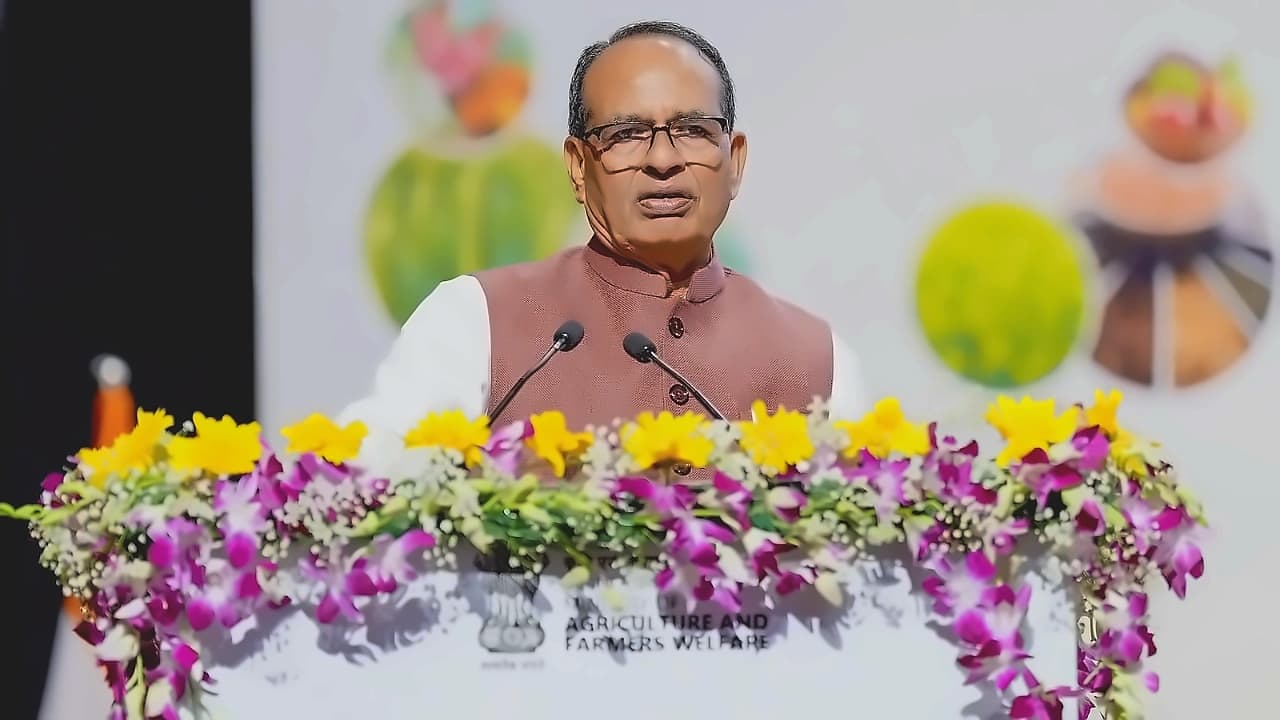
The two-day conference of state finance ministers and finance secretaries concluded on Saturday, September 19, 2026, marking the successful completion of discussions on 'Financing India's Journey Towards Viksit Bharat'. As reported by the Ministry of Finance, the meeting brought together finance ministers and finance secretaries from states and Union Territories with legislatures, along with economists and financial experts to deliberate on key financing challenges and opportunities linked to India's development priorities. The conference emphasized coordination between the Union government and states in financing the country's development priorities, with deliberations guided by the spirit of 'Team India' - the Union and state governments working together towards the shared vision of Viksit Bharat. Eminent experts, including Dr Sajjid Z Chinoy, Dr Samiran Chakraborty, Professor Ashima Goyal and Dr Harsh Kumar Bhanwala, shared their insights during the sessions, providing deeper understanding of challenges ahead while highlighting opportunities on India's path towards becoming a Viksit Bharat.
The latest developments reveal that GST 2.0 will introduce Merchant Discount Rate (MDR) charges of 0.4% on UPI transactions exceeding ₹2,000, as reported by PIONEER NEWS SERVICE. According to tax experts, GST will be levied at 18% on these MDR charges, which will be recovered by banks from merchants. Large, GST-registered enterprises will be able to claim Input Tax Credit (ITC), effectively neutralizing the tax burden for the exchequer. This framework is projected to generate over ₹5,000 crore annually in fresh GST revenue while maintaining India's retail digital adoption experience. EY India Tax Partner Saurabh Agarwal confirmed that the 18% GST will be levied on MDR charges which will be recovered by banks from the merchant, creating minimal friction as it qualifies fully for Input Tax Credit.
According to Business Standard, a background paper circulated for the conference will examine the implications of GST 2.0 for states, along with issues including private financing for Viksit Bharat, financing agricultural markets, renewable energy and transmission assets, and carbon capture, utilisation and storage. The conference concluded with three thematic sessions on the macroeconomic outlook, financing agricultural transformation and financing the energy transition. Key themes discussed included financing agricultural transformation and financing the energy transition, with experts examining the challenges and opportunities associated with these areas. Background papers circulated among participants included those on macroeconomic milestones and pathways towards Viksit Bharat, private financing for Viksit Bharat, implications of GST 2.0 for states, financing agricultural markets and marketing, and financing resilience and sustainable resource use in Indian agriculture. Other papers focused on financing renewable energy and transmission assets and financing carbon capture, utilisation and storage.
As reported by Business Standard, former finance secretary and 15th Finance Commission Chairman N K Singh delivered the keynote address at the inaugural session, while former Maharashtra additional chief secretary and finance secretary Sudhir Shrivastava presented the state perspective on financing Viksit Bharat. Department of Economic Affairs Secretary Anuradha Thakur outlined the objectives of the conference during the inaugural session. MoSPI Secretary Saurabh Garg highlighted the importance of measuring growth outcomes in India's journey towards Viksit Bharat, while MeitY Secretary S Krishnan spoke on the role of new-age technology in promoting good governance. The conference represented a significant platform for discussing India's development financing strategies and policy frameworks, with Finance Minister Nirmala Sitharaman attending the conference as confirmed by the ministry statement.
Market benchmark indices Sensex and Nifty rebounded on Wednesday following the GST 2.0 announcement, with Sensex climbing 332.63 points to settle at 74,336.45 and Nifty ending at 23,217.60, up 99 points. According to PIONEER NEWS SERVICE, bank stocks drove the rally in equities, with ITC, State Bank of India, Axis Bank, Trent, Mahindra & Mahindra and Bharat Electronics being major winners. The 18% GST on MDR charges is projected to generate ₹3,500-4,000 crore in annual GST collections, effectively neutralizing the revenue burden while maintaining the zero-fee experience that drives India's retail digital adoption. EY India's Saurabh Agarwal noted that this structural update strikes a calculated balance, building a lucrative revenue stream for the Government while funding payment infrastructure.