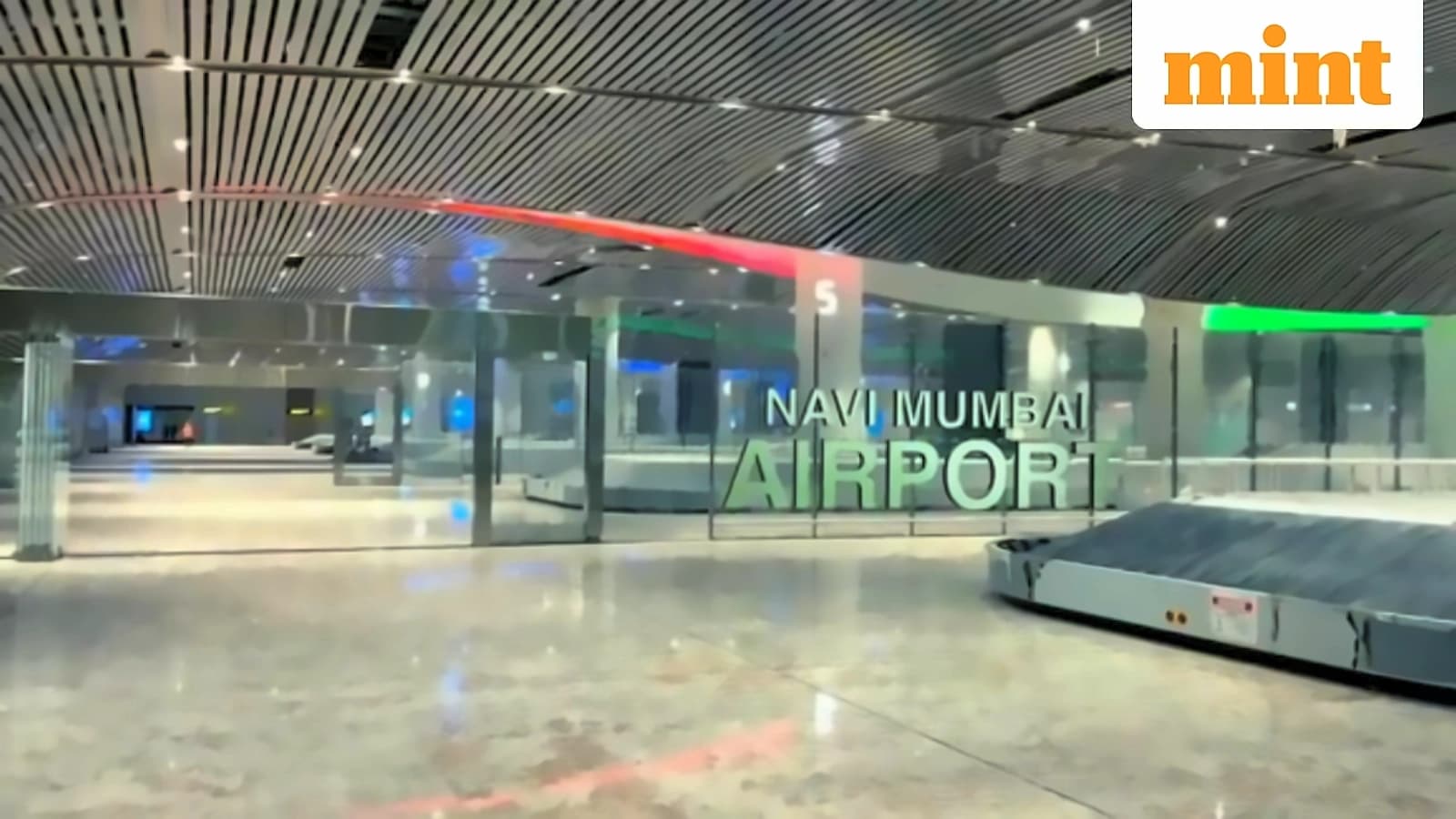
Adani Airports CEO Arun Bansal has categorically ruled out entering the airline business, stating that "as airport CEO, I would not like to compete with my own customers. My hands are full." Speaking at the SBI Banking and Economics Conclave, Bansal emphasized that "India will be the fastest-growing aviation market in the world over the next 10 years and will be among the top two markets." The CEO noted that India's aviation sector could expand about tenfold over the next two decades, driven by GDP growth potentially increasing eightfold in 20 years. Adani Airports currently handles about 100 million passengers and operates eight airports including Mumbai, Ahmedabad, Lucknow, Thiruvananthapuram, Jaipur, Guwahati and Navi Mumbai. Bansal indicated the company planned to invest about $11 billion in airport infrastructure in India over the next five years, focusing on expanding its airport operations rather than entering the airline business.
The Centre is examining whether airport operators such as Adani Airport Holdings Ltd and GMR Airports should be allowed to own airlines, with Civil Aviation Minister K Rammohan Naidu confirming that "the government will assess the pros and cons of the proposal and decide on a balanced approach." Speaking at a press conference, Naidu emphasized that "the country needs more airlines to come into the picture. Now, airports and airlines operating together need some deliberation on that." This policy consideration comes as India's wealthy business families increasingly shift from traditional family businesses to family offices, private equity and startup investments. The proposal would particularly benefit the Adani Group, operator of Mumbai and seven other airports, and GMR Airports, which manages New Delhi and four additional facilities. A final decision has not yet been taken, with Naidu noting that "Pros and cons are being looked at. And no final decision has yet been taken."
There is currently no general law preventing cross-holding between airport operators and airlines, Naidu explained. However, restrictions exist under airport-specific agreements, including the Operations Management and Development Agreements (OMDAs) governing the Delhi and Mumbai airports. Under existing arrangements, operators of the Delhi and Mumbai airports can hold up to 10% in an airline. "For example, if BIAL or Bangalore International Airport Ltd, which is also a private operator, wants to operate an airline, there is no rule as such stopping it," Naidu said, noting that Fairfax owns a majority stake in BIAL, which manages the Bengaluru airport. The regulatory framework reflects the evolving nature of family business ownership, where traditional dynastic enterprises are giving way to more diversified investment portfolios. The proposal would waive the rule that bars New Delhi and Mumbai airport operators from owning more than a 10% stake in airlines.
India faces a severe airline market concentration problem, with IndiGo and Air India flying nine out of 10 domestic passengers in the world's fourth-largest aviation market. The collapse of Jet Airways India Ltd. and Go Airlines India Ltd., along with the merger of Vistara and AirAsia India under the Tata Group, has left IndiGo and Air India in a dominant position. "India doesn't have that many large carriers. Barring IndiGo (Interglobe Aviation Ltd) with over 400 planes and the Air India group that has over 290, no other airline in the country has even 50 aircraft in its fleet," Naidu noted. The government needs at least five carriers, each with at least 100 aircraft, and Naidu emphasized that "We are willing to consider anyone who applies for a new airline." The possibility of airport-airline cross-holding has drawn criticism from IndiGo, with co-founder and managing director Rahul Bhatia stating that allowing such ownership would be "without global precedent."
Minister Naidu outlined ambitious plans for India's aviation infrastructure, stating that "people, even in small towns, want airports in their vicinity. So, it is important for us to plan not only for the aspirations today, but for Viksit Bharat 2047 also." He emphasized that "India should ideally have more than 350 airports," reflecting the country's growing travel demand and expanding airport network. The ministry is actively supporting this ambition given the country's size and growing airport infrastructure. This infrastructure expansion aligns with the broader trend of family businesses diversifying their investment strategies beyond traditional manufacturing and industrial operations.
Separately, the civil aviation ministry is monitoring SpiceJet's operational and financial position through the Directorate General of Civil Aviation (DGCA). "The immediate activity in the ministry regarding SpiceJet involves operational scrutiny and, to an extent, financial scrutiny through the Directorate General of Civil Aviation. We do not want any lapse in safety," Naidu said. SpiceJet had sought around ₹500 crore of government-backed funding support from banks, of which around ₹150 crore has been disbursed, Naidu confirmed. The government had extended the Emergency Credit Line Guarantee Scheme to airlines facing financial difficulties, including those arising from disruptions related to the West Asia war. "Our major priority right now is to ensure the passengers shouldn't face any inconvenience. The safety shouldn't be compromised at any cost in terms of operations. And that smooth operations are sustained in the airline," Naidu added.