The Centre has released an interim allocation of ₹95,692 crore under the newly introduced Viksit Bharat Guarantee for Rozgar and Ajeevika Mission (Grameen), or VB-G RAM G, scheme. According to reports from Business Standard, this allocation comes ahead of the formal launch of VB-G RAM G on July 1, 2026, across the country. The interim allocation includes ₹8,508 crore for West Bengal, which represents among the highest allocations the Centre has made to the state under any demand-for-work programme since March 2022. Union Agriculture and Rural Development Minister Shivraj Singh Chouhan stated that after adding the mandatory state contribution, the total annual outlay under the scheme would be around ₹1.51 lakh crore. As per The Hindu, Chouhan emphasized that the new law is not merely a transition of a scheme, but an issue connected with the lives and livelihoods of crores of workers, ensuring a completely smooth, worker-centric transition without any disruption.
The Centre has now allocated ₹30,000 crore under the existing Mahatma Gandhi National Rural Employment Guarantee Act (MGNREGA) and released the interim allocation of ₹95,692 crore, bringing the total allocation for rural employment and development to exceed ₹1.25 lakh crore. According to Upstox News Desk, the funds will reach nearly 2.8 lakh gram panchayats across the country. Chouhan emphasized that "not a single worker should remain without work even for a day" and stressed that no disruption in employment generation, wage payments or statutory rights would be acceptable. The minister urged states to accord advance approvals to an adequate number of projects so that implementation can begin immediately from July 1. As per The Hindu, the Centre's share under the scheme for Andhra Pradesh has been fixed at ₹7,707.21 crore, Bihar at ₹6,715.83 crore, Karnataka at ₹5,709.9 crore, Kerala at ₹3,136.44 crore, Madhya Pradesh at ₹6,252.03 crore, Maharashtra at ₹4,420.32 crore, Rajasthan at ₹7,581.87 crore, Tamil Nadu at ₹7,585.49 crore, Telangana at ₹3,825.31 crore, Uttar Pradesh at ₹9,721.48 crore, and West Bengal at ₹8,508 crore. Among Union Territories, Puducherry has been allocated ₹40.56 crore, Jammu & Kashmir ₹1,151.2 crore, Andaman & Nicobar Islands ₹4.44 crore, Ladakh ₹85.98 crore, Dadra and Nagar Haveli and Daman and Diu ₹9.02 crore and Lakshadweep ₹0.32 crore.
According to the Rural Development Ministry, Uttar Pradesh has been allotted the highest interim allocation of ₹9,721.48 crore, followed by West Bengal at ₹8,508 crore, Tamil Nadu at ₹7,585.49 crore, Rajasthan at ₹7,581.87 crore, Andhra Pradesh at ₹7,707.21 crore, and Bihar at ₹6,715.83 crore. The total allocation for states stands at ₹92,550.17 crore, while Union Territories have been allocated ₹1,291.52 crore. An additional ₹1,850.62 crore has been earmarked for central administration and social audits, taking the total allocation to ₹95,692.31 crore. Since the law has provided for 60:40 share of funding between Centre and States, except for north-east region and border states where the Central share rises to 90 per cent, each state will now have to allocate its share to implement the scheme. Among other states, Chhattisgarh has been allocated ₹3,354.85 crore, Gujarat ₹1,540.54 crore, Himachal Pradesh ₹1,203.28 crore, Jharkhand ₹2,705.64 crore, Kerala ₹3,136.44 crore, Madhya Pradesh ₹6,252.03 crore, Maharashtra ₹4,420.32 crore, Manipur ₹581.99 crore, Meghalaya ₹1,155.09 crore, Mizoram ₹611.65 crore, Nagaland ₹287.85 crore, Odisha ₹3,763.80 crore, and Punjab ₹1,331.61 crore.
As reported by Business Standard, 26 states have completed the procedural requirements necessary for implementing the new scheme, while four states — Jharkhand, Karnataka, Telangana and Mizoram — are yet to complete all formalities. However, representatives of these states attended the meeting and assured the Centre that they were preparing for implementation. Chouhan said he would personally write to the chief ministers of the four states to expedite the exercise, noting that 26 states had already made budgetary provisions in line with the objectives of "Viksit Bharat-Gramin Bharat." The minister said states have been asked to notify the state scheme, declare peak agricultural seasons, frame state rules, complete e-KYC of beneficiaries and undertake awareness and capacity-building exercises at district and block levels. On West Bengal, which was at loggerheads with the Centre over rural development funds for several years, Chouhan said the newly elected state government has conveyed in writing that it is willing to comply with all conditions laid down by the Centre. Asked whether the allocation of ₹8,508 crore for West Bengal included pending dues under the MGNREGA scheme, Chouhan said disputes relating to past dues remained unresolved, but the West Bengal government has given in writing that it is ready to accept all the rules and conditions of the central government.
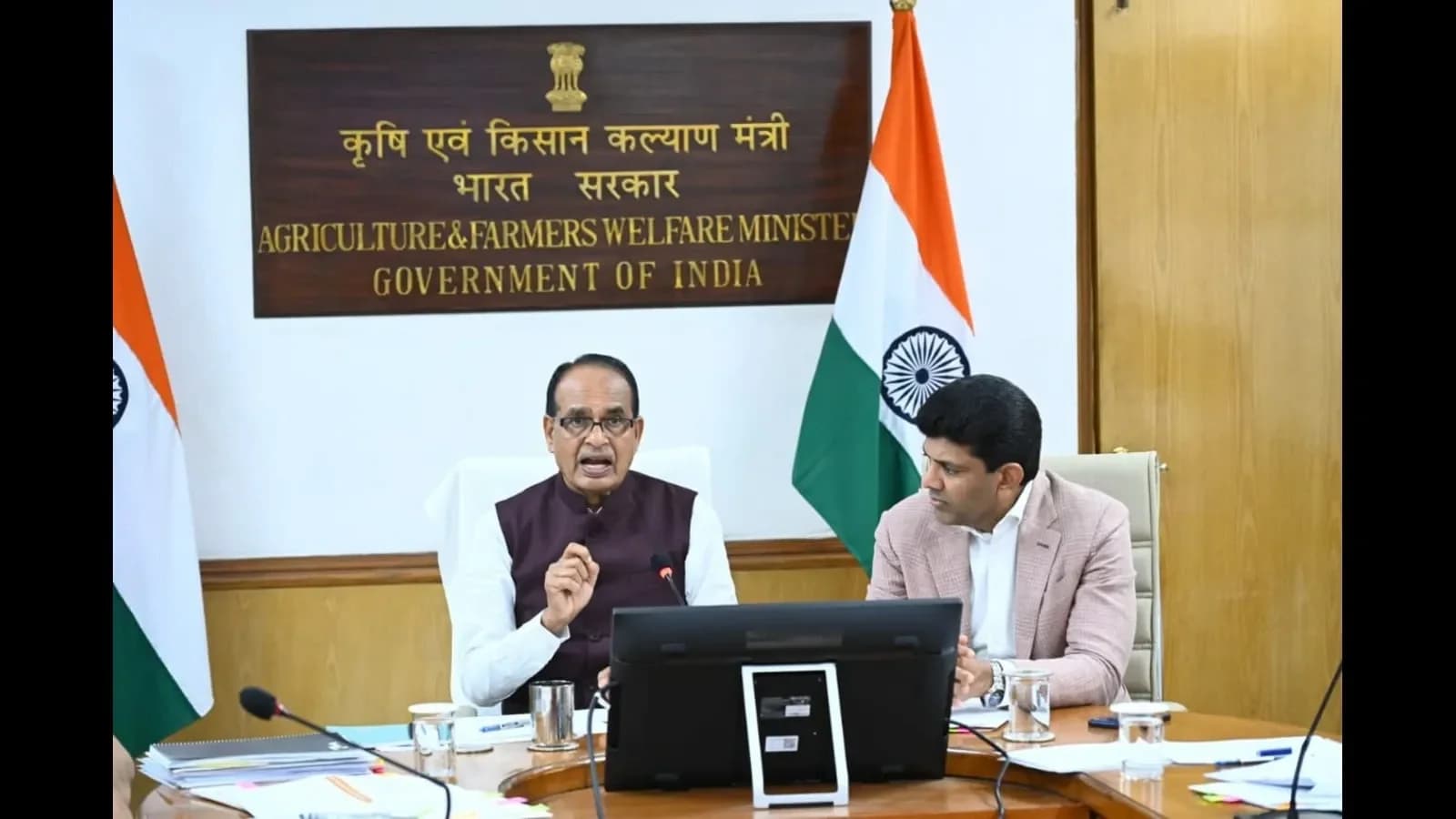
Addressing a virtual meeting of state rural development ministers, Union Agriculture and Rural Development Minister Shivraj Singh Chouhan emphasized that "without causing any inconvenience to workers, we are moving from MGNREGA to VB-G RAM G. There will not be a gap of even a single day in the availability of work." According to Upstox News Desk, works will be identified through gram panchayats and gram sabhas and finalised on the basis of local proposals. Chouhan directed officials to ensure that there was no reduction in employment generation or delay in wage payments under MGNREGA before the July 1 transition. He also directed states to issue notifications for implementation of the new framework, noting that Mizoram, Puducherry and Andhra Pradesh had already done so. As per The Hindu, the amount would reach nearly 2.80 lakh Gram Panchayats across the country, ensuring that each Panchayat receives funds worth lakhs of rupees, with the funds to be utilised for development works identified under the provisions of the Act so that employment generation and the creation of rural assets are both ensured. The BJP-led NDA government had announced the replacement of MGNREGS with the VB-G RAM G as part of its broader rural development agenda, with the Centre maintaining that the new programme will retain the employment guarantee component while providing greater flexibility for creation of rural assets and infrastructure. Speaking on digital and administrative preparedness, Chouhan said that many states have made remarkable progress in processes such as DBT, SMS-based information systems, e-KYC and face authentication, which indicate successful implementation of the new arrangement.