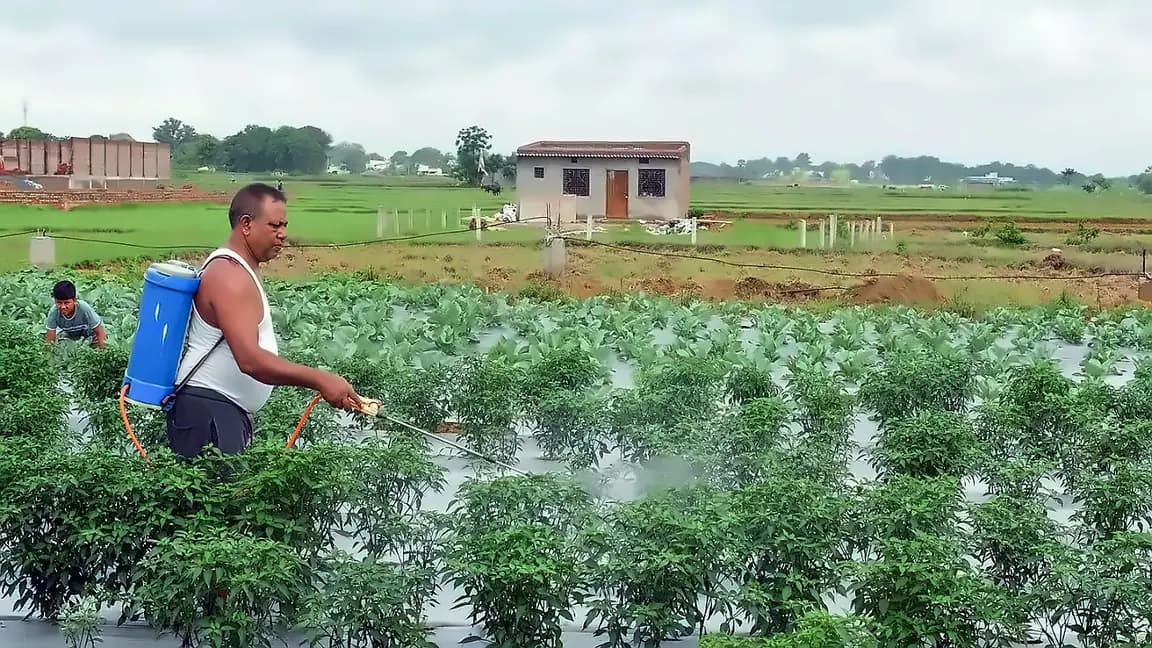
The Centre on Wednesday approved the continuation of the SARTHAK-PDS scheme for five years with a financial outlay of ₹25,530 crore until March 2031, marking a significant step towards overhauling the country's public distribution infrastructure through technology-led reforms. According to the latest cabinet briefing, the scheme will operate from April 1, 2026 to March 31, 2031, combining two existing programmes related to transport and handling of foodgrains under the National Food Security Act (NFSA) and the SMART PDS technology reform scheme. IT Minister Ashwini Vaishnav clarified that the platform is not a replacement for the existing PDS system but rather a "step aimed at improving overall PDS efficiency and delivery mechanism" as part of broader structural reforms in public distribution. The scheme aims to integrate intra-state foodgrain movement, track dealer margins, and support multilingual accessibility for beneficiaries across the country, ensuring smoother ration delivery and reducing leakages. The initiative will provide comprehensive assistance to State agencies for intra-state movement of food grains, along with support for fair price shops and modernisation of the public distribution system, supporting nearly 80 crore beneficiaries covered under NFSA.
The scheme will continue financial support for transporting foodgrains within states and for fair price shop (FPS) dealer commissions, working towards fulfilling the Government of India's commitment to 81.35 crore persons covered under NFSA. As per the latest briefing, SARTHAK-PDS will provide comprehensive assistance to State agencies for intra-state movement of food grains, along with support for fair price shops and modernisation of the public distribution system. The platform aims to integrate intra-state foodgrain movement, track dealer margins, and support multilingual accessibility for beneficiaries across the country, ensuring smoother ration delivery and reducing leakages. Information and Broadcasting Minister Ashwini Vaishnaw confirmed that the approval covers the entire PDS value chain, from "selection of beneficiaries to movement of foodgrains, to getting proactive feedback from citizens, to reducing transportation distance" with the ₹25,530 crore outlay. The "structural reform of the entire PDS system" is not intended to replace existing framework but to improve transportation, logistics and material-handling efficiencies across the network.
The scheme will push wider use of technology in ration distribution systems, including real-time monitoring, digital databases and grievance systems. According to the latest announcement, a SMART-PDS system was also announced as part of the PDS modernisation plan, featuring three major AI-enabled modules. The NIRMAL module is an AI-driven real-time PDS beneficiary registry with live inter-ministry integration and cross-scheme convergence. The ASHA module is a multilingual AI grievance and citizen engagement platform accessible across calls, WhatsApp, IVRS, and chatbot, scalable to 3 lakh interactions a day. The SAKSHAM module is an AI-enabled supply chain platform with vehicle tracking, QR traceability, demand forecasting, and route optimisation. The revamped platform will use technologies such as artificial intelligence, machine learning, natural language processing and blockchain to improve monitoring, grievance redressal and supply-chain management, with the scheme also proposing state-level command and control centres and unified databases for PDS operations. Key deliverables include standardised architectures and unified databases for real-time monitoring, AI-driven grievance redressal and analytics systems, and ISO-certified process frameworks to ensure transparency, security and operational sustainability.
Union Information and Broadcasting Minister Ashwini Vaishnaw announced that the Union Cabinet decided to increase remuneration for dealers operating fair price shops under the programme. As per the latest briefing, for a long time, the remuneration allocated to the dealers had remained static, with pressing need to increase it as demands were pouring in from the field from all quarters. The Government of India has decided to provide financial support to cover costs associated with transporting food grains from large FCI warehouses within the state to various districts, divisions, and ultimately to the Fair Price Shops. State government agencies were facing difficulties in bearing these costs, and the Government of India has decided to address this issue through the SARTHAK-PDS scheme. The Cabinet Committee on Economic Affairs (CCEA), chaired by Prime Minister Narendra Modi, also cleared a revision in norms governing Central assistance to states and union territories for intra-state movement and handling of foodgrains, along with fair price shop (FPS) dealers' margins, while retaining the existing funding pattern. However, the All India FPS Dealers Federation criticised the allocation, stating that upon analysing the allocation, their apprehensions had proved correct: The commission for ration dealers had been increased by a mere 10 paise per kilogram, which was grossly inadequate.
SARTHAK-PDS draws on over a decade of technology reforms in the PDS ecosystem, building upon earlier initiatives including end-to-end computerisation of the Targeted Public Distribution System (TPDS), Integrated Management of PDS (IM-PDS) and SMART PDS, as well as citizen-facing applications such as Mera Ration, Anna Mitra, the Rightful Targeting Dashboard and Anna Sahayata. Since April 1, 2023, the SMART PDS scheme has served as the cornerstone of technology-led reforms, enabling complete digitisation of ration cards, Aadhaar seeding, FPS automation through electronic Point of Sale (e-PoS) devices, online allocation and computerised supply-chain management across all 36 states and union territories. According to IT Minister Ashwini Vaishnav, the IndiaAI Mission is set to support the PDS, with transportation of food grains expected to reduce by 15-50% due to these integrations. Carbon emissions linked to foodgrain movement are expected to decline by 35% due to these technological improvements. The scheme carries a dual mandate: providing assured financial support for intra-state movement, handling and FPS dealers' margins on one hand, and building a unified, citizen-centric and interoperable PDS architecture on the other — aimed at ensuring last-mile service delivery while minimising leakages.