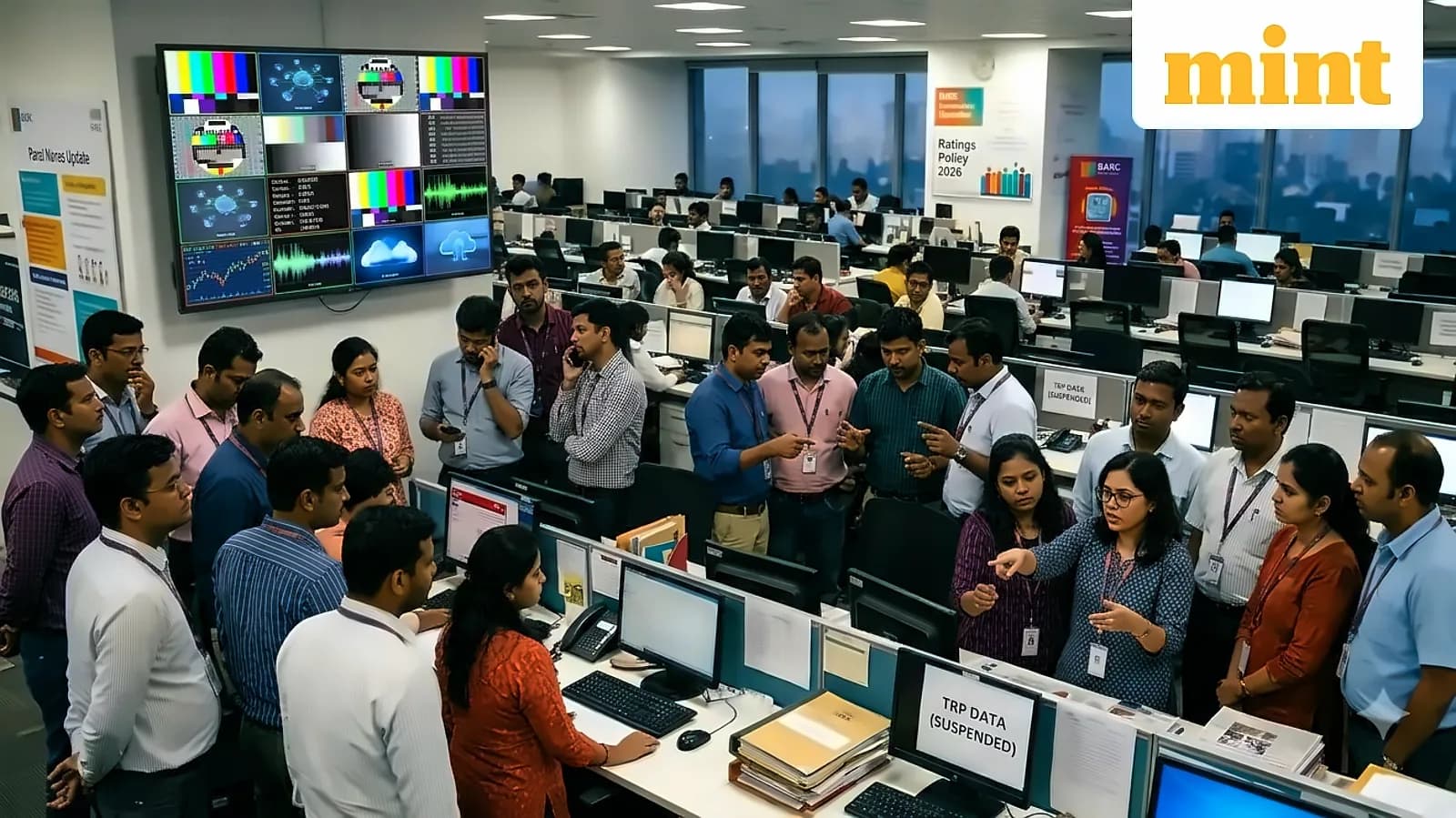
The Ministry of Information and Broadcasting's suspension of Broadcast Audience Research Council (BARC) ratings has created an immediate commercial paralysis across India's television industry. According to reports from NDTV Profit, this regulatory pause was intended as a pressure tactic to accelerate compliance under the Television Ratings Policy, 2026, but has instead triggered devastating consequences for the entire ecosystem. The suspension removes the single empirical currency that holds India's television market together, fundamentally disrupting the traditional measurement system that underpins television advertising and audience research. India has had no weekly television ratings since early July 2026, leaving broadcasters, advertisers and media agencies without the audience data they normally use to plan, price and evaluate TV campaigns.
The disruption affects 70% of television channels that rely solely on advertising revenue to survive, as reported by NDTV Profit. Television broadcasters are being dealt a crushing blow during the crucial festive window when annual advertising commitments and major brand launches are traditionally locked in. The suspension forces broadcasters to market prime-time programming on speculative assumptions, losing pricing power and forward revenue visibility. Emerging, regional, and niche channels face acute existential precarity as they depend on data spikes to prove value to mainstream media planners.
The regulatory crisis unfolded through a series of policy changes and suspensions. March 6, 2026: The ministry directed BARC to suspend ratings for news channels for four weeks or until further directions, citing concerns over coverage of the Israel-Iran conflict. March 27, 2026: The ministry notified the TV Ratings Policy 2026, replacing the guidelines for TV rating agencies issued on January 16, 2014. April 29, 2026: BARC submitted its application for registration under the new policy, according to industry reports. May 8, 2026: The ministry amended the policy, with at least 33% of a ratings agency's board now required to be independent directors. July 24, 2026: Information and Broadcasting Minister Ashwini Vaishnaw told the Rajya Sabha that no entity was yet registered under the new policy, and that the policy places no limit on how many agencies can be registered. August 2026: Industry reports said a ministry wing had recommended provisional registration for BARC, conditional on it meeting the policy's remaining requirements, with a possible review in January 2027. November 2026: According to industry reports, weekly ratings have yet to resume.

Television advertising relies entirely on third-party verification to price inventory, establish reach, and deliver return on investment. According to NDTV Profit, the suspension strips broadcasters of this common measurement system, while global digital platforms and walled gardens are reaping an unearned windfall. Digital media, with its proprietary ad-tech metrics, has absorbed diverted budgets simply because it offers measurable immediacy. This shift threatens linear television, which is already grappling with structural declines, regulatory friction, and ad-revenue erosion.
The ultimate casualty of this manufactured blackout is the Indian consumer, according to NDTV Profit. Television remains the country's most democratic and affordable medium of mass information and entertainment. When monetisation collapses, production budgets are slashed, original script development is shelved, and regional journalism is starved of investigative resources. Without granular audience feedback, creators cannot gauge what the public demands, flattening narrative variety into safe, low-cost homogeneity. The ministry must abandon the illusion that enforcement requires economic disruption and restore BARC ratings immediately to prevent further damage to India's creative economy.