The 8th central pay commission (CPC) has modified guidelines on eligibility criteria and essential qualifications for vacancies of its contract-based consultant roles. According to a notice posted to the official website, eligible applicants can submit entries through a form on the CPC's website. The vacancies are for fixed periods and require 'high end services or for attending to specific and time-bound jobs of the Commission'. As reported by Mint, the full-time consultants shall not be permitted to take up any other assignment during the period of consultancy with the Commission, and engagement can be cancelled at any time without assigning any reason.
The application deadline is 31 August 2026 for 23 roles, across various experience levels and pay scales. According to the notice, these are for three categories based on age limit, experience and posts available. The roles include Consultant (Senior Consultant) with over 10 years experience and age limit of 45 years (2 vacancies from 5), Consultant with over 6 years experience and age limit of 40 years (5 vacancies), and Consultant (Young Professional) with over 2 years experience and age limit of 32 years (16 vacancies from 10). Notably, those who have applied earlier need not apply again, as stated in the official notice. The Commission has clarified that candidates who had already applied under the earlier recruitment rules do not need to submit a fresh application. The revised framework creates a significant number of positions for younger professionals, with 16 posts reserved for Young Professionals compared to 2 Senior Consultant and 5 Consultant positions.
The essential qualifications have been updated to include Masters or MBA degree in HR/Industrial Relations, LL.B with relevant experience in law research or handling service matters in Tribunals/Courts, and B.Tech/M.Tech with relevant experience in IT/data analysis. As reported by Mint, candidates must have aptitude for general research, knowledge of working on excel/spreadsheets and preparing presentations, and candidates who have handled matters related to pay or emolument structure would be given preference. All categories require knowledge of working on excel/spreadsheets and preparing presentations as a must requirement. The Commission has clarified that applicants do not need to hold one particular degree to qualify for these positions, with broader eligibility criteria allowing professionals from different academic and career backgrounds to apply. Law graduates enrolled with a Bar Council or Bar Association may also be eligible if they have relevant experience in legal research or service-related matters before tribunals and courts. Candidates with B.Tech or M.Tech degrees may also qualify, particularly if they have experience in IT, data analysis or data visualisation.
The term is for one-year contract or up to the tenure of the Commission, whichever is less. According to the notice, extension beyond one year shall be subject to performance and professionalism of the consultant. Candidates will receive offer of engagement via email only and have seven days to consent. A maximum period of 30 days shall be given for joining from the date of e-mailing offer of engagement letter. The salary structure varies by role and work type, with full-time consultants receiving ₹1,80,000 for Senior Consultants, ₹1,20,000 for Consultants, and ₹90,000 for Young Professional Consultants. Part-time options are also available at ₹60,000 and ₹45,000 for different work schedules. Unlike regular government employment, contract staff do not accrue pension; however, NABCONS may offer limited provident fund or gratuity provisions.
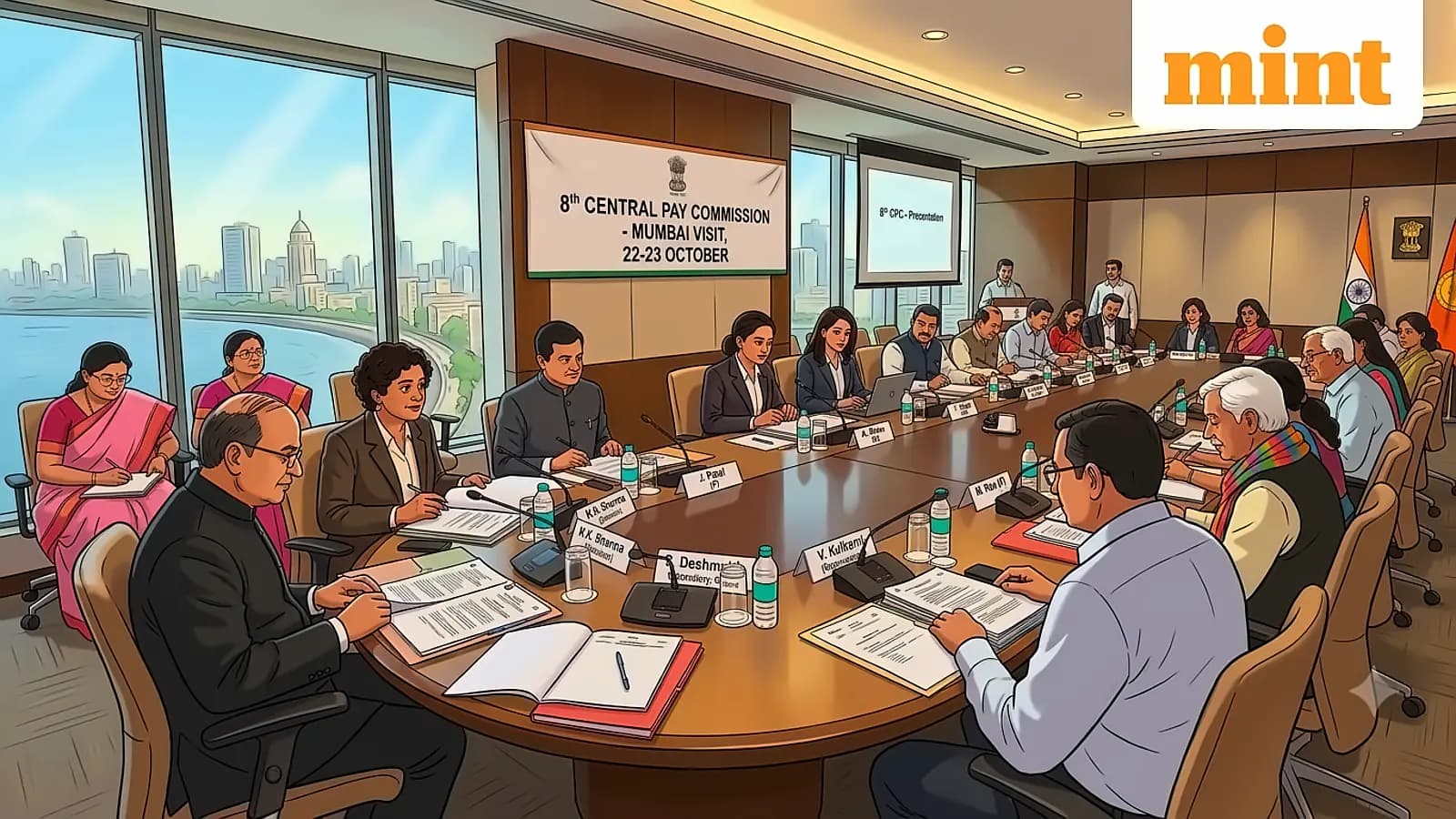
The 8th Central Pay Commission is conducting multiple state visits in August and September 2026 to interact with employee and pensioner associations across the country. According to Mint, the commission will visit Jaipur from 31 August to 1 September, Chennai from 7-8 September, Puducherry on 9 September, and Chandigarh from 16-18 September. Additionally, the panel plans to visit railway departments under the Central Railway Zone in Mumbai to gain firsthand experience of worker conditions. Concerned stakeholders must submit requests for appointments by 18 August for Jaipur, Chennai and Puducherry dates, and 25 August for Chandigarh dates. These meetings are expected to feature discussions on revision of fitment factor and basic pay structure, salary revisions keeping pace with inflation, reorganisation of allowances like HRA and transport allowance, pension reforms for retirement security, and measures to improve compensation competitiveness. The commission closed submission of suggestions on 15 June and data on 31 July, with the absolute deadline to submit recommendations set for May 2027.
The 8th Central Pay Commission has entered a crucial phase with an 18-month deadline set for May 2027 to submit its recommendations. According to the latest reports from Mint, the Commission's work involves examining issues relating to pay, allowances, pensions and other service conditions of central government employees, considering factors such as the country's economic conditions, fiscal prudence, and prevailing compensation in central public sector undertakings and private sector. The Finance Ministry has confirmed that the Commission was constituted through a Resolution dated November 3, 2025, with the 18-month period pointing to May 2027 as the broad deadline for submission of recommendations. However, employees should note that the report deadline is not the same as implementation date, as the government has not announced a final implementation date for the recommendations. The government's October 2025 announcement indicated that based on the usual 10-year cycle, the effect of 8th CPC recommendations would normally be expected from January 1, 2026, but this remains an indication based on tradition, not a confirmed implementation date. The Commission has been conducting multiple state visits since March to meet employee representative groups, unions and stakeholders, with plans for more meetings across states and union territories in the coming months. Based on past trends, once the pay commission's recommendations are made, the rollout takes another two to three years to complete, meaning hikes announced in 2027 may only be fully implemented by 2029 or 2030.