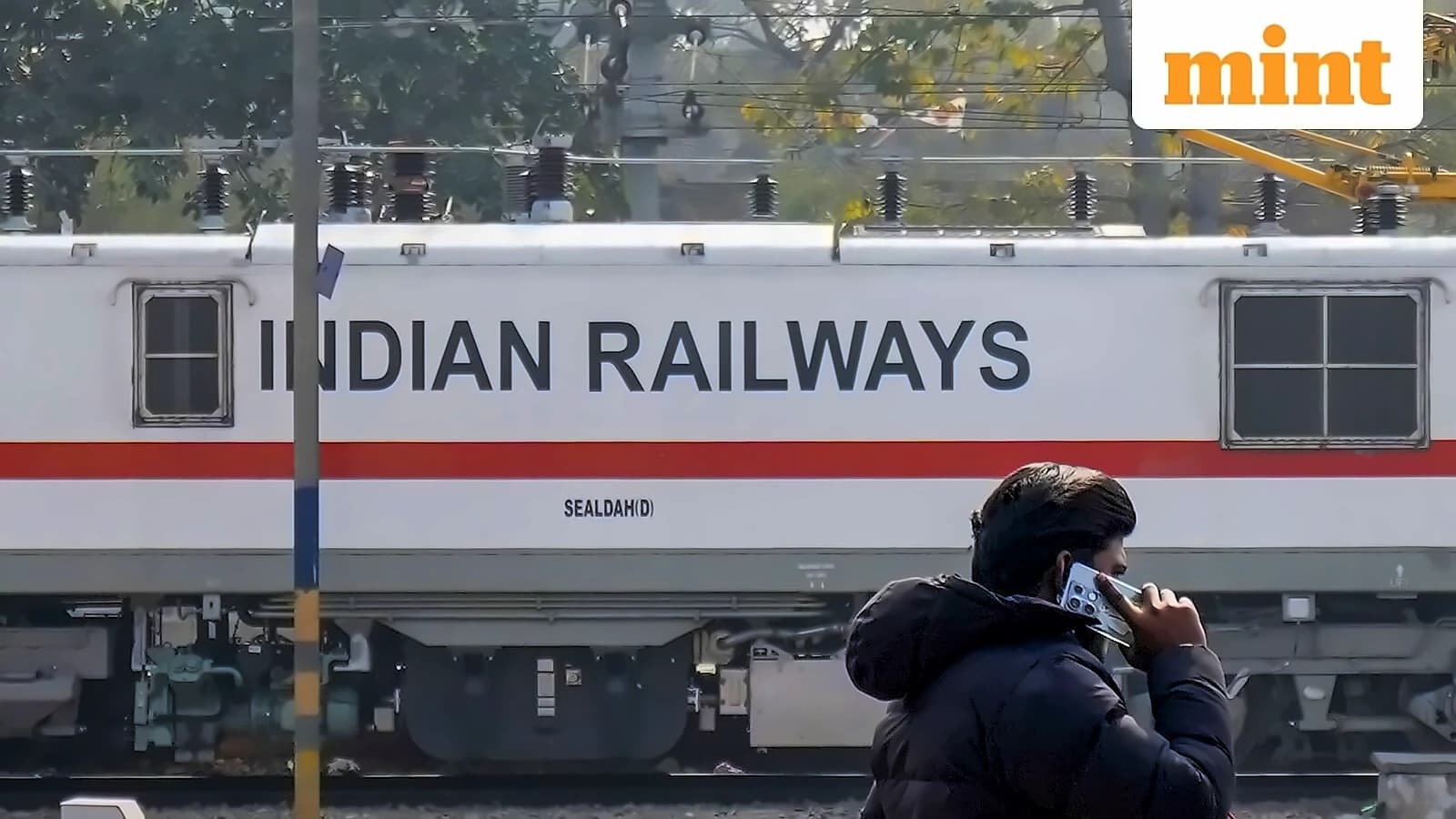
The Indian Railway Technical Supervisors' Association (IRTSA) has submitted a comprehensive proposal to the 8th Pay Commission that could push salary revisions beyond 400% for senior employees. According to reports from The Times of India, Firstpost, NDTV, and latest analysis from The Economic Times, the association has recommended a tiered fitment factor structure across different pay levels, with levels 1 to 5 receiving a 2.92 multiplier, levels 6 to 8 getting 3.50, levels 9 to 12 receiving 3.80, levels 13 to 16 seeing 4.09, and levels 17 to 18 benefiting from 4.38. Under this proposal, an employee with a basic pay of ₹2.5 lakh under Levels 17-18 could see their salary rise to nearly ₹10.95 lakh under the proposed 4.38 factor. Illustrative outcomes show that an employee in Level 6–8 earning ₹45,000 could see basic pay rise to ₹1,57,500, while a lower-grade employee earning ₹20,000 could move to nearly ₹58,400 under the proposed structure. Instead of asking for one common fitment factor for everyone, the association has proposed five different fitment factors for different pay levels, marking a major shift from previous pay commissions. The proposal has attracted attention because of the potential increase in salaries at the highest levels, with experts noting that such calculations are based only on basic pay, while government employees also receive other components such as dearness allowance, house rent allowance, and travel allowance.

The fitment factor has become the central point of discussion in the 8th Pay Commission deliberations. As reported by The Times of India, Firstpost, NDTV, and The Economic Times, under the 7th Pay Commission, the fitment factor was fixed at 2.57, but employee unions are now pushing for significantly higher multipliers, with some demands going up to 3.83 and beyond 4.0. The National Council-Joint Consultative Machinery has demanded a minimum basic pay of ₹69,000, while the Bharatiya Pratiraksha Mazdoor Sangh has reportedly proposed ₹72,000 minimum pay along with a 4.0 fitment factor. The new salary calculation formula is defined as New Basic Pay = Current Basic Pay X Fitment Factor. A higher fitment factor does not only increase monthly salaries; it also raises pension payouts for retirees, allowances linked to basic pay, arrears or backdated payments, and long-term retirement liabilities across departments. The impact would also extend to state governments, which have historically followed Central Pay Commission recommendations. However, experts believe the government is likely to balance employee welfare with fiscal considerations while finalising the recommendations, with several analysts expecting the eventual fitment factor under the 8th Pay Commission to be in the range of 2.28 to 2.86, which is lower than the levels sought by some employee unions.
Beyond salary revisions, employee representatives are making several other demands that could significantly impact government finances. According to The Times of India, Firstpost, NDTV, and The Economic Times, the IRTSA has sought a separate pay structure for technical staff, faster promotions, 5% annual increments, and merger of 50% Dearness Allowance into basic pay before recalculation of salaries. The association has also flagged the issue of 'salary compression' between junior and senior staff, particularly for technical employees engaged in safety-critical roles in Indian Railways. In practical terms, this means senior employees handling more complex, technical, and safety-critical responsibilities in the Railways often do not see a proportionate difference in pay compared to junior staff. Additionally, unions are discussing revision of the 'family unit' assumption from 3 to 5 to account for modern household financial burdens. As reported by The Times of India, unions argue that today's families face much more financial pressure than when the original salary structures were created decades ago, with many employees now supporting spouse, children, and elderly parents while dealing with rising healthcare, housing, and education costs. Apart from IRTSA, several employee organisations have put forward their own demands, with the National Council-Joint Consultative Machinery (NC-JCM) representing central government employees having reportedly sought a minimum basic pay of ₹69,000 and a fitment factor of 3.83. Other employee groups have also demanded improvements in pension benefits and restoration of the Old Pension Scheme.
The scale of demands has raised significant concerns over fiscal sustainability and implementation challenges. As reported by The Times of India, Firstpost, NDTV, and The Economic Times, a higher fitment factor would not only increase salaries but also significantly raise pensions, allowances, arrears, and long-term retirement liabilities across departments. The impact would also extend to state governments, which have historically followed Central Pay Commission recommendations. Economists and analysts have raised concerns about the fiscal implications of a large salary increase, with a significant revision in salaries potentially increasing the government's expenditure on wages and pensions, potentially putting pressure on fiscal deficit targets. Higher government salaries could also have broader economic implications, with increased disposable income among government employees potentially boosting consumption in sectors such as housing, automobiles, consumer goods and retail. At the same time, higher spending could contribute to inflationary pressures if demand rises sharply. Even union representatives admit in private that not all their demands will be met, as the government must balance employee welfare with financial pressures, pension liabilities, and the risk of inflation. The railway union's proposal comes amid a broader push from employee groups for higher wages and stronger retirement security, with several unions demanding higher minimum basic pay thresholds, fitment factors above 3.0 and in some cases closer to 4.0, along with inflation-linked wage protection mechanisms. However, there is also recognition within policy circles that fiscal constraints and rising pension obligations may limit the scope for aggressive revisions, with a middle-path outcome increasingly seen as the most likely direction.
The Old Pension Scheme (OPS) issue has resurfaced in the current discussions, with several unions continuing to demand its restoration. According to The Times of India, Firstpost, NDTV, and The Economic Times, while some unions acknowledge that dismantling the National Pension System (NPS) may no longer be feasible after years of implementation, many are now pushing for OPS-like protections, including guaranteed pension mechanisms, DA-linked pension security, and minimum assured pension structures. The Commission has scheduled visits to Bhubaneswar on July 6 and 7, and will also hold consultations in Lucknow, Hyderabad, Srinagar, Ladakh, and Jammu & Kashmir. The 8th Pay Commission was formally constituted on November 3, 2025, continuing a process that began in 1946 with India having seen seven previous commissions. The panel is expected to impact more than 1.1 crore beneficiaries, including central government employees, pensioners, and their families. The final recommendations of the 8th Pay Commission are expected to be closely watched by millions of central government employees, pensioners and defence personnel, as they will determine the next round of salary and pension revisions. The commission's recommendations will also be important for state governments, many of which typically take cues from central pay commission revisions while framing their own salary structures.