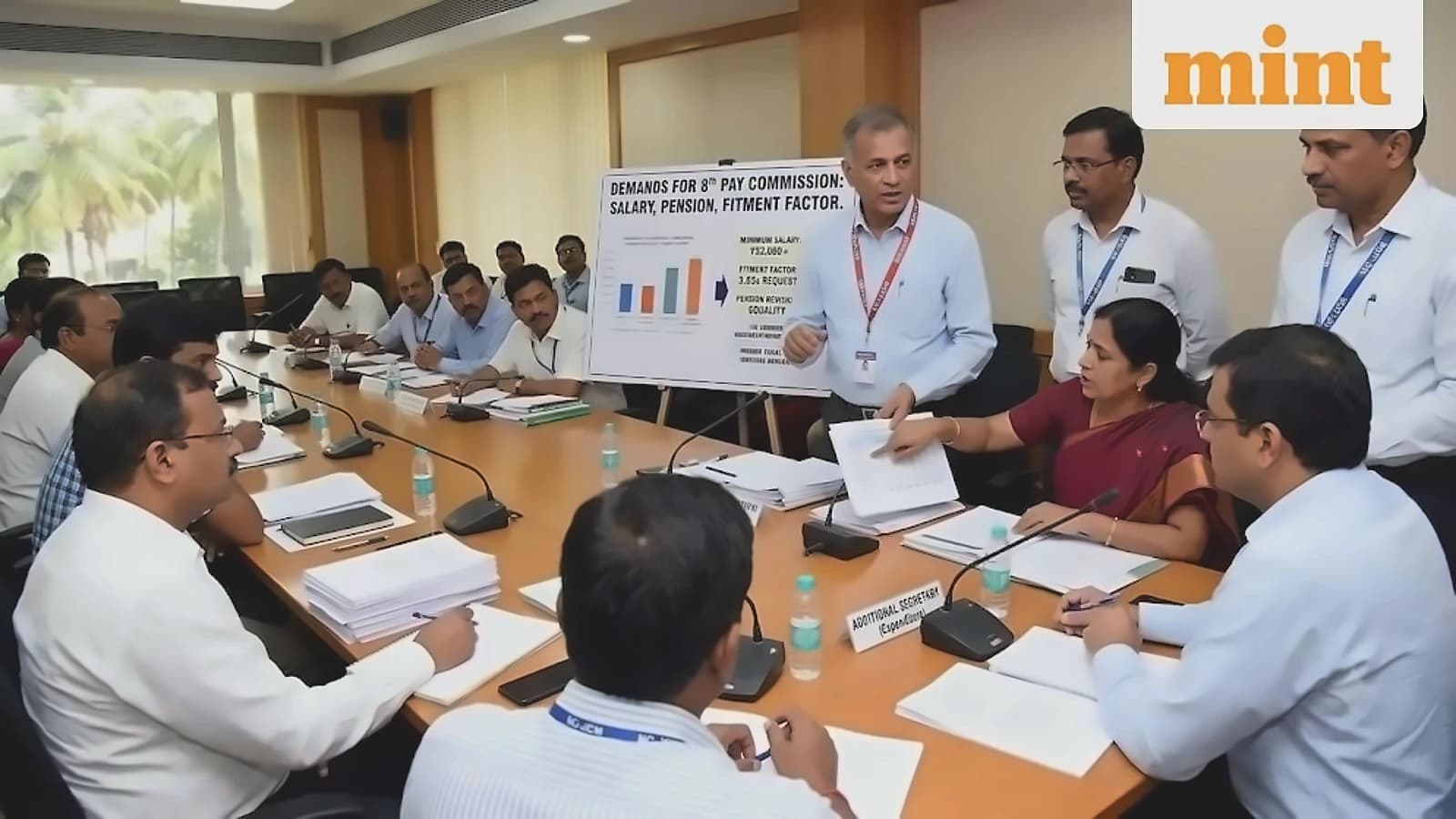
Railway engineers have urged the 8th Pay Commission to restore pay parity, grant Group B status and improve promotions during recent stakeholder consultations. According to Business Standard, the All India Railway Engineers Federation (AIREF) has demanded a comprehensive overhaul of service conditions, restoration of pay parity, reclassification of engineering posts, faster career progression and enhanced allowances for one of Indian Railways' largest technical workforces. AIREF Secretary General BP Dash highlighted that the payment structure for railway engineers has not been sufficient to help them cope with current economic challenges, stating it has steadily deteriorated since the implementation of the 6th Pay Commission. The federation seeks changes in the pay hierarchy that existed until the 5th Pay Commission and requests that railway engineers be given Group B status comparable to that of officers in other Central Government ministries. Dash emphasized that railway engineers, despite their role in railway operations, receive less favourable pay than employees in non-technical and non-safety cadres, urging the Commission to restore the pay structure that existed before the 6th Pay Commission.
A major concern highlighted was the extremely low representation of Group B posts in Indian Railways at just 0.29%, which is significantly below the national average of 7.5%. As reported by Business Standard, AIREF requested that the share of Group B positions be increased to the national average, saying that the current structure severely limits career growth and promotion opportunities. Organising Secretary General Sivakant Singh also highlighted issues of stagnation, lack of motivation and the lack of progress faced by railway engineers. These demands were presented during the 8th Pay Commission's nationwide consultations with employee unions, pensioners and other stakeholders before preparing its final recommendations. During the discussions, Organising Secretary General Sivakant Singh highlighted the prolonged career stagnation faced by railway engineers, emphasizing the urgent need for structural changes in the railway pay hierarchy. The federation has urged the Commission to substantially increase the number of Group B posts, allow Level 6 and Level 7 recruits to enter Group B directly, abolish personal interviews and loco pilot seniority weightage in promotions, and ensure every railway engineer receives at least five functional promotions during service.
AIREF has sought a 15 per cent technical allowance, a 30 per cent risk and hardship allowance for the JE and SSE cadre, an excluded category allowance for employees who work without fixed rest hours under the Hours of Employment Regulations, and restoration of other allowances. According to Business Standard, Bobin Mohanty, adviser to AIREF, highlighted these demands during the interaction with 8th CPC officials in Bhubaneswar. The federation has also demanded a designated weekly rest mechanism for railway engineers, better rest house facilities on a par with running staff, protection against the lapsing of earned leave beyond 300 days, and an increase in leave encashment opportunities from six to 12 occasions. The federation has also sought improvements in welfare measures, including better rest house facilities on a par with running staff, protection against the lapsing of earned leave beyond 300 days, and an increase in leave encashment opportunities from six to 12 occasions.
Employee bodies have proposed contrasting approaches to determining the highest government salary under the 8th Pay Commission, with some seeking a 1:12 cap between minimum and maximum pay while others oppose any such limit. According to Mint, the National Council (JCM) Staff Side, representing several Central government employee unions, has recommended that the ratio between the minimum and maximum pay should not exceed 1:12. The memorandum states that limiting the ratio would help reduce excessive income disparity within government service, improve employee morale and reinforce the government's role as a model employer committed to fairness and social justice. Similarly, the Railway Senior Citizens Welfare Society (RSCWS) has recommended maintaining a balanced relationship between the lowest and highest pay levels in the salary structure. These proposals on maximum salary are among several representations submitted by employee organisations to the 8th Pay Commission, with other memorandums seeking changes to fitment factor, minimum basic pay, House Rent Allowance, transport allowance, pension benefits and salary methodology.
The Indian Railways Technical Supervisors' Association (IRTSA) has taken a different position, opposing any cap on the highest salary. As reported by Mint, IRTSA has proposed that the Apex Scale should not be limited by the ratio between the minimum and maximum pay and has also proposed that wages of technocrats, particularly railway employees, should be fixed separately from non-technocrat employees. According to the association's memorandum, this would adequately compensate technocrats for hazardous working conditions, additional working hours, specialised job requirements and peculiar service conditions under which railway employees work. These proposals on maximum salary are among several representations submitted by employee organisations to the 8th Pay Commission, with other memorandums seeking changes to fitment factor, minimum basic pay, House Rent Allowance, transport allowance, pension benefits and salary methodology.
The 8th Central Pay Commission was constituted by the government on November 3, 2025 and is expected to submit its recommendations by 2027, with the report expected to be submitted approximately 18 months after the commission's constitution. As reported by Mint, the Union government will take a final decision on the Commission's recommendations after the report is submitted. After the report is submitted, it will be examined by the government, reviewed by a group of ministers, and placed before the union cabinet for approval before implementation. Experts suggest that this process might take an additional three to six months, which may push the implementation of revised salaries and pensions to the latter half of 2027. Based on past trends, once the pay commission's recommendations are made, the rollout takes another 2 to 3 years to complete, meaning hikes announced in 2027 may only be fully implemented by 2029 or 2030.