India has witnessed seven pay commissions since the First Pay Commission was established in January 1946. According to reports from Mint, a new pay commission has generally been constituted every 10 years, with the 8th Pay Commission constituted on January 16, 2025. The First Pay Commission introduced the first structured salary framework for Central government employees, while the 2nd Pay Commission (1957-1959) revised salaries to ₹80 and the 3rd Pay Commission (1970-1973) strengthened need-based wage approaches. The 4th Pay Commission (1983-1986) delivered major pay revision during high inflation, with basic pay reaching ₹750, and the 5th Pay Commission (1994-1996-1997) recommended major restructuring with basic pay at ₹2,550.
The 7th Pay Commission (2014-2016, effective from January 1, 2016) introduced the pay matrix system, replacing grade pay and pay bands, with a fitment factor of 2.57. As reported by Mint, this resulted in minimum basic pay increasing from ₹7,000 under the 6th Pay Commission to ₹18,000 under the 7th Pay Commission. The fitment factor is the multiplier used to convert old basic pay into revised basic pay under a newly introduced pay commission, with any change directly impacting salaries, pensions, increments and related arrears.

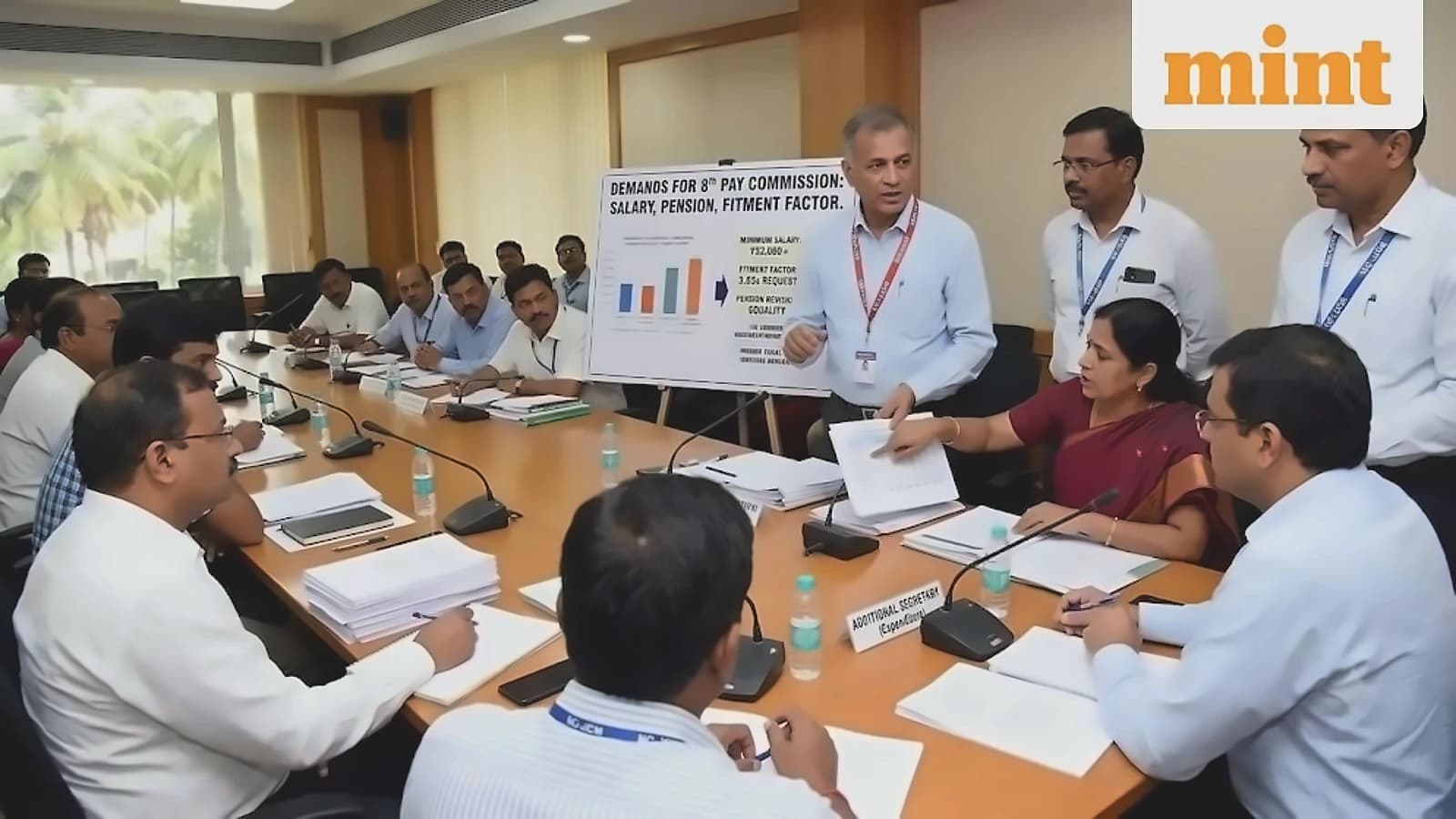
The Indian Railway Technical Supervisors Association (IRTSA) has submitted comprehensive demands for the 8th Pay Commission, including a minimum basic salary increase to ₹52,000. According to latest reports, the association has proposed different fitment factors for various pay levels, with estimated salaries showing significant increases across railway departments. Senior Technician/Chief Technician positions could see estimated salaries rise to ₹52,000, while Depot Material Superintendent roles might reach ₹1.23 lakh. Senior Section Engineer (SSE) positions could increase to ₹1.57 lakh, and Assistant Divisional Engineer roles could reach ₹1.66 lakh. Junior Engineer (JE) positions could see substantial increases to ₹2.13 lakh, with some estimates suggesting pay packages may even double for certain categories. The 8th Pay Commission has been constituted with a mandate to submit its report within 18 months, meaning the final report is expected by mid-2026.
IRTSA has proposed major revisions in House Rent Allowance (HRA), arguing that living expenses in cities have increased sharply. The organization says employees working in metro and high-cost cities need stronger housing support, with tripling of transport allowance rates and removal of the upper limit on night duty allowance. According to IRTSA, railway technical staff work in highly demanding and risk-prone environments and should receive improved compensation for operational responsibilities. The association has also suggested maximum 48 working hours per week for technical staff and an increase in retirement and death gratuity limit to ₹50 lakh. Additionally, IRTSA has proposed major reforms in career progression policies, wanting employees to receive five MACP (Modified Assured Career Progression) upgrades during 30 years of service at the following intervals.
The railway employees' body has once again demanded restoration of the Old Pension Scheme (OPS) for employees recruited after January 1, 2004. IRTSA has also opposed the continuation of the National Pension System (NPS) and Unified Pension Scheme (UPS), calling for OPS benefits to be extended to all railway staff. The association has additionally proposed maximum 48 working hours per week for technical staff and an increase in retirement and death gratuity limit to ₹50 lakh. According to the organization, railway technical employees handle critical operational responsibilities and deserve improved salaries, pension benefits, and working conditions under the 8th Pay Commission framework.