The 8th Pay Commission has extended the deadline for uploading employee-related data through its online portal until July 31, 2026. According to reports from ZeeBiz WebDesk and Mint, this extension provides central government ministries, departments and Union Territories another month to complete the exercise after several departments were unable to upload required information within the earlier June 30, 2026 deadline. The Commission has directed all designated nodal officers to complete pending uploads within the revised timeline. The extension was announced after the Commission closed submission of suggestions and memorandum on June 15, 2026 following two previous deadline extensions from April 30 and May 31, 2026.
The Commission has provided a stepwise guide for data submission through its designated portal at https://data.8cpc.gov.in/. As reported by Mint, employees, government departments, pensioners and unions must login using their email and fill in the displayed captcha to register before submissions. The portal only accepts inputs made via the specified portal, with the Commission emphasizing that physical data, stand above excel sheets, hard copies, and emails shall not be considered or entertained. The submission process requires detailed information from central government ministries, departments, Union Territories and other organisations covering details of regular employees and pensioners, along with information on contractual and outsourced manpower deployed during FY 2022-23, FY 2023-24 and FY 2024-25.
The Commission is collecting detailed information from central government ministries, departments, Union Territories and other organisations to build a comprehensive database before beginning its pay revision exercise. As reported by ZeeBiz WebDesk and Mint, the exercise covers categories such as Multi-Tasking Staff (MTS), housekeeping personnel, data entry operators, drivers, security guards, gardeners and skilled, semi-skilled and unskilled workers, with departments asked to provide information in terms of man-months rather than only headcount. The exercise covers stakeholders including industrial and non-industrial central government employees, personnel belonging to the All India Services, Defence Forces, Union Territories; officers and employees of the Indian Audit and Accounts Department, members of the Regulatory Bodies (except the Reserve Bank of India) set up under the Acts of Parliament, officers and employees of the Supreme Court, officers and employees of the High Courts whose expenditure is borne by UTs, judicial officers of the subordinate courts in UTs, pensioners, service associations or unions, central government ministries or departments or organisations and UTs.

The 8th Pay Commission was constituted on November 3, 2025, and is expected to submit its recommendations within 18 months of its formation. As reported by ZeeBiz WebDesk and Mint, the Commission's recommendations are expected to affect around 1 crore beneficiaries, including close to 50 lakh central government employees, including defence personnel, and nearly 65 lakh retired central government pensioners, including defence retirees. The data collection exercise serves as the foundation for the Commission's analysis before preparing recommendations on salaries, pensions, allowances and other service conditions for central government employees and pensioners. The Commission cannot finalize fitment, pay levels or pension changes until it has complete and accurate workforce data from all government bodies.
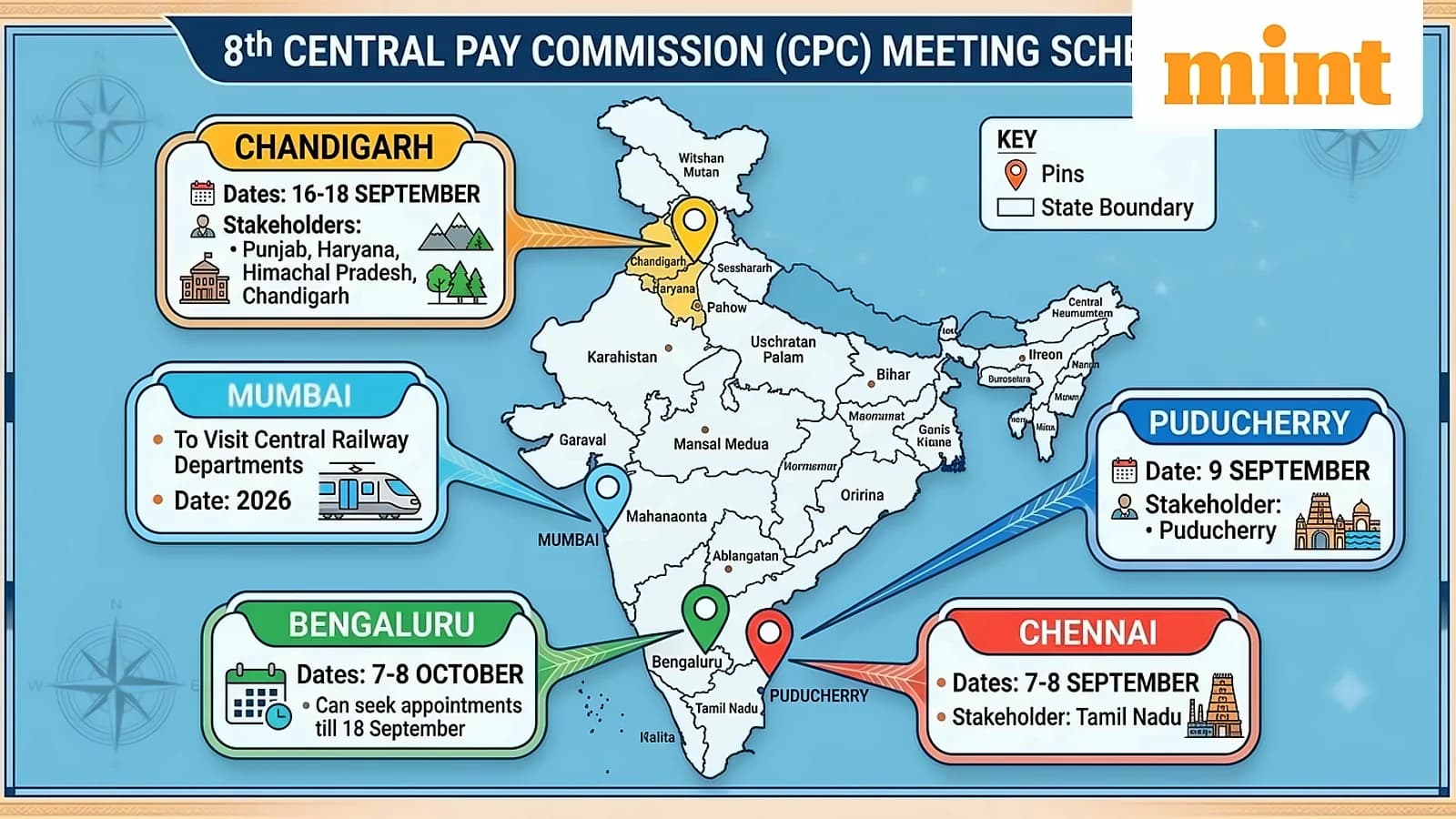
The Commission is currently undertaking state visits and meetings with various employee representative groups, unions and stakeholders to gather suggestions, having begun this process in March and plans to schedule more meetings in due course. According to Mint, before making formal recommendations, the Commission gathers inputs from labour representatives and groups, ministries, pension bodies, central government organisations/institutions, employee unions/associations, and other similar stakeholders and analyses the data to decide on allowances, pension formula, and salary structures for the relevant employee and retiree groups. The Commission is expected to submit its final recommendations around 18 months after its constitution, with the earliest formal announcement expected between February to April 2027. Historically, implementation takes two to three more years to complete, meaning any hikes or recommendations made in 2027 may only be fully implemented by 2029 or 2030.