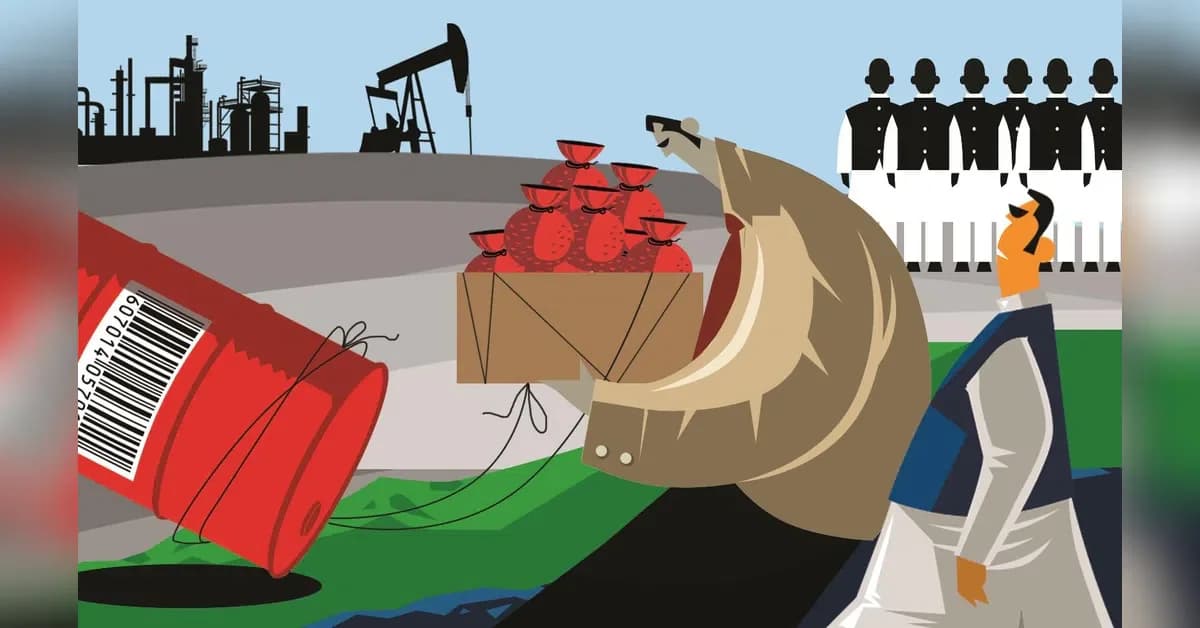
According to Swaminathan Aiyar, Consulting Editor at ET Now, the West Asia conflict may be resolved quickly due to American political dynamics. As reported by The Economic Times, petrol prices in the US have increased by around 33% and diesel by approximately 25%, directly impacting consumers and manufacturing costs. With mid-term congressional elections approaching, President Trump risks losing the House of Representatives and possibly the Senate, which would severely constrain his ability to govern. Aiyar expects a resolution within a week or two, possibly with Trump declaring victory and walking away from the conflict. Recent developments show that US-Iran talks have helped stabilise global LNG prices despite failed peace agreements, with diplomatic efforts continuing to de-escalate the situation.
India's current economic shock is significantly smaller than historical crises, according to Aiyar's analysis reported by The Economic Times. The 1973–74 oil crisis saw prices quadruple, while the current spike represents roughly 50% increase, making it far more contained. India has demonstrated remarkable resilience, having absorbed Covid, the Great Recession, and the dotcom bust without requiring IMF bailouts. However, if the conflict extends for three to four more months, the impact becomes 'very-very harsh'. India's heavy dependence on the Gulf for LPG and LNG remains its most acute vulnerability, with Qatar indicating its damaged gas fields could take up to five years to fully repair. Recent global developments show that Malaysia's inflation rose 1.7% in March, mainly driven by transport and services costs, while China's economy grew 5% in Q1 despite the Iran war fallout, demonstrating varying regional resilience.

Despite a quick resolution, certain downstream effects will persist according to Aiyar's assessment reported by The Economic Times. Fertiliser prices represent a major pressure point, with higher input costs forcing the government to raise minimum support prices across crops. Industries relying on LPG or LNG as raw materials, including ceramics and chemicals, are already experiencing stress. Aluminium prices have surged due to Gulf supply disruptions, further squeezing downstream manufacturers. Aiyar expects inflation to rise well above the RBI's 4% comfort zone, possibly touching 5–6%, with rising minimum wages already at ₹22,000 per month around Delhi compounding the pressure. Global markets show mixed responses, with oil prices falling as hopes for US-Iran deal outweigh supply disruption concerns, while KLM cancelled 160 European flights due to increased kerosene costs making flights unviable.
To absorb the macroeconomic shock, Aiyar believes the government has both political will and capacity to expand the fiscal deficit by 1–1.5% of GDP. With the NDA politically secure, difficult decisions including long-delayed fuel price hikes will come after elections. He anticipates the fiscal deficit could touch 5.5% for one year. On monetary policy, Aiyar emphasizes that the RBI should not cut interest rates in this environment, with the direction of risk being the other way. As reported by The Economic Times, the second-order impact on certain industries will be significant and visible in the next two quarters, maybe even beyond. Recent market developments show that Goldman Sachs' rates business experienced losses due to fixed-income market volatility caused by the Iran conflict, with the firm's FICC division seeing a 10% revenue drop in Q1.