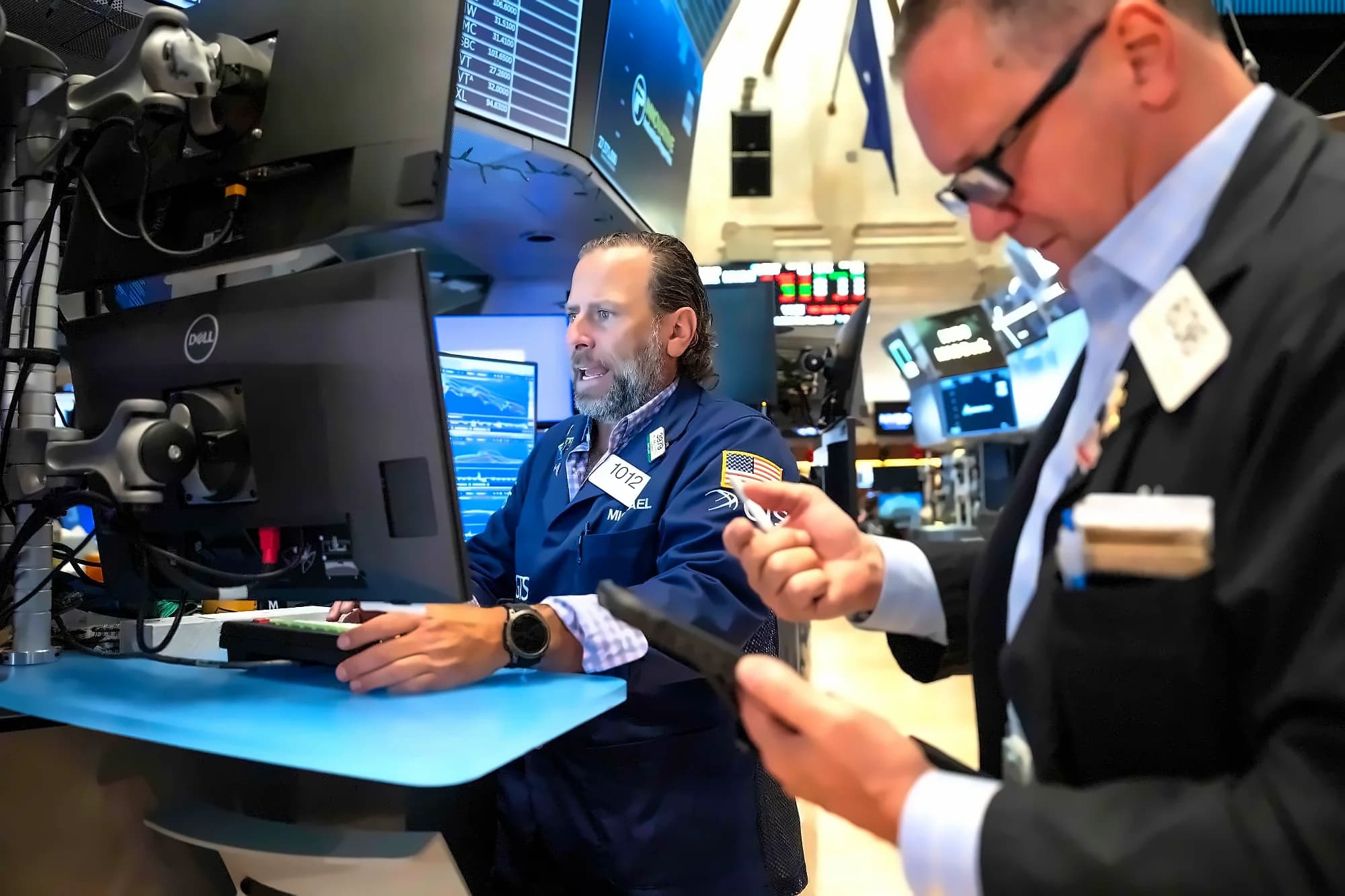
Wall Street staged a dramatic recovery on Monday, November 9, with the Dow Jones surging over 1,100 points to mark its best day since April this year, recovering more than 50% of what it lost across Thursday and Friday. The S&P 500 gained over 2.3% overnight, while the Nasdaq Composite surged 2.7%, as investors returned to technology and artificial intelligence stocks following last week's volatility. The rally comes after all three major indices ended last week in the red, with the S&P 500 posting its biggest weekly loss since April 2025 while $2.3 trillion was wiped off the value of the Nasdaq 100 on Thursday alone. According to reports, the recovery comes as dip-buyers stepped in to pick up beaten-down shares and an extended decline in crude oil prices further supported market sentiment.
Oil prices fell sharply on Monday after US President Donald Trump struck a more conciliatory tone about Iran, saying it's "highly unlikely" he will order extensive strikes on the Islamic Republic. Brent crude futures fell 4% towards $94 a barrel, extending last week's 16% decline following an unconfirmed report that Iran had made concessions on its demands over the Strait of Hormuz. As reported by CNN, Trump said on Sunday that he was highly unlikely to order fresh strikes on Iran as long as negotiations to end the conflict continued, even as both countries reported attacks on shipping in or near the Strait of Hormuz. This development provided significant support to market sentiment, with the decline in oil prices helping boost investor confidence and contributing to the overall positive market tone. Brent crude is now on the verge of breaking below the $90 a barrel mark, providing additional tailwinds for the market recovery.
Nvidia shares fell 4.5% on Monday following new developments in the CEO controversy, with the company's board of directors announcing that its CEO, Jensen Huang, became the target of a foreign intelligence attempt after media reports claimed he had an affair with a Singapore data center company's former executive, Alice Huang, who worked for China's Ministry of State Security. Reports indicated that Megaspeed was a significant purchaser of AI chips and processors and bypassed restrictions on chips to China, with the operation allegedly aimed at lobbying for lighter restrictions on China, which Jensen Huang succeeded in persuading Trump to do in 2025. Jensen Huang wrote an important message apologizing to his wife, family and colleagues and promising to cooperate with investigative agencies. While Huang has admitted to the affair, he reportedly told US President Donald Trump that he had no idea of the woman being a Chinese spy, an allegation that China has gone on to deny as well. The development comes as a major blow for the AI-related theme, which is facing headwinds from threats of increased scrutiny, overheated valuations, and calls for slowing down the development of generative AI models.
Despite the Nvidia controversy, chip stocks witnessed a sharp bounceback on Monday with significant buying interest from lower levels. Advanced Micro Devices surged 13%, while Intel, Broadcom, Micron, Sandisk and Western Digital gained between 6% to 10% each. The weakness in Nvidia shares did not extend to its peers, with Broadcom and Advanced Micro Devices each jumping 5% in the previous session, while ON Semiconductor gained 3%. Additionally, other members of the "Magnificent Seven" traded higher, with Amazon gaining 5%, Tesla and Alphabet climbing more than 3%, and Microsoft adding 2%. The controversy has raised concerns over the growth outlook for the AI industry, with investors closely tracking upcoming earnings from AI-related companies including CoreWeave, Cisco Systems, and Applied Materials. According to CNBC-TV18, the rally in tech shares beyond Nvidia appeared to create an "Anti-Nvidia trade," with buyers piling into its fellow chipmakers while selling Nvidia alongside.
Investors are closely watching inflation expectations for November, with the October CPI jumping to 3.7% after remaining flat at 3.4% in the previous two readings. According to the Federal Reserve of New York's Survey of Consumer Expectations, headline CPI inflation is expected to hit a three-year high of 3.9%. The CME's Fedwatch tool now indicates an 82.2% probability of a 25 bps rate hike in the coming policy decision in December. The most important trigger of today's trading session will be the Consumer Price Inflation (CPI) report for the month of October, which will be reported at 7 PM Indian Standard Time this evening. Any positive news on inflation easing could result in further boost to sentiments and delay hopes of the US Federal Reserve raising interest rates as well in December. UBS wrote in its note that the recent tech sell-off represented a reset and not the start of a structural downtrend in the AI investment cycle, though they warned that the rebound does not remove the risk created by concentrated positioning and elevated expectations.