US stock markets ended mixed on Tuesday as investors parsed mixed quarterly results from major banks and continued to grapple with AI spending concerns. The Nasdaq Composite lost 42.37 points, or 0.15%, to 27,203.53, while the S&P 500 declined 1.41 points, or 0.02%, to 7,805.83 points. The Dow Jones Industrial Average fell 173.10 points, or 0.33%, to 51,677.45, according to preliminary data from The Economic Times. Despite the turbulence, analysts express optimism about future earnings linked to AI-driven innovations, with expectations of a strong earnings season offsetting worries about geopolitical tensions and rising bond yields.

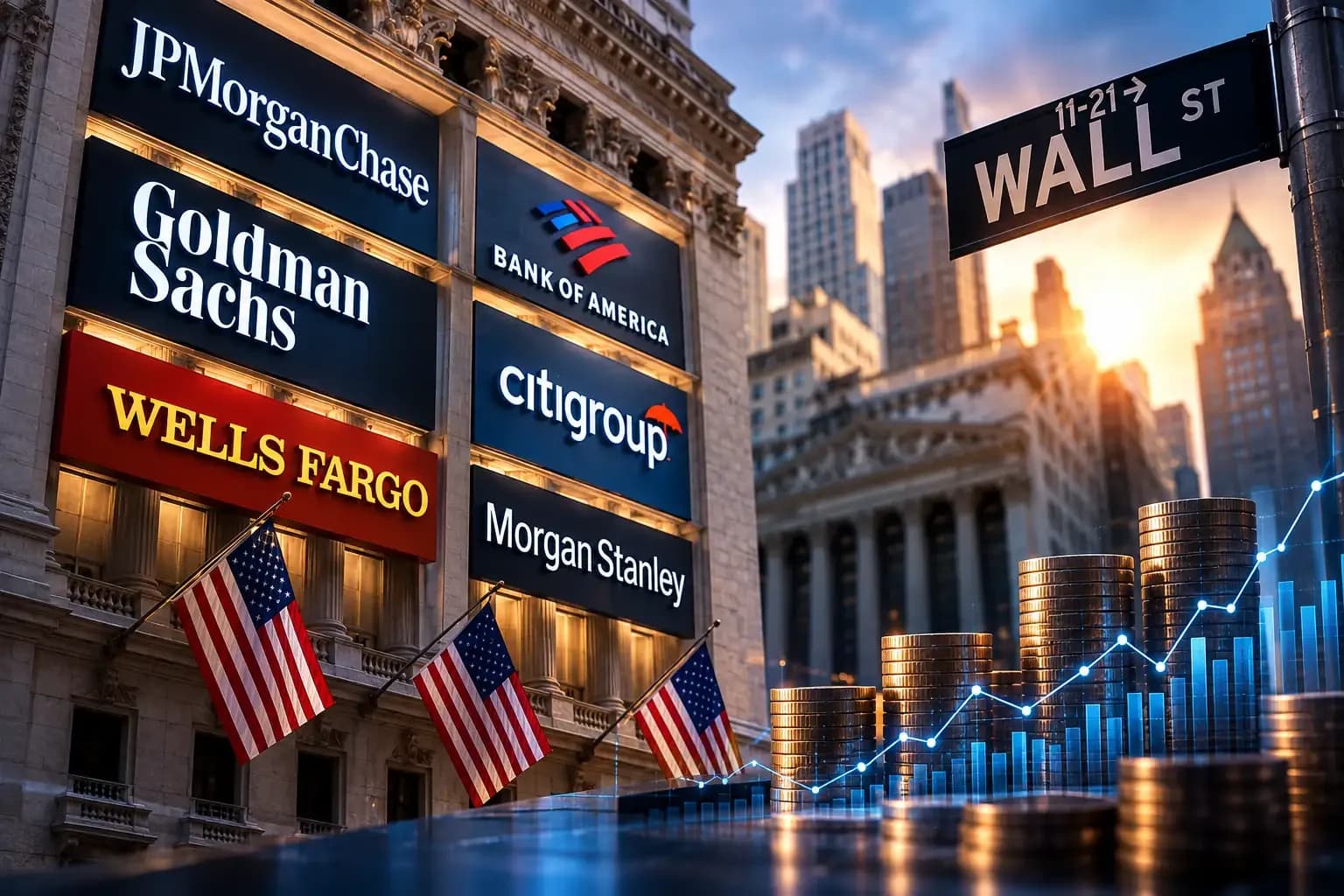
Major banks including JPMorgan Chase, Goldman Sachs, Citigroup and Wells Fargo released their September quarter results, with mixed results setting the tone for the earnings season. JPMorgan Chase swung between gains and losses following a rare profit miss, while Wells Fargo fell after its net interest income missed estimates. Goldman Sachs rose after topping profit estimates, as did Citigroup. US banking stocks are already in a correction, with the KBW Bank Index down 12% from its mid-August peak. Fund managers in Bank of America's latest survey are the most exposed to technology stocks since the rebound from the COVID pandemic six years ago, with 37% overweight the sector. However, JPMorgan, Citigroup, and Wells Fargo posted a record $56.5 billion in combined net interest income, with JPMorgan's $107 billion guide excluding markets topping the $103 billion consensus.
Corporate America is now navigating one of the strongest profit cycles in recent history, yet investors are growing uneasy about whether massive AI spending will pay off, especially as a higher cost of capital raises the hurdle rate for investment. A Bank of America survey shows 45% of fund managers expect an AI bubble in 2027, while 42% don't see a bubble. Negative headlines including warnings on issues with funding the AI buildout and 'casino'-like market sentiment from Broadcom CEO Hock Tan come at a time when investors have piled into the trade. However, analysts on average see S&P 500 third-quarter earnings surging over 30%, fueled largely by AI-related technology companies, according to LSEG data.
Chip stocks continued their downward spiral, with the PHLX chip index falling for a fifth straight session after Broadcom CEO Hock Tan on Monday likened some of the investment flow into the sector to "casino gambling." Micron Technology and Applied Materials both fell sharply, while Broadcom rose. The PHLX chip index has lost more than 8% in the past five sessions and remains up over 70% year-to-date. Reports of technological advances by Chinese memory chip company CXMT underscored concerns about rising competition, with China's CXMT narrowing the technology gap with Samsung Electronics, SK Hynix and Micron - raising the prospect of greater competition that could erode the three DRAM giants' pricing power and market share.
Despite the recent turbulence, the S&P 500 has rallied about 14% in 2026, lifted by AI-related technology stocks, though the median stock in the index is up less than 5% and over 200 S&P 500 components are down for the year. The S&P 500 healthcare index fell on Tuesday, with Johnson & Johnson down despite topping profit estimates. Bumble jumped after the dating-app operator agreed to go private in a $1.3 billion deal, while Domino's Pizza declined after scaling back its full-year sales outlook. The S&P 500 is trading at under 19 times expected earnings, its lowest since 2023, reflecting expectations of strong corporate earnings from AI heavyweights. As Jake Dollarhide, CEO of Longbow Asset Management, noted, "A lot of investors are feeling a sense of relief that markets might start looking at earnings and less at the bond market, less at higher-for-longer oil prices and less at high interest rates."