US stocks showed mixed performance on Monday as investors assessed rising oil prices and prepared for a busy week of corporate earnings and inflation data. The Nasdaq Composite lost 0.44% to 27,245.90 points, while the S&P 500 closed nearly flat at 7,807.24 points and the Dow Jones Industrial Average rose 0.4% to 51,850.55. According to Goodreturns, Nasdaq 100 futures crashed 239.25 points or 0.8% to trade around 30,656.50, with the tech-heavy index pulled down by selloffs in AI, tech and chipmaker stocks. MSCI's gauge of global stocks fell 0.15%, with the pan-European STOXX 600 index rising 0.61% as bank stocks gained in Europe. Analysts estimate S&P 500 annual earnings growth of 30.6% for the July-September period, with energy and technology posting the largest year-on-year earnings growth of 123% and 66.5% respectively. Wall Street expects S&P 500 earnings to grow 29.6% in the third quarter, with 84% of the 19 S&P 500 companies that had reported by Oct. 9 beating estimates. As reported by The Economic Times, following a robust first half, S&P 500 earnings are expected to have jumped by more than 30% in the third quarter, with banks including JPMorgan and Goldman Sachs expected to report exceptionally strong quarterly results.
Citi's Scott Chronert says the S&P 500 needs both AI stocks and rate-sensitive sectors to rally to reach 8,100, with only one of those groups currently in good standing. Citi raised its year-end target to 8,100 from 7,700 in June, citing AI-driven earnings strength, though rate-sensitive sectors have dropped about 10% since the Federal Reserve's Jackson Hole symposium in late August. According to Citi Research's head of U.S. equity strategy, AI-linked companies make up just over half of the index, while rate-sensitive sectors including utilities, real estate, consumer discretionary stocks, and banks have declined significantly. A rebound hinges on markets pricing out some expected Fed rate hikes, as the Fed raised rates by a quarter point on September 16 and could raise them again at the October 28 meeting. Matt Stucky, senior portfolio manager at Northwestern Mutual, expects a positive season with consensus pointing to upper-20s year-over-year earnings growth versus low 30s in the second quarter. Valuation multiples could drive stocks from here, with Fed policy, the 10-year Treasury yield, inflation, and oil all influencing market dynamics.
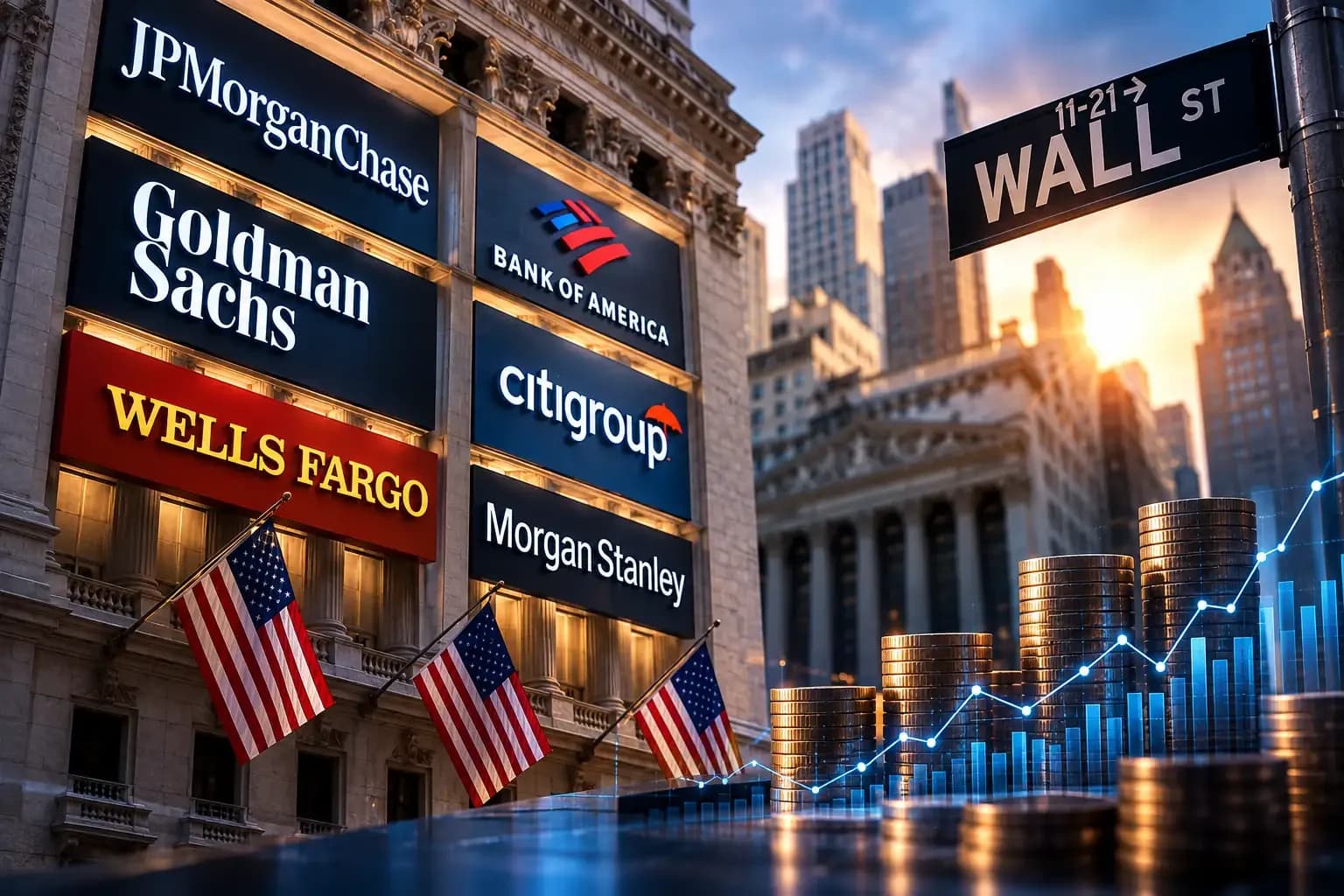
US bank stocks face a critical earnings test as investors assess whether rising Treasury yields, higher deposit costs and slower dealmaking could offset profit growth at the six largest lenders. According to The Economic Times, bank stocks have been among the worst-performing groups recently amid a rise in Treasury yields, with the S&P 500 banks index down 7.5% in the past month. The KBW Bank Index has fallen 13% from its August closing peak and declined 6% in the third quarter, reflecting investor concerns over the sector outlook. JPMorgan Chase, Goldman Sachs, Citigroup and Wells Fargo will report results today, followed by Morgan Stanley and Bank of America on Wednesday. As reported by Reuters, the six largest US lenders are expected to report higher profits than a year earlier, with analysts forecasting earnings growth of up to 20%, supported by stronger investment banking and trading revenue. Investors will particularly scrutinise loan loss reserves for possible higher increases to consumer defaults, as banks navigate tighter financial conditions. According to The Economic Times, "Is the market sniffing out something that is underneath the surface for these financial companies?" analysts wonder, with expectations for "a sigh of relief if these financial services companies come out with good results next week."
AI spending remains a key test for the market's continued momentum, with one panelist noting that hyperscalers and cloud giants building AI data centers continue spending without signs of pulling back. However, another panelist warned that investors are growing wary of AI-related debt, citing reports of growing concerns about financing these massive investments. The 10-year Treasury yield closed at 5.24% on Oct. 9, near a 24-year high, adding pressure to the market. A pattern of misses across several tech names would be hard for the market to absorb, particularly given that technology firms are issuing most positive guidance. A record 72 S&P 500 firms issued positive Q3 earnings guidance, with 44 of them being technology companies, according to CNBC reports. Over half of S&P 500 stocks sit below their 200-day averages, indicating widespread weakness beyond the tech sector. FactSet projects 15.8% earnings growth for 2027, down from 32.7% in 2026, suggesting the current rally may be unsustainable without continued AI spending and strong results. Aya Yoshioka of Wealth Enhancement Group said the outlook depends on what hyperscalers say about AI capital spending, noting that "we need this broadening trade to come back to get to my 8100" and warning that without continued strong cloud growth and investment returns, a correction could follow as investors reset expectations for 2027.
Oil prices climbed significantly on Monday following deadly strikes on Riyadh's international airport over the weekend, with Brent crude rebounding to around $106.65 a barrel as doubts over a proposed Russia-Ukraine energy ceasefire and renewed supply concerns in the Middle East revived the geopolitical risk premium. According to Goodreturns, weekend optimism over a Russia-Ukraine energy truce faded after reports of continued attacks on energy infrastructure, while unresolved tensions around Gulf energy facilities kept supply concerns alive. Elevated oil prices remain a concern for equity investors, as sustained increases in energy costs can push up inflation and complicate the outlook for monetary policy. September inflation data will be another key driver of market sentiment, with the Consumer Price Index (CPI) expected to rise by a hefty 0.6% to an annual 3.7%, though the core is seen cooler at 0.2% and 2.5% annually. The readings could influence expectations for the Federal Reserve's interest-rate decisions, particularly as rising energy prices threaten to keep inflationary pressures elevated. Cleveland Federal Reserve President Beth Hammack said the US central bank should move "relatively quickly" to a more restrictive monetary policy stance to fight inflation, which she feels has become more broad-based and is starting to influence firms' price-setting plans.
Deutsche Bank's Bankim Chadha projects Q3 earnings growth around 34%, significantly above consensus estimates near 27%. As reported by Investing.com India, this represents a pace that normally belongs to rebound phases rather than mature expansions. The second-quarter S&P 500 earnings grew around 33% year-on-year, a growth rate that historically occurs during recovery periods rather than sustained expansion. With expectations already sitting above 24% EPS growth for the S&P 500, investors are not walking into earnings with modest expectations and cheap valuations. They are walking in expecting companies to clear a fairly high bar while facing the difficult combination of expensive oil, high yields, European stress, and narrowing market breadth. As reported by The Economic Times, "Earnings have been incredible this year, and we're just going to have to start to see with the banks how Q3 shaped up," said Matthew Miskin, co-chief investment strategist at Manulife John Hancock Investments. Q3 earnings face a high bar, as FactSet data show growth topping estimates in 37 of the past 40 quarters, meaning an in-line report could disappoint investors.