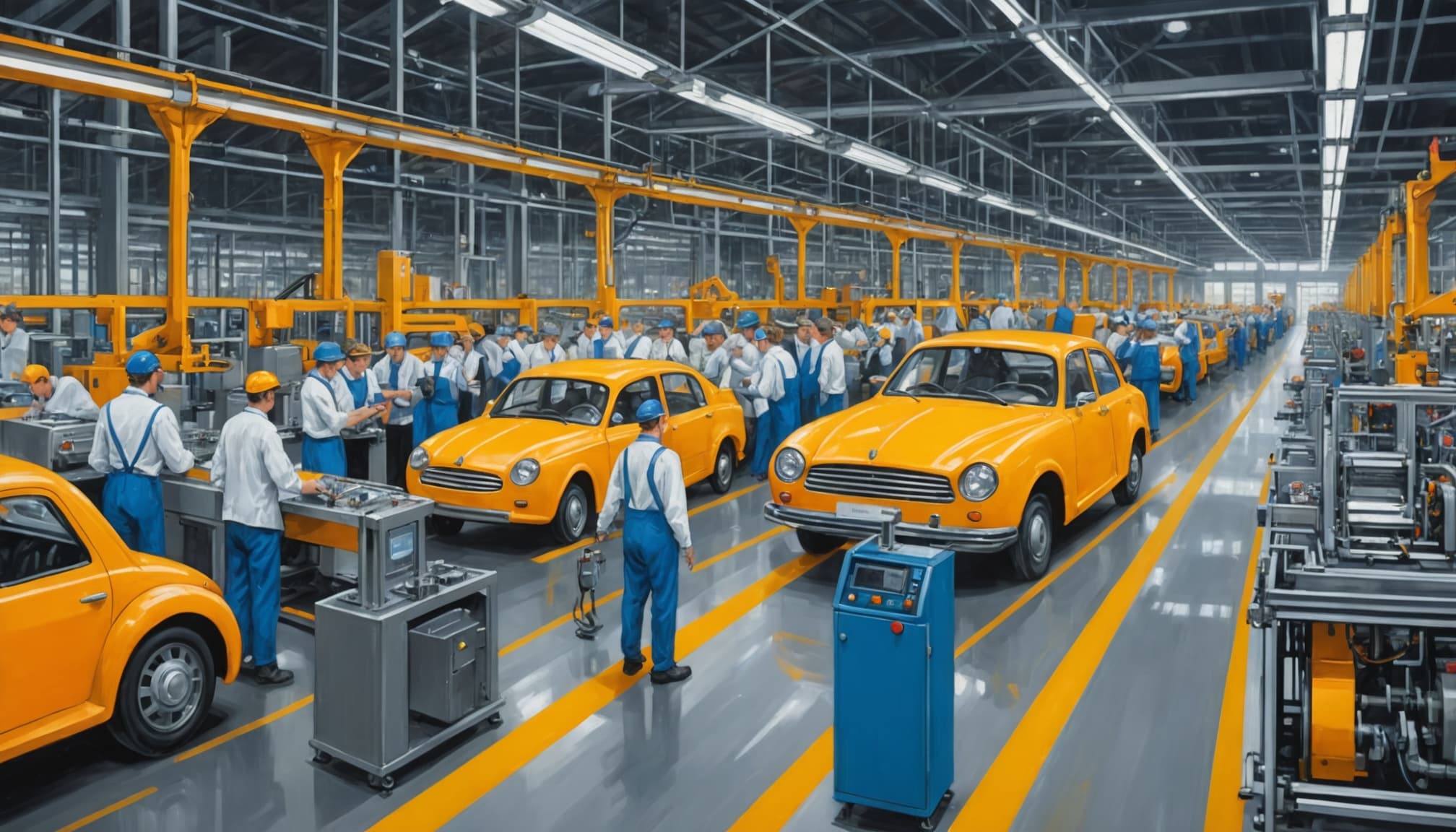
Tens of thousands of workers across Germany's automotive sector took to the streets on Monday, protesting over job security and manufacturing future as carmakers face mounting challenges. According to Bloomberg reports, the protests were led by the IG Metall union and involved workers from major brands including Volkswagen, BMW, Mercedes-Benz, Porsche, Audi, and parts supplier Bosch. The demonstrations occurred at more than 280 locations across Germany, with workers gathering to push for employment safeguards and plant guarantees. As reported by The Times of India, the protests come as Germany's most important industry faces painful job cuts, possible production relocations and plant closures, a crisis that was also reflected in the results of two state elections held over the weekend.
Volkswagen alone plans to slash another 50,000 jobs as part of its biggest-ever turnaround agreed with stakeholders earlier this month, averting a full-blown dispute with powerful unions that still repeated calls on management to fix the issues. According to The Times of India, works council chief Daniela Cavallo and IG Metall union head Christiane Benner called for stronger protection against unfair competition from China, a more effective European Union subsidy policy, and the continuation of a phased retirement programme. Benner told workers at Volkswagen's headquarters in Wolfsburg: 'We expect corporate leaders and management teams to take responsibility for Germany as an automotive nation, for employees and for jobs.'
Volkswagen shares fell 0.6% at 0816 GMT, while Porsche declined 2.3%, extending Friday's losses. As reported by The Times of India, shares in Porsche SE, Volkswagen's largest shareholder, also fell 2.9%. Volkswagen shares were excluded from the benchmark Euro Stoxx 50 index today, highlighting the pressure on the company as it struggles with excess capacity in Europe, US tariffs, and weaker profits in China. The stock decline reflects the broader challenges facing the German automotive sector as it navigates the costly transition to electric mobility and increasing competition from Asian manufacturers.
On Friday, Volkswagen cut its 2026 profit-margin forecast to a maximum of 1%, citing weak demand in China and higher provisions related to retirements. According to The Times of India, the company also lowered its expectations for its Porsche sports car division. The profit warning came as Germany's auto industry grapples with the costly transition to electric vehicles and increasing competition from Asian manufacturers. European carmakers are facing tougher competition from Asian rivals, both in overseas markets and at home, creating a major problem for Volkswagen, which is already battling overcapacity on the continent, US tariffs and plunging profits in China. The warning from Europe's biggest carmaker underscored the pressures converging on German manufacturers, with CEO Arno Antlitz stating 'The market changes are profound and lasting. We have no time to lose.'
IG Metall trade unionist Horst Ott criticized industry management, stating that 'due to lethargy and disastrous misjudgements, most managers have failed to keep pace with developments in e-mobility, digitalisation and battery technology, thereby causing the German automotive and supplier industries to fall behind.' As reported by The Times of India, part of the problem was accelerated demand for less profitable electric vehicles, underscoring the sector's ongoing dependence on combustion engines that have for decades fuelled Germany's top economy. The crisis has become a political issue, with challenges reflected in the results of two state elections held over the weekend, where Merz's Christian Democrats suffered crushing losses to the anti-capitalist Left party in Berlin and crashed out of a state assembly for the first time in Germany's post-World War II history.