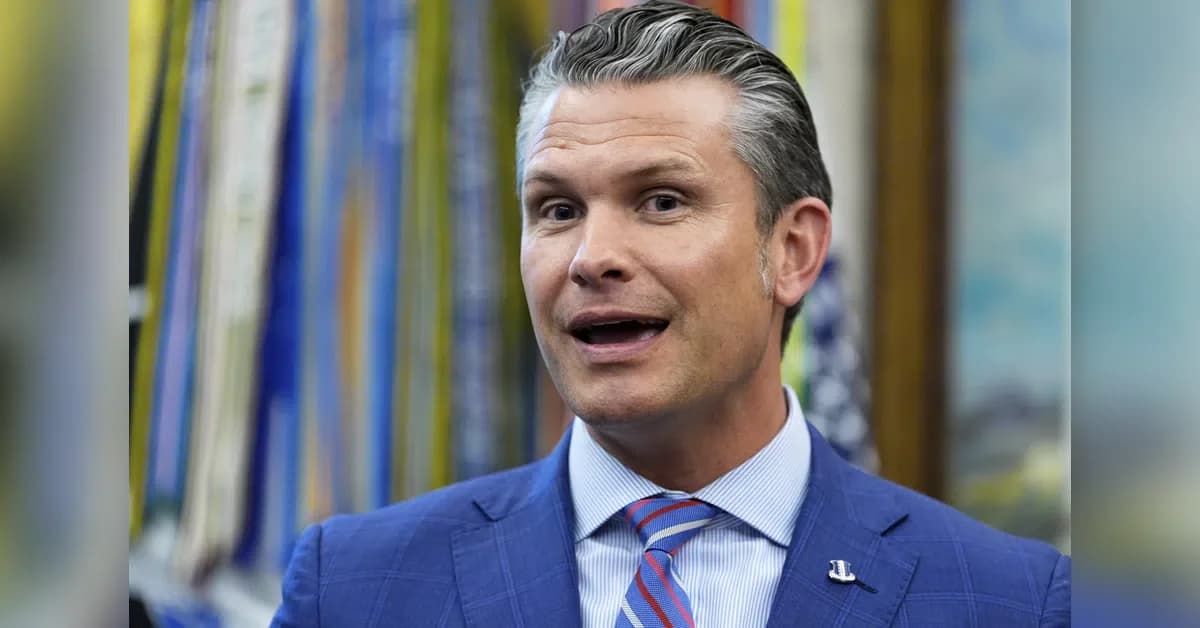
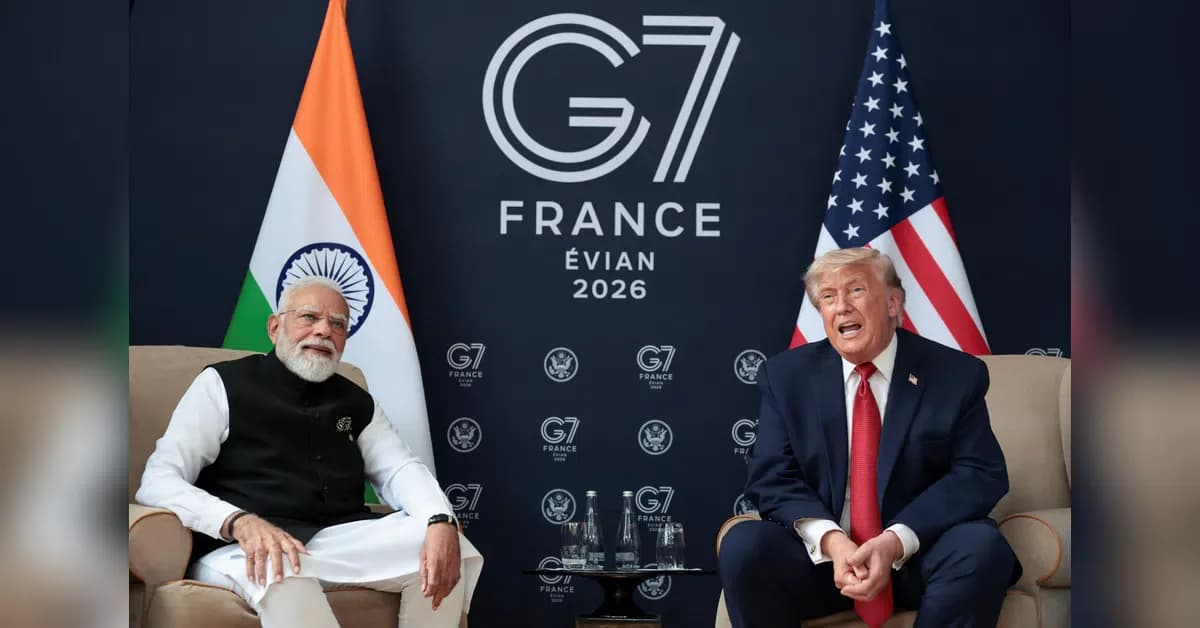
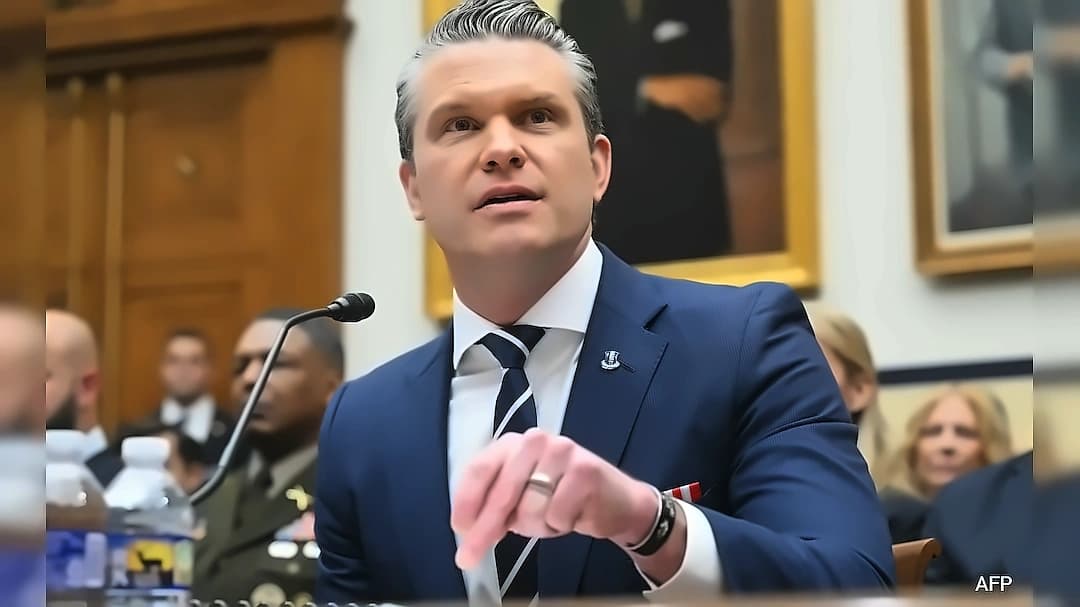
US Secretary of War Pete Hegseth delivered a comprehensive assessment of India's military capabilities during his address at the Shangri-La Dialogue in Singapore on Saturday. According to reports from Business Standard, Hegseth characterized India as 'powerful' and 'modernising' its military, highlighting the country's strategic position in the Indo-Pacific region. The US official specifically praised India's heavy industrial and logistics capacity to sustain high-end military operations and noted that the country was maintaining a balance of power, particularly in the Indian Ocean. Hegseth emphasized that 'In South Asia, India is a critical anchor to hold the line. A powerful India acting in its own self-interest advances our shared goal of maintaining a balance of power across the region'. Speaking at the security summit, Hegseth credited President Donald Trump with helping ease tensions between India and Pakistan following their military confrontation last year, stating 'You saw that in the ability of the president to come together on brokering a peace between India and Pakistan, two nuclear capable countries'. As reported by Business Standard, Hegseth noted that 'Both sides there are going to see understandable threats coming from the other, maybe some of which we see differently, and countries are going to want to develop ICBM threats, but we are not pointing a finger, at least from our view right now, at either country and calling them a threat to us'.
Hegseth outlined specific defence cooperation measures between the US and India during his remarks. As reported by Business Standard, he stated that 'We've also committed to pursuing co-production with India to advance capabilities like Javelin anti-tank guided munitions. Real, tangible steps to improve the collective readiness of our forces' and emphasized that America was undergoing a national manufacturing globalisation of its defence. The Secretary noted that India was building a heavy industrial and logistics capacity to sustain high-end military operations, demonstrating the country's growing defence manufacturing capabilities. Hegseth highlighted that 'India is modernising its military to carry its share of the security burden, particularly in the Indian Ocean' and pointed to 'the ability to repair and maintain our shared platforms and support US Navy vessels operating forward in the theatre'. He also reaffirmed Washington's commitment to strengthening defense cooperation and pursuing joint defense production initiatives with India.
Hegseth addressed broader regional defence dynamics during his address to the Shangri-La Dialogue, which brings together top officials from 44 nations this year. According to Business Standard, he characterized the Asia-Pacific as the most consequential region in the world and stated that the security of the region rested 'disproportionately' on the US military power. The US official called on nations to invest seriously in their own defence while expressing Washington's stance amidst global tensions and ongoing conflicts in West Asia and Europe. Hegseth emphasized that 'this kind of industrial muscle isn't just a long-term goal, it's an immediate operational imperative' for regional stability. Addressing regional security dynamics, Hegseth noted that while India and Pakistan will continue to evaluate their relationship strictly based on safeguarding their own borders and distinct threat priorities, the United States does not currently view either nation as a direct threat. As reported by Business Standard, Hegseth praised both countries for their contributions to international stability, stating 'We are grateful for, you know, in each of their lanes, the benefits they have given to peace around the world'.
Hegseth provided an assessment of US relations with key regional partners and global powers. As reported by Business Standard, he noted that US and China relations are better than they have been in many years under President Donald Trump, while emphasizing that 'no state, including China, can impose hegemony and hold the security of our nation and allies in question'. The Secretary's remarks came amid growing uncertainty over the United States' long-term strategic priorities in the Indo-Pacific region. Hegseth also acknowledged the role of Pakistan's military and political leadership in ongoing diplomatic efforts in West Asia, describing Pakistan's engagement in facilitating discussions between the United States and Iran as an important development. As reported by Business Standard, Hegseth said 'I mentioned India here, but I very easily could have mentioned Pakistan and the role that the field marshal and the prime minister are playing in peace negotiations. I think an unexpected development and a true friendship developing there, which I think is important'. Pakistan has emerged as the main mediator in the ongoing West Asia conflict, trying to negotiate a peace deal between the US and Iran, with many analysts saying Islamabad enjoys the trust of both Washington DC and Tehran.
Hegseth outlined the Trump administration's ambitious defence spending plans and expectations for allies. According to Business Standard, he announced that 'President Trump, after spending USD 1 trillion on defence last year, plans to make a generational investment of USD 1.5 trillion on defence this year, to unleash America's arsenal of freedom and expand America's military dominance for decades to come'. The Secretary called on US allies and partners to increase defence commitments, stating 'The era of the United States subsidising the defence of wealthy nations is over. We need partners, not protectorates. We seek alliances built on shared responsibility, not dependency'. Hegseth emphasized that 'For those nations that rise to this challenge, that embrace responsibility as true partners, the benefits will be clear' and that 'As our strategy states, we will prioritise working with model allies. Those nations that are most capable, clear-eyed, and ready to defend their national interests'. Outlining the broader US Indo-Pacific strategy, Hegseth said 'What we seek ... is a genuinely stable equilibrium that works for Americans as well as for our allies' and 'A favourable, but durable, balance of power in which no state, including China, can impose its hegemony and hold the security or prosperity of our nation and our allies in question'. As reported by Business Standard, Hegseth highlighted defence commitments undertaken by several Indo-Pacific partners, including India, Japan, South Korea, Australia, Singapore, Malaysia, Thailand, Vietnam and the Philippines.