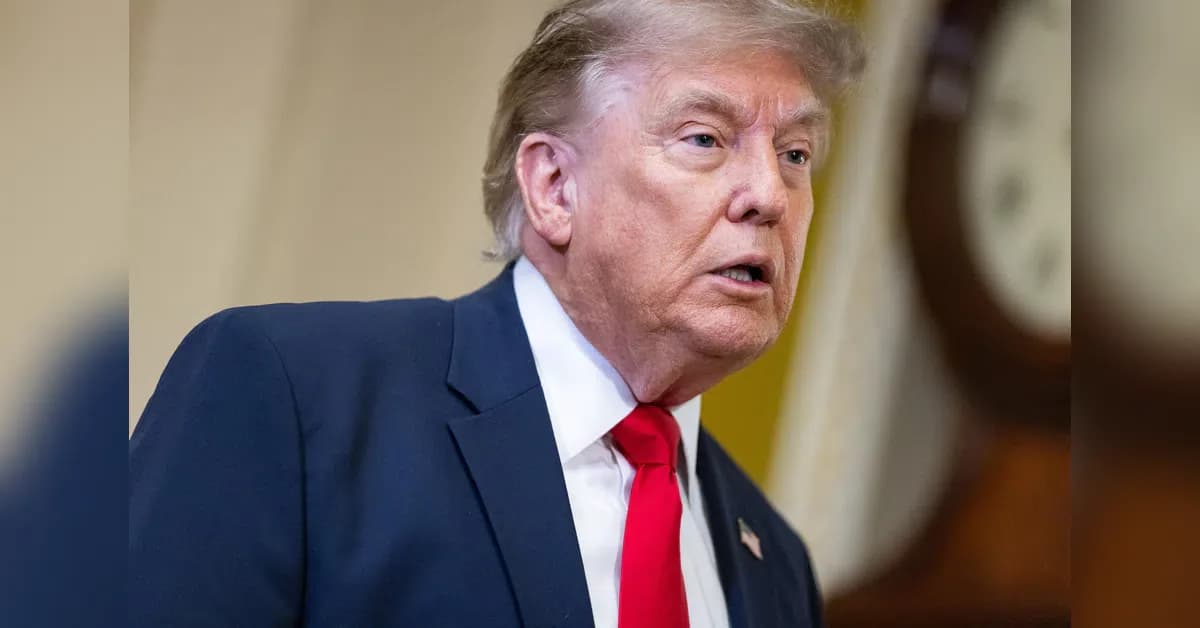
The Trump administration has suspended a controversial visa bond requirement for certain foreign football fans travelling to the United States for the 2026 FIFA World Cup, offering temporary relief amid wider concerns over tighter US immigration rules. According to reports from the Associated Press, under the revised policy, foreign nationals from select countries who have confirmed FIFA World Cup tickets and are enrolled in FIFA's visa facilitation system will no longer have to pay visa bonds of up to $15,000 to enter the US. The exemption applies to fans who have purchased official World Cup tickets and opted into the FIFA Pass system by April 15. As confirmed by the State Department, the policy change affects 50 countries that were previously covered under the visa bond programme. Assistant Secretary of State for Consular Affairs Mora Namdar stated to the BBC that "We are waiving visa bonds for qualified fans who bought World Cup tickets."
The visa bond programme was introduced last year as part of the Trump administration's broader immigration crackdown, targeting countries with high rates of visa overstays or security concerns. Under the system, certain travellers applying for temporary US visas had to deposit refundable bonds worth $5,000, $10,000, or $15,000 depending on their risk category. The bond would be returned if the traveller complied with visa conditions or if the visa application was rejected. According to the Associated Press, travellers from 50 countries were covered under the policy, with five of those countries having already qualified for the FIFA World Cup: Algeria, Cabo Verde, Côte d'Ivoire, Senegal, and Tunisia. The 12-month pilot scheme, launched last August, was designed to help reduce instances of visitors overstaying their visas and cases where screening or vetting information was considered insufficient.
Assistant Secretary of State for Consular Affairs Mora Namdar stated that the US wanted to organise "the biggest and best FIFA World Cup in history," as reported by the Associated Press. The waiver appears linked to mounting pressure around the US hosting responsibilities for the 2026 FIFA World Cup, which will be jointly organised by the United States, Canada and Mexico. The tournament begins on June 11, 2026, and is expected to attract millions of international visitors. FIFA had pushed for the exemption for months, with discussions involving the State Department, Department of Homeland Security and White House officials. In a statement, FIFA said the announcement demonstrates the ongoing collaboration with the White House "to deliver a successful, record-breaking and unforgettable global event," expressing gratitude to the Administration for the ongoing partnership.
This summer's World Cup promises to be the biggest yet, with 48 teams competing - an increase from 32 teams at previous tournaments. National team coaches are currently in the process of deciding on their 26-man squads for the competition, which concludes at the MetLife Stadium in New Jersey on July 19. The tournament's expanded scale comes as football (soccer) has grown in popularity in the United States over the past two decades but still trails a long way behind sports like the NFL and NBA in terms of viewing figures. However, a successful showing from the US Men's National Team (USMNT) this summer has the potential to attract a new wave of committed soccer fans in the country. The issue remains an economic concern for the tourism industry, with the American Hotel & Lodging Association warning that visa-related hurdles and geopolitical tensions are suppressing international travel demand ahead of the tournament.
Despite the waiver, broader concerns around US immigration policies remain. According to the Associated Press, the Trump administration has adopted a much stricter stance on foreign travellers, including expanded travel restrictions on certain countries, enhanced social media screening for visa applicants, and increased immigration enforcement at airports. While the bond requirement has now been lifted for football fans from the 50 affected countries, travellers from Iran and Haiti are still subject to entry restrictions, although World Cup players and officials from those countries are exempt. Meanwhile, visitors from Côte d'Ivoire and Senegal, both World Cup-qualified nations, still face partial restrictions under expanded travel measures. Separately, the US government announced that visitors from multiple countries may be required to submit up to five years of social media history as part of the entry process, a measure that could also impact World Cup travellers.