The US trade deficit narrowed to $55.9 billion in April, representing a 1.2% month-on-month decline and slightly beating economist expectations of around $56.1 billion, according to data released by the US Commerce Department. The March trade deficit was also revised lower to $56.6 billion from the previously reported $60.3 billion. This improvement offers modest support to economic growth as the US economy seeks to recover from trade-related challenges that have weighed on gross domestic product growth for two consecutive quarters.
Exports rose 2.6% to a record $327.1 billion during April, driven primarily by a 60% jump in crude oil shipments as well as higher exports of fuel oil and other petroleum products. Goods exports climbed 4.1% to an all-time high of $221.3 billion, with gains also seen in capital goods such as computers and civilian aircraft. Industrial supplies and materials exports, including petroleum products, also reached record levels, as reported by Reuters. The strong performance in petroleum-related exports provided the primary catalyst for the overall export growth.
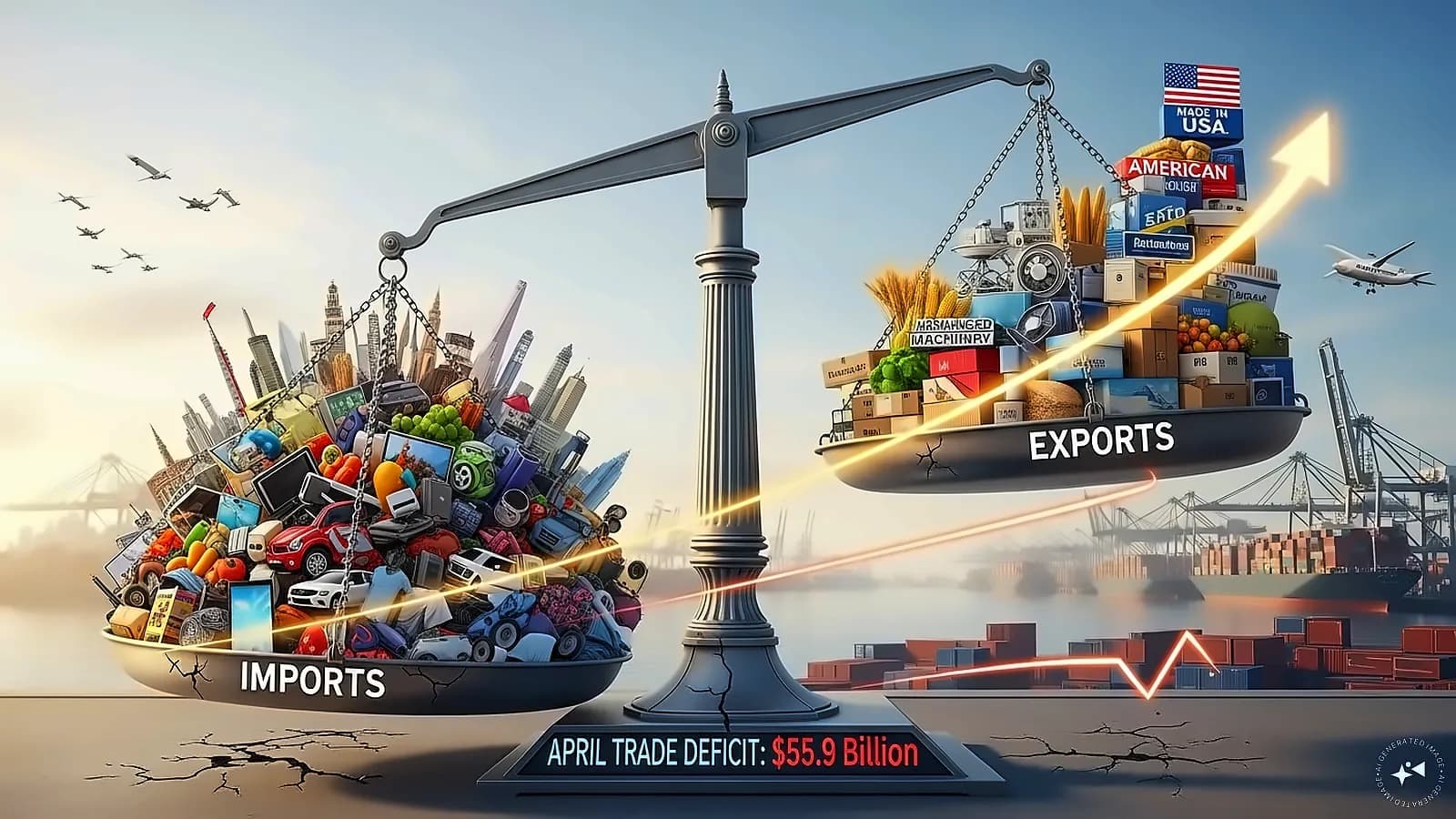
Imports increased 2% to $383 billion, reflecting robust demand for technology equipment and continued business investment in artificial intelligence infrastructure. Capital goods imports surged by $7 billion, led by computers, semiconductors and telecommunications equipment as businesses continued to invest in artificial intelligence infrastructure and data centres. However, imports of industrial supplies and materials declined during the month, partially offsetting the technology-driven increases.
The narrowing trade gap provides some relief for the US economy after trade weighed on gross domestic product growth for two consecutive quarters. Economists indicated that if export momentum is sustained, net trade could make a positive contribution to economic growth in the second quarter. While the Trump administration's tariff policies have sought to reduce America's trade imbalance, April's figures suggest the overall deficit remains largely unchanged, with stronger exports rather than weaker imports driving the improvement.