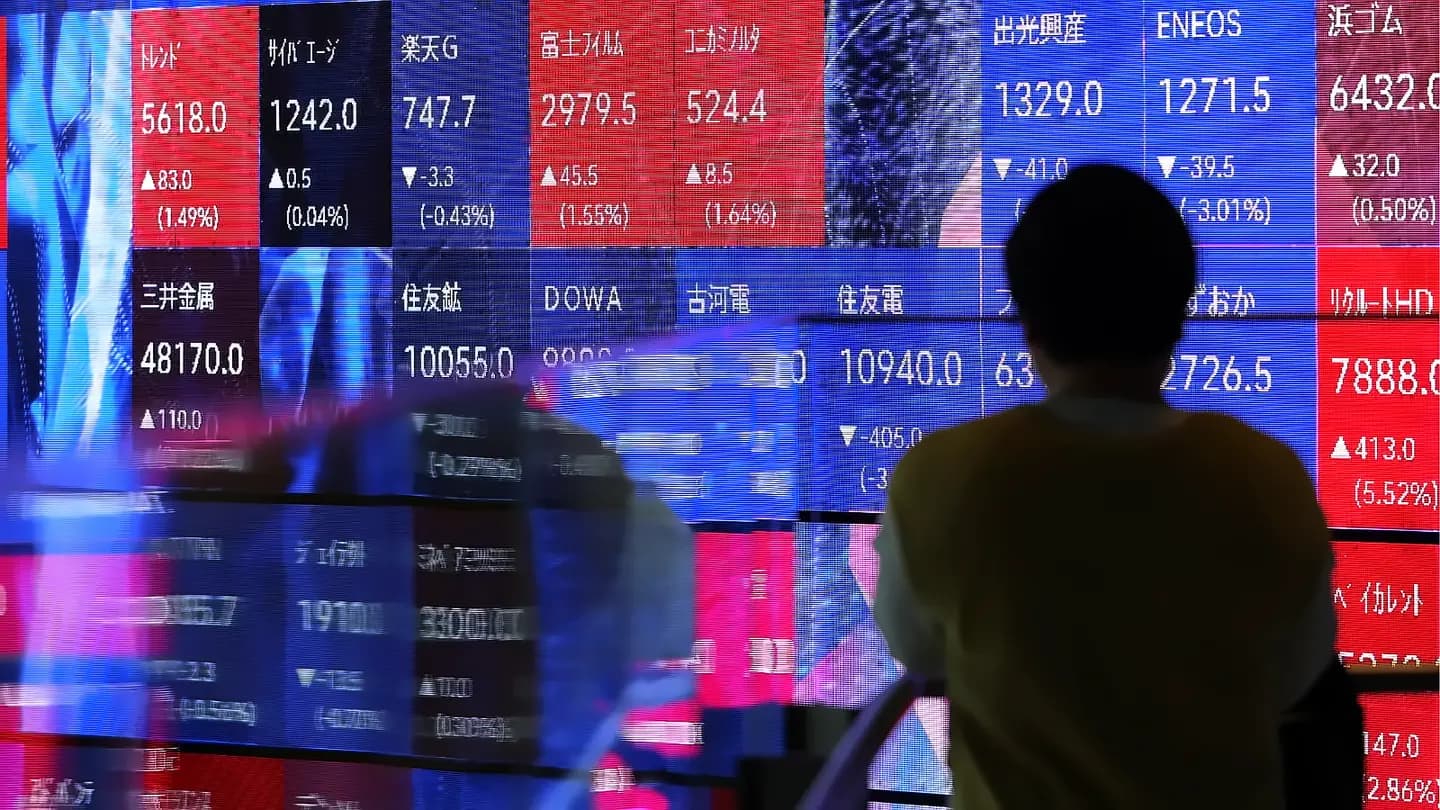
European shares traded subdued on Monday as technology stocks fell following calls from leading artificial intelligence executives for a slower pace of development, while a fresh surge in oil prices weighed on broader risk appetite. The pan-European STOXX 600 was little changed at 638.95 points in choppy trading as of 0810 GMT, with most major regional bourses trading lower, as reported by Reuters. The Euro Stoxx 50 also declined 1.58% to 6,311.56 points, as reported by multiple outlets including Newsquawk and France 24. The German DAX fell 0.4%, while the French CAC 40 dropped 0.6% and the British FTSE 100 declined 0.2%. This represents a sharp reversal from Friday's modest recovery when the STOXX 600 had risen 0.3% to 637.60 points, as the pan-European index remains on track for its worst weekly performance since April.
Technology stocks dropped 1.4%, tracking weakness in Asian peers, as the sector came under pressure after Anthropic CEO Dario Amodei called for artificial intelligence companies to slow the pace of advances in model capabilities amid concerns over potential misuse, according to Reuters. Germany's Infineon fell 5.8%, while Dutch chip-equipment makers ASML and ASMI declined 4.4% and 5%, respectively. The technology sector bucked the broader trend, with oil and gas stocks closing up 0.26%, as reported by Newsquawk, with Italy's Eni Group rising 1.91% and TotalEnergies gaining 0.59%. However, cyclical sectors faced significant pressure, with the STOXX 600 Construction & Materials index falling 2.57%, the Retail index dropping 2.56%, and the Personal & Household Goods index declining 2.39%.
Oil prices surged more than 2%, adding to concerns over energy supplies as new Houthi strikes on Saudi Arabia and Iranian attacks on ships in the Gulf compounded supply worries following the closure of a key Saudi oil pipeline, according to Reuters. Brent crude oil surged above $100 per barrel for the first time since July, with Brent hitting a high of $101.94 on Thursday and WTI peaking at $97.79, as reported by multiple outlets including France 24 and Newsquawk. The latest surge has been even more dramatic, with Brent crude futures for November delivery rising nearly 3% on Tuesday to settle at $108.75 a barrel, while West Texas Intermediate crude gained more than 4% to close at $105.83 a barrel. However, oil prices slipped as trading resumed in Asia, with Brent crude futures down 0.6% at $108.08 a barrel after rising 2.9% on Tuesday, as reported by Business Standard. The renewed escalation of U.S.-Iran tensions has intensified market concerns, with the Yemeni Houthis taking control of key strategic points along the Bab al-Mandeb strait, including the Al-Mokha port, Zaqar Island, Mayun Island, Hanish Islands, and the Al-Omari military and strategic base.

Investors were also focused on the U.S. Federal Reserve's monetary policy decision due later this week, with traders increasingly pricing in a 25-basis-point interest rate hike, as reported by Reuters. The Fed's policy announcement, due Wednesday, followed higher than expected core inflation data last week and mounting worries over government budgets. Traders believe that a hike from the Federal Reserve is almost assured, pricing an implied 92.4% probability of a 25-basis-point hike when it announces its policy decision, according to the CME Group's FedWatch tool, compared to a 59.4% chance a week ago, as reported by Business Standard. The yield on the US 10-year Treasury bond was 0.8 basis point lower at 4.9875% in Asian trade after breaching the 5% mark on Tuesday for the first time in three years, ahead of a rate decision from the Federal Reserve and a media conference by Fed Chair Kevin Warsh. The rate-hike expectations had already driven a bond-market selloff, with the 10-year Treasury yield touching 5.04% which was its highest level in nearly two decades, before settling at 5%.
Stocks made tentative gains at the start of the Asian trading session on Wednesday as a rise in global bond yields and oil prices paused ahead of the Federal Reserve's policy decision. MSCI's broadest index of Asia-Pacific shares outside Japan fluctuated between gains and losses after declining for four consecutive sessions and was last up 0.2%, led by a 0.8% gain in Korean shares, as reported by Business Standard. S&P 500 e-mini futures nudged 0.1% higher as Asian markets showed signs of stabilization. The US dollar index, which measures the greenback's strength against a basket of six currencies, was trading near a two-week high at 99.656, adding to market uncertainty. Digital assets extended losses after the US Senate on Tuesday voted against advancing comprehensive cryptocurrency legislation backed by President Donald Trump, with Bitcoin sliding 0.1% to $75,816.24 and ether slipping 0.2% to $2,403.27.